
How to Potty Train a Puppy and Teach Them Where to Go
You have just brought your puppy home, placed them on the floor, and thought, “I will let them explore for a minute.” Two minutes later, there is a puddle on the carpet.
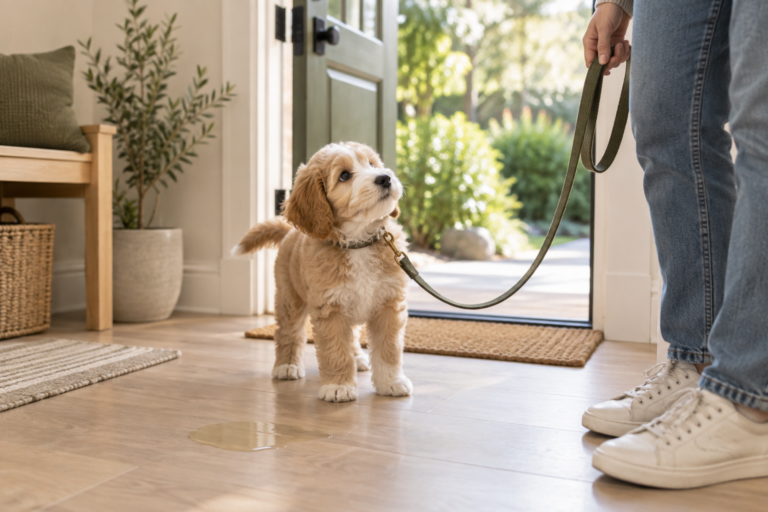
You take them outside and wait for ten minutes. Your puppy sniffs the grass, watches the birds, tries to eat a leaf, and eventually does nothing. You go back inside, take off your jacket, and your puppy goes to the bathroom right next to the door.
If this has happened to you, you did not choose the wrong dog. Your puppy is not stubborn, naughty, or “impossible to train.” They simply do not know where you want them to go yet. They cannot hold their bladder for very long, and they are only beginning to connect the feeling of a full bladder with going to a specific place.
The good news is that potty training does not depend on punishment, anger, or waiting for your puppy to figure out the rules on their own. What you need is a good schedule, careful observation, and plenty of repetition of the same simple routine.
How Long Does It Take to Potty Train a Puppy?
Some puppies quickly understand what is expected of them, but that does not mean all accidents will stop immediately. Understanding the rule and being physically able to hold it long enough are not the same thing.
A young puppy has a small bladder, limited control, and plenty of excitement throughout the day. Playing, waking up, eating a meal, meeting a new person, or simply running around the room can suddenly make them need to go.
It is more realistic to expect steady progress over several weeks, with true reliability coming later. There will be good days, followed by an accident that makes you feel as if you are back at the beginning. You are not. One puddle does not erase everything your puppy has already learned.
How quickly a puppy learns depends on:
- their age;
- the conditions they lived in before coming to you;
- their size and individual bladder control;
- how regular their meals and potty trips are;
- how closely you watch for signs;
- whether everyone in the household follows the same rules;
- how much space the puppy can access inside the home.
The most important thing is not to compare your puppy with someone else’s. The sentence, “My dog learned everything in three days,” usually leaves out at least a few details and a few puddles.
First, Decide Where You Want Your Puppy to Go
Before you begin training, you need one clear rule. Is your final goal for your puppy to go only outside, on a puppy pad on the balcony, or in one permanent spot inside the home?
Your puppy cannot follow a rule that keeps changing. If the pad is in the bathroom today, in the hallway tomorrow, and the day after that you expect your puppy to ask to go outside, the process will take longer.
If you eventually want your dog to go only outside, a puppy pad can be a useful temporary solution when your puppy has not completed their vaccinations, when you live on an upper floor, or when you cannot reach a safe outdoor area quickly enough. However, keep in mind that you will later need to teach one more step. Your puppy will have to learn that the pad is no longer the bathroom and that they now need to go outside.
This is not impossible, but consistency matters. Choose one place, do not move the pad from one spot to another every day, and do not place pads all over the house “just in case.” If every corner is a toilet, your puppy has no reason to learn to look for one particular place.
A Consistent Schedule Is the Most Important Part of Potty Training
Most accidents do not happen because a puppy refuses to listen. They happen because the owner is a few minutes too late.
At first, do not rely on your puppy to clearly tell you that they need to go outside. Some puppies stop by the door or whine, but many simply pause their game for a moment, lower their nose, and wander behind the sofa. That may be the only warning you get.
Take your puppy to their potty area:
- immediately after they wake up;
- after every meal;
- after they drink a larger amount of water;
- after playing, running, or getting excited;
- after spending time in a crate, playpen, or resting area;
- before bedtime;
- at regular intervals during the day, based on your puppy’s age and individual needs.
Instead of guessing when it is time, keep a simple record for the first few days. Write down when your puppy eats, drinks, sleeps, pees, and poops. You will usually notice a pattern very quickly.
You may discover that your puppy normally needs to go five minutes after waking up and fifteen minutes after a meal. That information is more useful than a general chart from the internet because it describes your puppy, not an average one.
If you would like a clear plan to follow from the first day, my ebook, Potty Training for Puppies: Teach Your Dog Where and When to Go, walks you through the entire process in more detail.
Learn to Recognize the Signs
Puppies often show that they need to go, but their signals can be brief and easy to miss.
Pay attention when your puppy:
- suddenly stops playing;
- starts sniffing the floor with urgency;
- turns in circles;
- walks toward a corner, a rug, or another room;
- becomes restless;
- moves away from you for no obvious reason;
- heads toward a place where they had an accident before;
- whines or pauses near the door.
As soon as you notice one of these signs, calmly take your puppy to the correct place. Do not wait to see whether your guess was right. If you were wrong, you have only lost a few minutes. If you were right, you have prevented another accident and created an opportunity to reward the behavior you want.
What a Successful Potty Trip Looks Like
When it is time to go to the bathroom, the trip should be simple and a little boring.
Take your puppy to the same spot. When you go outside, keep them on a leash at first so the potty trip does not turn into chasing leaves and investigating every smell in the neighborhood. Stand quietly and give your puppy a little time.
You can use a short word or phrase every time, such as “go potty,” “be quick,” or “go now.” Say it calmly once or twice. Do not repeat it constantly, or it will become nothing more than background noise.
The moment your puppy finishes, praise them and give them a small treat. Give the reward while you are still outside, not after you return to the house. Otherwise, your puppy may connect the treat with coming inside, taking off the leash, or walking through the door instead of going to the bathroom in the correct place.
Afterward, allow a short walk, some sniffing, or a little playtime. This prevents your puppy from learning that going to the bathroom makes all the fun end immediately.
What If Your Puppy Does Nothing Outside?
This is one of the most common problems. Your puppy is so busy with the world outside that they forget why they are there. As soon as they return to the quiet, familiar house, they relax and go to the bathroom.
If nothing happens after a few minutes, go back inside, but do not immediately allow your puppy to wander around the house. Keep them close to you on a leash, place them in a playpen for a short time, or watch them very carefully. Try again in about ten minutes.
The goal is not to stand outside for an hour begging your puppy to pee. The goal is to prevent that familiar moment when you are certain they “obviously do not need to go,” while they are already searching for the nicest rug in the house.
Limiting Space Can Speed Up Potty Training
A puppy who has access to the entire house from the first day can go to the bathroom in one room and then walk into another room to play. From the puppy’s point of view, almost nothing has happened, and you may not find the mess until much later.
At first, it is better to keep your puppy in an area where you can supervise them. This could be one safe room, a playpen, or part of a room separated by a gate. When you cannot actively watch your puppy, a smaller, comfortable space can help prevent mistakes.
A crate can also be useful for short periods of rest and for creating a routine, but it should never become a place where your puppy spends too much time simply because no one is available to take them outside. If a puppy is confined for longer than they can physically manage, they may be forced to soil the place where they sleep. You have not taught the rule in that situation. You have given the puppy a task they were physically unable to complete.
Increase freedom gradually. Once your puppy is reliable in a smaller area, give them access to one more room. If accidents start again, take a step back and provide closer supervision.
What to Do If You Catch Your Puppy in the Act
If you notice that your puppy has just started to pee or poop, calmly interrupt them with a short sound or word and immediately carry or lead them to the correct place. If they finish there, praise and reward them.
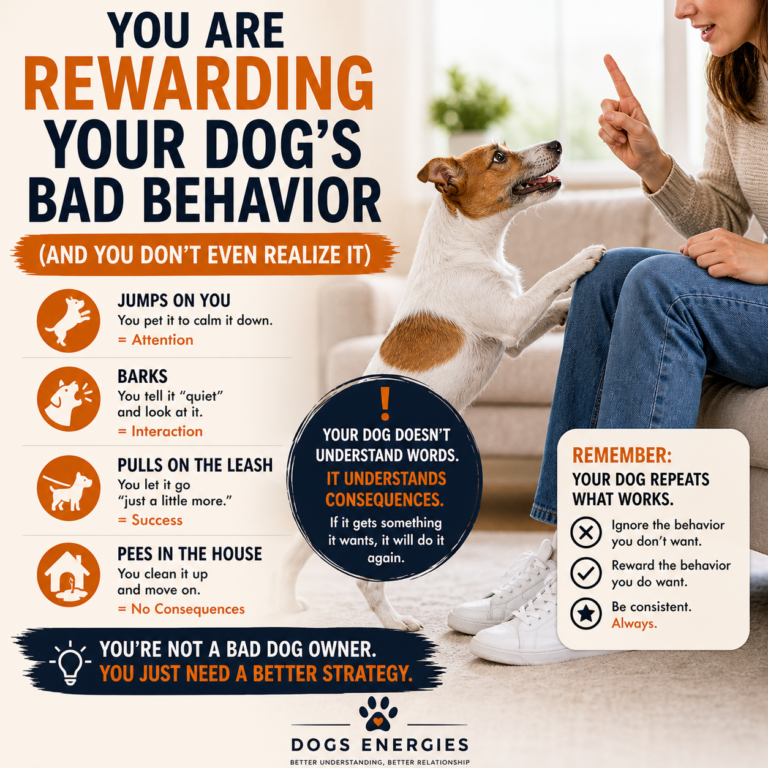
There is no need to shout, hit your puppy, push their nose into the mess, or give them a long lecture. None of those things teaches a puppy where they should go. They may only learn that it is dangerous to go to the bathroom when you are watching.
Some dogs then begin hiding behind furniture, waiting for their owner to leave the room, or refusing to relieve themselves on a leash while a person watches them. The problem has not disappeared. It has simply become harder to notice.
If you find a puddle later, do not react toward your puppy. They cannot connect your anger now with something they did several minutes ago. Clean the area and think about what happened before the accident. Had too much time passed? Had your puppy just woken up? Did you miss a signal?
An accident is information, not proof of disobedience.
Clean Accident Spots Properly
A dog’s nose can detect odors that people can no longer smell. If you simply wipe the area with an ordinary household cleaner, your puppy may still recognize it as their bathroom.
Use an enzymatic cleaner made for removing pet urine and follow the manufacturer’s instructions. Before cleaning, blot up as much liquid as possible. Avoid rubbing hard because this can push the urine deeper into the carpet or fabric.
Avoid cleaners with a smell that may resemble some of the components in urine, as well as products that could damage the surface. Always test the cleaner on a small, less visible area first.
Proper cleaning is not only about hygiene. It removes the scent marker that tells your puppy, “You have been to the bathroom here before.”
Potty Training at Night
A very young puppy may not be able to make it through the entire night. Plan the final potty trip immediately before bedtime and the first one as soon as your puppy wakes up.
If your puppy wakes during the night, becomes restless, or starts whining, take them to the potty area without playing, chatting, or turning it into an event for the whole household. Keep the lights low, the trip short, and the return to bed calm. The message is simple. Nighttime is for a quick bathroom trip, not for entertainment.
As your puppy’s bladder control develops, the nighttime trip will gradually become later and eventually disappear. Do not limit water during the day simply to avoid waking up at night. Your puppy should have regular access to fresh water. If you have concerns about thirst, urination, or your puppy’s health, speak with your veterinarian.
Common Mistakes That Slow Down Progress
Too Much Freedom Too Soon
Your puppy cannot make a good choice if no one notices that they are looking for a place to go. Freedom is something a puppy earns as they become more reliable. It is not the way reliability is taught.
Waiting for the Puppy to Ask
Many puppies do not yet know how to ask. The owner creates the schedule first. A clear signal at the door comes later.
Giving the Reward Too Late
A treat given in the kitchen several minutes later does not tell your dog which behavior you want them to repeat. Reward your puppy immediately, in the place where they went to the bathroom.
Punishing Accidents
Punishment can create fear and hiding, but it does not show your puppy where the bathroom is.
Waiting Outside Too Long Without a Plan
If your puppy does not go, bring them back inside under close supervision and try again soon. Do not give them immediate access to rugs and distant rooms.
Constantly Changing the Place and the Rules
One family member uses a puppy pad, another takes the puppy outside, and a third lets them onto the balcony. Everyone wants the same result, but the puppy is receiving three different messages.
Expecting a Young Puppy to Hold It Like an Adult Dog
A small bladder and immature control are not disobedience. The schedule must suit the puppy you actually have, not the schedule that would be most convenient for you.
When Accidents May Be More Than Part of Learning
An occasional accident is normal while a puppy is learning. However, contact your veterinarian if you notice a sudden change in a puppy who had already been making progress, very frequent urination, straining, pain, blood in the urine, unusual thirst, diarrhea, vomiting, or other signs that your puppy is unwell.
Training cannot solve a health problem. When your puppy’s behavior suddenly changes, a physical cause should be ruled out first.
A Simple Daily Potty Training Plan
No schedule is perfect for every puppy, but a basic routine can look like this:
- As soon as your puppy wakes up, take them straight to the potty area.
- After a successful trip, give praise, a small reward, and a few minutes of supervised freedom.
- Serve meals at roughly the same times each day.
- Take your puppy out again soon after food, water, play, and every nap.
- Between potty trips, provide supervision or a safe, limited space.
- Take your puppy for one final, calm potty trip just before bedtime.
- Record the times of accidents and successful trips for a few days, then adjust the schedule.
This plan is not complicated, but it does require your attention. During the first few weeks, you are learning how to predict your puppy while your puppy is learning to repeat the behavior that brings praise and rewards.
If you need more help creating a routine that fits your puppy, you can find the complete process in my puppy potty training guide.
Frequently Asked Questions
Should I Use Puppy Pads?
A puppy pad can be a useful temporary solution if your puppy cannot get outside safely or quickly enough. If the final goal is for your dog to go only outside, remember that you will eventually need to phase out the pad. The most important thing is to keep it in one place and avoid changing the rules every day.
Why Does My Puppy Pee Right After We Come Back from a Walk?
The smells, sounds, and movement outside are probably distracting your puppy. At first, keep potty trips calm and use the same spot. If your puppy does nothing, keep them under close supervision when you return and try again after a short time.
Is My Puppy Going to the Bathroom in the House on Purpose?
No. Your puppy is not planning revenge or trying to make you angry. In most cases, they did not understand the rule, could not hold it long enough, or their owner missed the right moment for a potty trip.
When Can a Puppy Stay Home Alone Without Having an Accident?
It depends on the puppy’s age, individual development, previous training, and how long they will be alone. Independence should increase gradually. First, make sure your puppy is reliable in a smaller space for a short period. Then slowly increase both the time and the amount of space they can access.
Do Potty Bells Help?
They can be a useful signal, but bells alone do not teach bladder control. Your puppy first needs a schedule and consistent potty trips. Later, you can teach them that touching the bell makes the door open. Just be prepared for a clever puppy to ring it occasionally because they simply want to go outside and sniff.
What If My Puppy Starts Having Accidents Again?
Go back to the basics. Offer more frequent potty trips, limit the available space, supervise more closely, and reward your puppy immediately after success. Think about what may have changed in the routine. If the setback is sudden or comes with other symptoms, contact your veterinarian.
Patience Is Not Passive Waiting
Being patient does not mean wiping up puddles and hoping your puppy will wake up one morning and understand the house rules. Real patience is active. You take your puppy out on time, watch for the signs, reward every success, and calmly adjust the schedule when a mistake happens.
Your puppy will not need this much attention forever. Every successful potty trip builds the habit, and every accident you prevent makes learning easier. With a consistent routine, one clear potty area, and a reward given at the right moment, your puppy will gradually understand not only where to go, but also how to tell you when it is time.
Then one day, you will realize that you have not reached for the cleaning spray in quite a while. That is usually the moment you know you have done it.