How to Calm a Puppy During the Evening Witching Hour
During the day, your puppy seems like a sweet little creature who is slowly learning the rules of life in a new home.
And then evening comes.
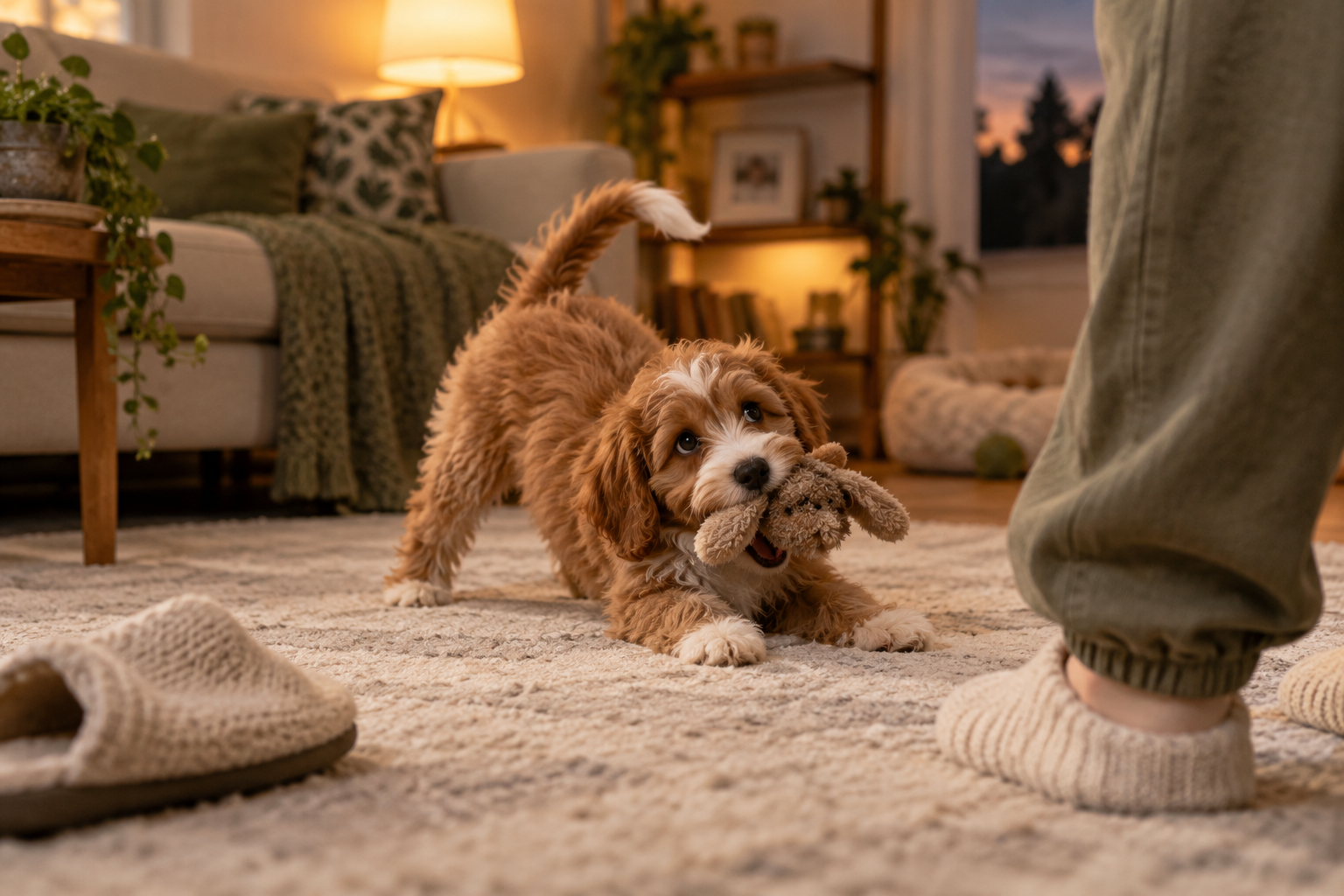
Suddenly, your puppy is racing through the house as if someone is chasing them, jumping on the furniture, biting pant legs, attacking slippers, pulling at the rug, and trying to grab everything that moves. If you try to pet them, they may latch onto your sleeve. If you stand up, you have a tiny crocodile wrapped around your ankles.
Welcome to the evening chaos commonly known as the puppy witching hour.
Although it may look as if your puppy has an endless supply of energy, the opposite is often true. Many puppies are not getting wild in the evening because they are not tired enough. They are overtired, overstimulated, and no longer know how to settle themselves.
The answer is not to wear your puppy out even more. You need to help them gradually move from the active part of the day into a calm evening.
What Is the Puppy Witching Hour?
The puppy witching hour is a period of intense activity that usually happens in the late afternoon or evening. For some puppies, it lasts about fifteen minutes. For others, it can go on much longer.
During this time, your puppy may:
- Race wildly around the house
- Jump on people and furniture
- Bite hands, feet, and clothing
- Bark or growl during play
- Steal things they normally leave alone
- Ignore cues they usually understand
- Struggle to stop even when they look tired
This behavior is especially common in young puppies that have not yet learned how to manage their excitement.
The evening crazies do not mean your puppy is aggressive, dominant, or badly behaved. Most of the time, your puppy has simply crossed the point where they can still make good choices.
After all, tired people are not exactly known for their patience and perfect behavior either. The only difference is that we get grumpy, while puppies attack slippers.
Why Does My Puppy Go Crazy at Night?
There is rarely just one reason. In most cases, it is a combination of tiredness, pent up energy, and too much stimulation.
Your puppy is overtired
Young puppies need a lot of sleep, but many of them do not recognize when they have had enough activity.
A predictable puppy sleep routine can make it much easier for your puppy to get enough rest before overtiredness turns into evening chaos.
Instead of lying down peacefully, they become faster, louder, and more likely to bite. It can look a lot like a tired toddler who has missed their bedtime.
Owners often assume the puppy has too much energy and start another intense play session. This makes the puppy even more excited and settling down becomes harder.
Your puppy did not get enough appropriate activity during the day
A puppy who spent most of the day without movement, sniffing, short training sessions, or time with their owner may try to make up for everything they missed as soon as the family gets home.
However, more activity does not always mean a longer walk or more time chasing a ball. Puppies need a healthy combination of physical movement, sniffing, learning, and rest.
On days when outdoor time is limited, try these indoor enrichment games for small dogs to give your puppy useful mental activity without creating even more evening excitement.
There is a lot going on in the house at night
You come home from work, the children arrive home, dinner is being prepared, the TV is on, people are talking, and everyone is moving from one room to another.
For a young puppy, that is a lot of sounds, smells, and movement to process. Your puppy wants to be involved in everything, even though they no longer have enough self control to participate calmly.
Your puppy needs to go potty
Sometimes there is a very simple reason behind the sudden restlessness. Your puppy may need to go outside or use their designated potty area.
Before treating it as a behavior problem, check your puppy’s basic needs. A short, calm potty break can prevent an accident indoors and help your puppy feel more comfortable.
If potty breaks are still unpredictable, a simple and consistent puppy potty training routine can help both you and your puppy end the day with less stress.
Your puppy is hungry or thirsty
If it has been a long time since the last meal, your puppy may become restless. The same can happen if they do not have access to fresh water.
This does not mean your puppy should get an extra meal every time the zoomies begin. Make sure their feeding schedule is appropriate for their age and daily routine.
How to Calm a Puppy During the Evening Witching Hour
Once your puppy has started racing, jumping, and biting, yelling usually adds even more energy to the situation. It is much more helpful for you to slow down, reduce stimulation, and offer an activity that encourages calm behavior.
1. Check your puppy’s basic needs first
Before assuming this is a behavior problem, ask yourself:
- Does my puppy need to go potty?
- Do they have fresh water?
- Is it time for a meal?
- Are they too warm?
- Could something be hurting or bothering them?
- How much have they slept today?
Take your puppy out for a potty break, but keep the trip short and boring. This is not the time for racing around, meeting new dogs, or starting an exciting game.
The goal is to take care of the need without waking your puppy up even more.
2. Stop wild play before it gets out of control
If you notice the game getting rougher, do not wait until your puppy is hanging from your pant leg.
Slow things down while your puppy can still listen to you and accept redirection. Put away toys that encourage chasing and offer something they can lick or chew quietly instead.
The earlier you recognize the first signs of overstimulation, the easier it will be to prevent a full evening meltdown.
3. Reduce noise and movement in the room
Dim the lights, turn down the TV, and ask family members not to call or excite the puppy for a while.
You do not have to tiptoe around your own home. The environment simply needs to become calmer and more predictable.
If the kids are running through the room, someone is rustling a bag, and you are chasing a puppy who has just stolen a sock, it is difficult to expect that puppy to settle down on their own.
4. Offer an activity that encourages calm behavior
Licking, sniffing, and chewing can help your puppy move from an excited state into a calmer one.
You can offer:
- A lick mat with a thin layer of food
- A toy filled with part of your puppy’s meal
- A safe chew suitable for your puppy’s age and size
- A few pieces of kibble scattered on a snuffle mat
- A rolled towel with kibble hidden inside, used under supervision
Choose something your puppy can do in one place. The goal is not to get them moving again, but to give them a simple activity that does not increase their excitement.
Always supervise your puppy when introducing a new toy or chew.
5. Give your puppy a short rest break
If your puppy still cannot settle, guide them to a quiet space. This might be a playpen, a bed, or a crate if they have already been introduced to it gradually and positively.
The break should not be a punishment.
Do not grab your puppy angrily, put them in the crate, and close the door while telling them how impossible they are. Calmly guide them to their resting place, offer a safe toy or chew, and give them a chance to fall asleep.
Some puppies need a little reminder from us that they are tired. Once the outside world finally becomes quiet, they often fall asleep within minutes.
6. Do not try to tire your puppy out with intense exercise
A long walk, endless games of fetch, or wild play right before bed can make the problem worse.
Intense activity increases excitement. Your puppy may look more physically tired, but their brain is still switched on.
Instead of another thirty minutes of racing around, try a few minutes of calm sniffing, a simple food activity, a potty break, and then some rest.
Settling is a skill your puppy needs to learn. You cannot always achieve it by exhausting them.
7. Protect your hands and pant legs without turning it into a game
If your puppy starts biting your clothes, stop moving. Do not pull your leg away, wave your hands, or run across the room. Movement can make your pant leg even more exciting.
If biting your clothes has become a daily habit, these practical steps can help you stop your puppy from biting your pants when you walk.
Calmly redirect your puppy to a toy. If they cannot take the toy and immediately return to your hands or clothing, they are probably too overstimulated and need a short break.
If necessary, quietly step behind a baby gate or door for a few seconds. This helps your puppy learn that biting too hard makes attention and fun stop.
8. Reward the calm moments you usually overlook
Owners react very quickly when a puppy steals a slipper, but they often do nothing when the puppy chooses to lie down on their bed.
Those calm moments are valuable training opportunities.
When your puppy lies down on their own, quietly place a treat between their paws. Do not praise them loudly and get them excited again. You want to show your puppy that calm behavior pays off.
Over time, your puppy will begin to choose rest more often because they have learned what you want them to do.
Create a Predictable Evening Routine for Your Puppy
Puppies find it easier to settle when events happen in a similar order each evening.
A simple evening routine might look like this:
- Take your puppy out for a short potty break.
- Spend a few minutes on calm sniffing or easy training.
- Serve dinner in a slow feeder or food toy.
- Take your puppy out for another potty break.
- Dim the lights and reduce activity in the house.
- Offer quiet chewing or licking in their resting place.
- Settle your puppy down for the night.
You do not have to follow every step at exactly the same time. The order matters more because it tells your puppy that the day is winding down.
Pay attention to when the evening crazies usually begin. If your puppy goes wild at about eight every night, begin the calming routine fifteen to thirty minutes earlier.
Do not wait until your puppy is already racing around the room and biting everything in sight. Start the calming routine fifteen to thirty minutes before the usual witching hour. It is much easier to prevent overstimulation than to calm a puppy who has already lost all self control.
It is much easier to prevent an explosion of energy than to negotiate with a tiny crocodile who has already taken over the living room.
Common Mistakes That Make the Puppy Witching Hour Worse
Yelling or punishing your puppy
A puppy who has lost all self control will not become calmer because you raise your voice. They may become frightened, get even more excited, or think you have joined the noisy game.
Physical punishment can damage trust and does not teach your puppy what to do instead.
Chasing your puppy
If your puppy steals a sock and the whole family runs after them, you have just created the best evening game ever.
Keep valuable and dangerous objects out of reach. If your puppy still grabs something, calmly offer a trade instead of starting a chase.
Too much stimulation right before bed
Visitors, rough play, noisy children, and exciting toys can be too much for a young puppy, especially at the end of the day.
Evening activities should gradually become quieter.
Skipping daytime naps
A puppy who has not slept enough during the day will not necessarily fall asleep earlier at night. They are more likely to become irritable and bitey.
Planned rest periods do not mean you are neglecting your puppy. Sleep is an important part of healthy development.
Expecting the problem to disappear in one evening
Your puppy needs time to learn the household routine and develop self control. One calm evening does not mean the witching hour will never return.
Be consistent. Every evening you help your puppy slow down is another small lesson in how to settle.
When Is Evening Behavior More Than Normal Puppy Craziness?
Occasional evening running, jumping, and biting are normal puppy behaviors. However, pay closer attention if your puppy’s behavior changes suddenly or comes with other symptoms.
Talk to your veterinarian if your puppy:
- Seems to be in pain
- Cannot settle even after resting
- Is not eating or drinking normally
- Is vomiting or has diarrhea
- Whines for no obvious reason
- Constantly bites or licks the same part of their body
- Suddenly becomes unusually irritable
- Has trouble sleeping throughout both the day and night
If you are not sure whether the biting is playful or a sign of a more serious problem, a qualified reward based trainer can help you assess the behavior properly.
Frequently Asked Questions
One episode may last anywhere from a few minutes to an hour, depending on the puppy, their daily routine, and how the owner responds.
As your puppy matures, sleeps better, and learns how to settle, these episodes usually become shorter and less frequent.
There is no exact age that applies to every dog. For many puppies, the behavior gradually decreases during the first several months of life, but it may still appear occasionally during adolescence.
A good daily routine and practice with calm behavior can make this stage much easier.
You should not ignore your puppy’s needs, but you also do not need to turn every wild episode into a big event.
Check whether your puppy needs to go potty, offer a calming activity, and reduce stimulation. If your puppy bites to get attention, briefly and calmly end the interaction, then give them another chance to choose a more appropriate behavior.
Sometimes they do, especially if your puppy did not have opportunities to explore, sniff, and learn during the day. However, in very young puppies, evening zoomies are often a sign of being overtired.
Look at your puppy’s entire day instead of focusing only on a few wild minutes. Puppies need both appropriate activity and quality rest.
You can guide your puppy to a crate if they have been introduced to it positively and see it as a safe place to rest. A crate should never be used as punishment.
If your puppy panics, tries to escape, or has never learned to relax in the crate, shutting them inside when they are already highly aroused may create another problem.
The Puppy Witching Hour Will Not Last Forever
When your puppy grabs your pajama leg for the fifth time, it can be hard to believe that one day they will sleep peacefully beside you all evening.
But they will.
Your job is not to defeat your puppy or drain every last bit of energy from them. It is to recognize when they are tired, adjust their daily routine, and show them what a calm end to the day looks like.
Check their needs, reduce noise, offer something to lick or chew, and create a predictable routine. With a little patience, the puppy witching hour will become shorter and much easier to manage.
And your pant legs will finally be able to relax too.