Why Does My Puppy Pee Inside After Going Outside?
You take your puppy outside. You stand there in the cold, rain, or wind while they sniff every leaf, watch people walk by, and try to eat something they probably should not have noticed in the first place.
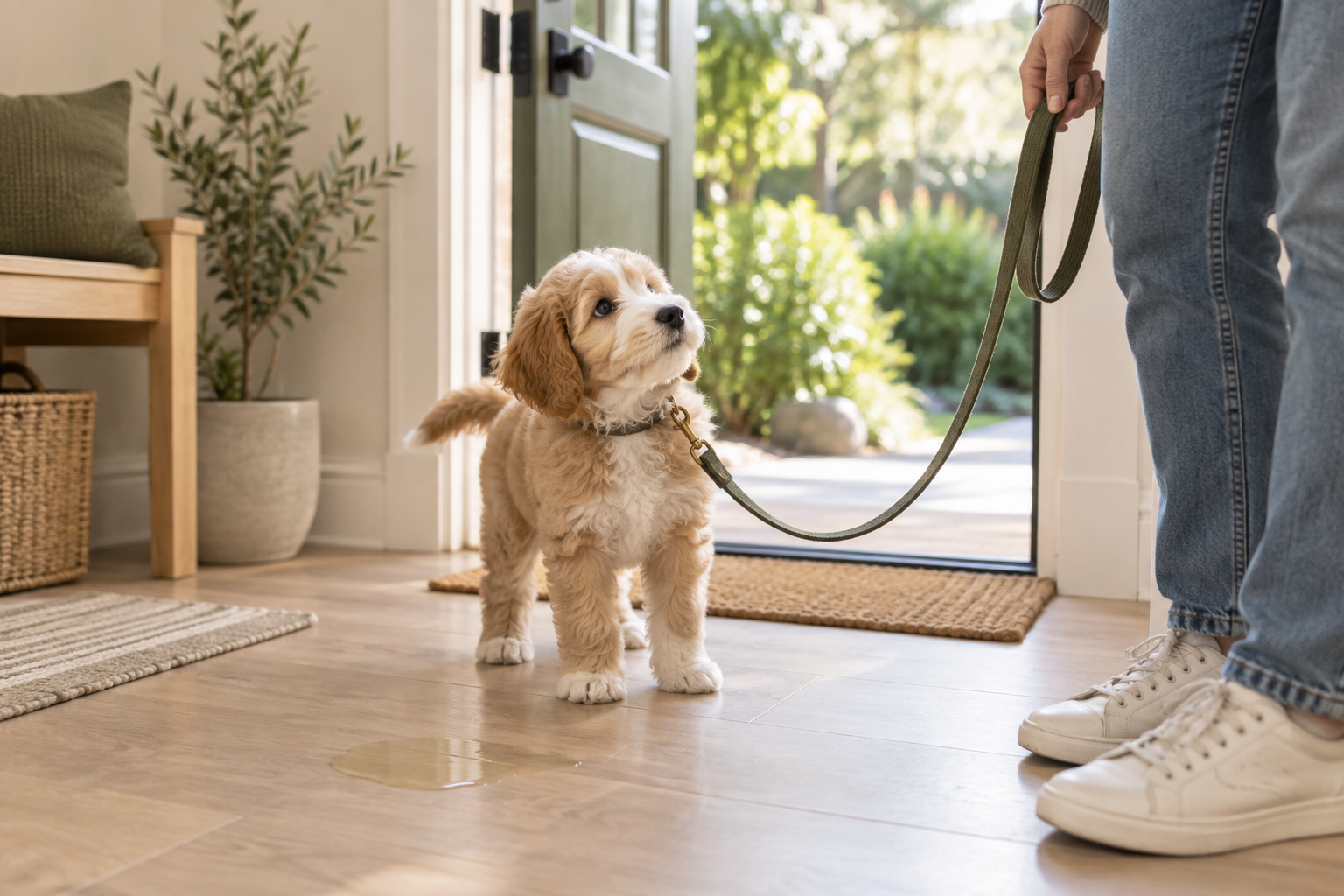
Ten minutes later, you head back inside, convinced they have done everything they needed to do. You take off your jacket, put down the leash, and then, almost right in front of you, your puppy leaves a puddle on the rug.
Your first thought is usually, “But we were just outside. Why are they doing this?”
The short answer is that your puppy probably did not fully empty their bladder outside, was too excited or distracted, still does not understand where they are supposed to go, or was given too much freedom in the house too soon.
They are not doing it out of spite. They are not trying to annoy you, and they have not “forgotten everything they learned.” House training is a process, and this situation is much more common than new puppy owners realize.
If you are still building the basic routine, start with this step by step guide on how to potty train your puppy without stress, punishment, or mess.
The Most Common Reasons Puppies Pee as Soon as They Come Inside
1. Everything outside is more interesting than going potty
To a young puppy, the yard or sidewalk is not just a place to go potty. It is full of smells, people, cars, birds, other dogs, sticks, and grass moving in the wind.
While you are waiting for your puppy to pee, they may be trying to process fifty new things at once. They might squat briefly and release a little urine without fully emptying their bladder. Once they are back inside, where everything feels quiet and familiar, they relax and finish what they started outdoors.
This is especially common with curious, excitable, or slightly nervous puppies.
2. The potty break turned into playtime or a walk
If every trip outside immediately begins with playing, running, or meeting other dogs, your puppy can easily forget why you went out in the first place.
That is why a quick potty break and a regular walk should not look exactly the same. When it is time to go potty, first take your puppy to a quiet, familiar spot and wait. Play and exploring can begin after they pee.
This teaches your puppy a simple routine: potty first, fun second.
3. Your puppy learned that peeing ends outdoor time
This is a small mistake owners often make with the best intentions.
Your puppy pees, gets praised, and is immediately taken back inside. After this happens a few times, they may start thinking, “When I pee, outdoor time ends.”
If your puppy enjoys being outside, they may begin delaying potty time to stay out longer. Then they come inside with a bladder that is still partly full and leave a puddle a few minutes later.
Whenever possible, stay outside for a few extra minutes after your puppy successfully goes potty. A little sniffing or calm play can be an additional reward.
4. Your puppy does not have full bladder control yet
A young puppy cannot reliably hold their urine the way an adult dog can. Even when they are starting to understand the rule, their body may not be ready to follow it every single time.
Puppies often need to pee:
- right after waking up
- after eating or drinking a lot of water
- after playing or running
- when they get excited
- before bedtime
- much more frequently during active parts of the day
Potty breaks may need to be planned even more carefully for small breed puppies. Their small bladders and busy little schedules do not leave much room for the famous, “Let me finish this one thing, and then we’ll go outside.” Your puppy probably has not checked your schedule.
If you are not sure how often your puppy needs to go out, this puppy potty training schedule by age can help you plan the day more realistically.
5. Your puppy was given too much freedom too soon
If your puppy did not pee outside, they should not come back in and immediately wander into another room.
There is a good chance they will find a quiet corner, a rug, or a spot behind the furniture. This is not because they are trying to hide the “crime.” They simply need to go and are choosing a surface that feels comfortable and absorbent.
Until the habit is reliable, keep your puppy under direct supervision after an unsuccessful potty break. You can keep them near you on a leash or briefly place them in a safe, limited area. Then try going outside again in about ten minutes.
6. Your puppy prefers a certain surface
Puppies can develop a preference for the type of surface they have used in the past. If your puppy is used to potty pads, blankets, towels, or rugs, grass may not seem like the obvious choice at first.
That does not mean they will never learn to go outside. It simply takes consistency, good planning, and plenty of successful repetitions in the place you have chosen.
If you use potty pads, keep them in one designated area. Pads scattered around the house can send the message that every soft, absorbent surface is actually a toilet.
7. It may be excitement or submissive urination
Some puppies release a small amount of urine when they get very excited, when someone greets them loudly, leans over them, or approaches with too much energy.
If the small puddle appears during greetings, tail wagging, jumping, or crouching, this may not be a typical house training accident.
In that case, calm greetings, a softer voice, and less pressure can help. Do not scold your puppy. Punishment can make them feel more insecure and may make the problem worse.
8. There may be a medical problem
Most occasional accidents in young puppies are connected to age, routine, and learning. However, frequent urination can sometimes point to a urinary tract infection or another health problem.
Contact your veterinarian if your puppy:
- pees very often but only passes a few drops each time
- strains or seems to be in pain while urinating
- cries or whines while peeing
- has blood in their urine
- suddenly starts having far more accidents than before
- drinks an unusual amount of water
- seems tired, loses their appetite, or develops other symptoms
If your puppy is trying to pee but no urine comes out, or only a few drops come out and they are clearly uncomfortable, do not wait for a routine appointment. Call your veterinarian right away.
What to Do When Your Puppy Does Not Pee Outside
The most important thing is not to assume your puppy is “definitely finished” just because they spent ten minutes outdoors.
Try this routine:
- Take your puppy to the same quiet potty spot.
- Keep them on a leash and limit playing and wandering around.
- Wait calmly for a few minutes.
- If they pee, reward them immediately while you are still outside.
- If they do not pee, take them back inside but keep them close and watch them carefully.
- Take them outside again after ten to fifteen minutes.
This routine may feel exhausting, especially when you are repeating it in your pajamas early in the morning. Still, it is much easier to spend a few days being consistent than to spend the next few months cleaning the rug and wondering what you are doing wrong.
Wait for the “Second Pee”
Some puppies pee once and then go again after a few more minutes of sniffing. That first pee does not always mean the bladder is completely empty.
So do not head straight for the door as soon as your puppy finishes. Praise them, give them a small treat, and stay in the same area for a few more minutes. This simple step often solves the mystery puddle that appears right after you come back inside.
If your puppy regularly pees again as soon as you get inside, do not rush home after the first pee. Stay outside for another three to five minutes and allow a little calm sniffing. Many puppies need that extra time to fully empty their bladder.
The Reward Must Come Right Away, Not After You Go Inside
Your puppy connects a reward with whatever happened immediately before it.
If your puppy pees outside, walks back into the building, climbs the stairs, waits for you to take off your shoes, and only then receives a treat, they probably will not understand what the treat was for.
Keep a treat in your pocket and give it as soon as your puppy finishes, while you are still beside the place where you want them to go again. Add a short, calm word of praise.
There is no need to celebrate as though your puppy just won a medal. Some sensitive puppies can become so excited by a big celebration that they actually stop peeing halfway through.
Watch Your Puppy, Not Just the Clock
A schedule is important, but your puppy’s body language may tell you it is time to go outside before the alarm does.
Watch for signs that your puppy:
- suddenly stops playing
- starts sniffing the floor intensely
- turns in circles
- heads toward a corner or another room
- becomes restless
- moves away from you
- squats without warning
When you notice one of these signs, respond calmly and quickly. Do not chase your puppy through the house shouting, “No!” You may only frighten them or teach them to hide the next time they need to pee.
What to Do If You Catch Your Puppy in the Act
If you notice your puppy starting to pee, gently interrupt them with a brief sound. If they are small enough, you can calmly pick them up and take them straight to their potty area.
If they finish there, praise and reward them.
If you find the puddle later, simply clean it up. Your puppy cannot connect your anger with something they did several minutes ago. Rubbing their nose in urine, yelling, and punishing them will not teach them where to go. It will only teach them that it is not safe to pee in front of you.
Clean the Accident Thoroughly
A regular floor cleaner may remove the odor you can smell, but your puppy may still detect traces of urine.
Use an enzymatic cleaner made for pet accidents and follow the directions on the label. If your puppy keeps returning to the same spot, temporarily block access to that part of the room while the new habit becomes stronger.
Common Mistakes That Make the Problem Last Longer
Waiting too long between potty breaks
If accidents keep happening, the current schedule is not frequent enough for your puppy. Do not wait for them to “learn to hold it.” First, give them enough opportunities to succeed. Then gradually increase the time between potty breaks.
Sending your puppy into the yard alone
A puppy who goes outside alone may spend five minutes chasing a leaf and then sit by the door waiting to come back in. You do not know whether they went potty, and they did not receive a reward at the right moment.
While your puppy is learning, go outside together.
Repeating the potty cue too many times
Saying, “Go potty, go potty, come on, go potty,” twenty times will not speed things up. Introduce the cue calmly when your puppy is already showing signs that they are about to pee. Over time, they will connect the words with the action.
Punishing your puppy after an accident
Punishment will not make your puppy’s bladder mature faster, and it will not explain where you want them to go. A consistent routine, close supervision, and a well timed reward work much better.
Expecting too much after a few good days
Three accident free days do not mean the habit is fully established. Learning is not a straight line. Excitement, a change in routine, visitors, or a longer play session can lead to an occasional setback.
That is not failure. It is simply a sign that your puppy still needs your help.
A Simple Plan for the Next Few Days
If your puppy regularly pees soon after coming back inside, try the following:
- write down when your puppy eats, drinks, sleeps, plays, goes outside, and has accidents
- take them out after waking, eating, drinking a larger amount of water, and active play
- use the same quiet potty spot
- wait for them to go potty before allowing play and exploring
- reward them immediately while you are still outside
- stay out for a few extra minutes to give them a chance to pee again
- if they do not go, keep them under direct supervision when you return inside and try again soon
- clean every accident with an enzymatic cleaner
- gradually give your puppy more freedom in the house as they become more reliable
Keeping a few simple notes often reveals a pattern you did not notice before. Maybe the accident always happens ten minutes after drinking water, right after a wild play session, or only in the evening when everyone is tired.
Once you see the pattern, preventing the next puddle becomes much easier.
Still Struggling With Puppy Potty Training?
Accidents are easier to solve when you have a clear routine to follow. My practical guide, Potty Training Your Puppy: Teach Them Where (and When) to Go, walks you through timing, supervision, rewards, nighttime potty breaks, and the most common mistakes that slow down progress.
Instant digital download • 28-page practical guide
Frequently Asked Questions
Most likely, your puppy did not completely empty their bladder. Something may have distracted them outside, or the first pee may have been very short. Stay outside for a few more minutes after they pee and give them another chance to go.
Take your puppy to a quiet spot and wait for a few minutes without playing. If they do not pee, go back inside, keep them under close supervision, and try again in ten to fifteen minutes.
Standing outside forever often turns into an exploring session rather than a focused potty break.
Not out of revenge or spite. Your puppy may feel safer indoors, prefer a certain surface, or have learned that peeing outside makes the fun end. Changing the routine and consistently rewarding outdoor potty trips will help build a new habit.
Do not withhold water during the day just to prevent accidents. Your puppy should have access to fresh water. If they suddenly start drinking much more than usual or urinating unusually often, talk to your veterinarian.
There is no single timeline that applies to every puppy. Age, size, previous habits, daily routine, and the owner’s consistency all affect how quickly a puppy learns.
The trend matters more than a perfect deadline. Accidents should gradually become less frequent, and your puppy should begin communicating more clearly when they need to go outside.
Final Thoughts
When your puppy pees inside right after being outdoors, it is easy to feel as though all your hard work has been wasted. But one puddle does not mean you are back at the beginning.
Your puppy is still learning to recognize the signals from their body, hold their bladder long enough, and understand where you want them to go. Those are three separate skills, and none of them develops overnight.
Be consistent, go outside together, reward the right moment, and do not give your puppy more freedom than they can currently handle. With a good routine and a little patience, the day when you suddenly realize you have not cleaned up a puddle in a long time will arrive sooner than it seems.
Disclaimer: This article is for informational purposes only and is not a substitute for veterinary advice or an examination. Contact your veterinarian if your puppy appears to be in pain, has blood in their urine, urinates frequently in small amounts, or suddenly changes their behavior.