How to Groom a Dog’s Coat: Bathing, Brushing, and Drying Tips
A Practical Routine for Different Coat Types.
Note: Some links in this article are affiliate links, which means I may earn a small commission if you choose to purchase through them. This comes at no extra cost to you. I only recommend products I truly believe in and would confidently give to my own dog.
A healthy-looking coat usually comes from a simple, regular routine—not from one special shampoo or a last-minute bath.
How often your dog needs brushing, bathing, or professional grooming depends on the coat type, the dog’s lifestyle, and the condition of their skin. A short, smooth coat has different needs from a long or curly coat that tangles easily.
The goal is to keep your dog comfortable, remove dirt and loose hair, and notice changes in the skin or coat early.
Start with your dog’s coat type
Before choosing a brush or setting a grooming schedule, look at your dog’s coat.
- Short, smooth coats usually need a soft brush or grooming mitt and less frequent brushing.
- Long or silky coats may need brushing several times a week to prevent tangles.
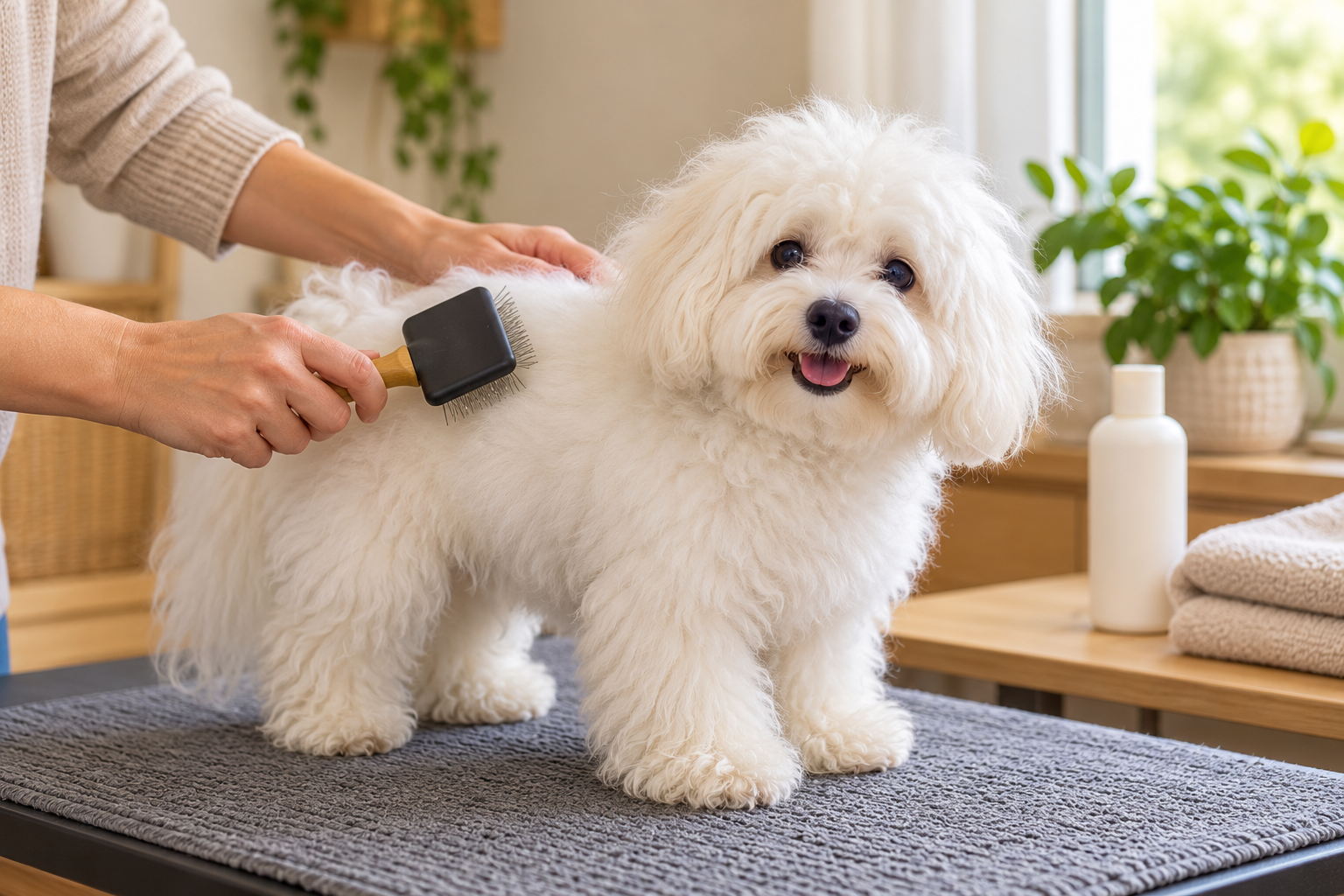
- Curly or continuously growing coats often need frequent brushing and regular professional trims.
- Double coats need tools suited to the topcoat and undercoat. Avoid shaving a double-coated dog unless your veterinarian recommends it for a medical reason.
These are general examples, not fixed rules. Your dog’s age, health, activity level, and tolerance for grooming also matter. A veterinarian, experienced groomer, or responsible breeder can help you choose suitable tools for your dog’s coat.
How often should you brush your dog?
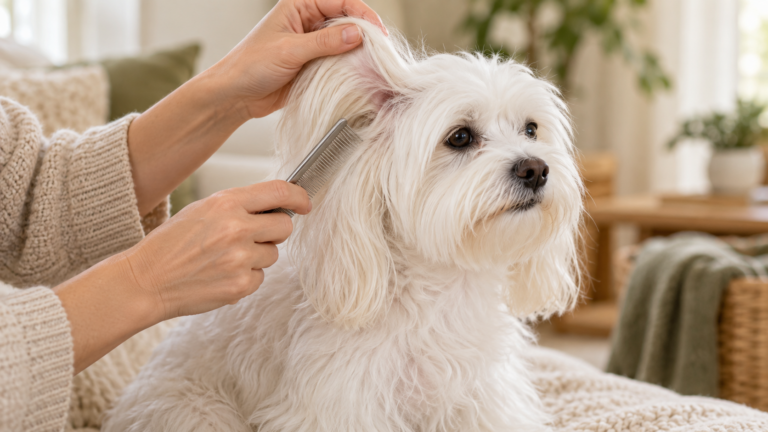
Brush often enough to prevent tangles and remove loose hair, but keep each session gentle. Some dogs are comfortable with a short daily brush; others do well with a few sessions each week.
Check areas where knots commonly form:
- Behind the ears
- Under the collar
- In the armpits
- On the belly and legs
- Around the tail
Use a brush or comb made for your dog’s coat. Work in small sections and avoid pulling hard. If a knot is tight, close to the skin, or painful for your dog, do not keep tugging at it. A professional groomer can help remove difficult mats safely. Avoid using scissors near the skin because a dog’s skin can be pulled into a mat and cut accidentally. VCA Animal Hospitals
For more help with one common trouble spot, see how to prevent mats behind a small dog’s ears.
How often should you bathe your dog?
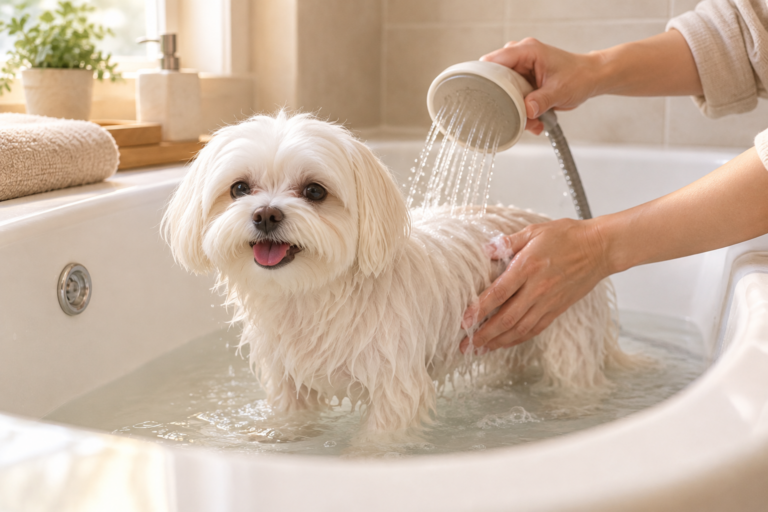
There is no single bathing schedule that suits every dog. The right interval depends on your dog’s coat, how dirty they get, and whether they have a skin condition. Your veterinarian may recommend a specific bathing routine or medicated shampoo if your dog has a skin problem.
When your dog needs a bath:
- Brush out loose hair and easy-to-remove tangles first.
- Use lukewarm water and a shampoo made for dogs. If you’re comparing dog shampoos, you can take a look at All Natural Oatmeal & Honey Shampoo + Conditioner for Dogs.
- Keep shampoo away from your dog’s eyes and follow the product directions.
- Rinse thoroughly so product does not remain on the coat.
- Use conditioner only if it is suitable for your dog’s coat and the product directions call for it.
Do not bathe a dog with extensive, tight mats at home. Water can make mats harder to work through. Ask a professional groomer or your veterinarian what to do. VCA Animal Hospitals
For a more specific guide, read how often to bathe a small dog.
Dry the coat comfortably
After the bath, gently press a towel against the coat to absorb water. Avoid vigorous rubbing, which can tangle longer hair.
A short-coated dog may dry comfortably with a towel in a warm room. A long or dense coat may need more help to dry fully. If you use a dryer, choose a pet-safe setting, keep the airflow moving, and make sure it is not too hot or close to the skin. Stop if your dog seems frightened or uncomfortable.
Check that the coat and skin are dry in areas that stay damp, such as under the legs or around the ears. If your dog has a thick coat or a skin condition, ask your groomer or veterinarian for advice about drying.
Build a calm grooming routine
Many dogs find grooming easier when it is introduced gradually. Start with a short session and reward calm behavior. Let your dog sniff the brush, touch a small area, and take breaks. You do not need to finish everything in one session.
In my 15-plus years of caring for dogs, I’ve learned that their coats and grooming needs can differ a lot—even when the dogs live in the same home. A routine that is comfortable for one dog may be too much for another, so I pay attention to how each dog responds and adjust the tools and pace.
When to ask a veterinarian
Grooming is a good time to notice changes, but it cannot diagnose their cause. Contact your veterinarian if you notice persistent itching, redness, sores, bald patches, a sudden change in coat texture, or an unusual smell that continues after bathing. Skin and coat changes can have different causes and may need veterinary attention. VCA Animal Hospitals
A simple coat-care checklist
- Choose a brush that suits your dog’s coat.
- Brush gently and check areas where tangles form.
- Bathe when needed, using dog-formulated products.
- Rinse thoroughly and dry your dog comfortably.
- Get professional help with severe mats.
- Ask your veterinarian about persistent skin or coat changes.
Regular, gentle care can help keep your dog comfortable and make it easier to spot problems early. If your dog comes home muddy, this guide may also help: how to clean muddy dog paws after a walk.
Frequently Asked Questions
How often should I brush my dog’s coat?
It depends on your dog’s coat. Short coats may need brushing less often, while long or curly coats usually need more frequent care to prevent tangles. Check behind the ears, under the legs, and around the collar regularly.
Can I use human shampoo on my dog?
It’s best to use shampoo made for dogs. If your dog has sensitive skin or a skin condition, ask your veterinarian which product is suitable.
Does every dog need conditioner after a bath?
No. Conditioner is not essential for every dog. Use one only if it is suitable for your dog’s coat and follow the product directions or your groomer’s advice.
What should I do if my dog has a tight mat?
Don’t pull hard or cut it with scissors. A tight mat can be close to the skin, so ask a professional groomer or veterinarian to remove it safely.