How to Prevent Mats Behind Your Small Dog’s Ears
If you have a small, long-haired dog, you probably know this situation well. Your dog looks neat, their coat is clean and nicely brushed, and then you run your fingers behind one ear and feel a firm little knot that seems to have appeared overnight.
Mats behind the ears really can form very quickly. The hair in this area is usually soft and fine, the skin is sensitive, and the ears are constantly moving and creating friction. Add a little moisture, scratching, and a few missed brushing sessions, and a small tangle can quickly turn into a tight mat against the skin.
The good news is that you don’t need a long daily grooming session to prevent mats behind your small dog’s ears. A few minutes of proper care is much more helpful than one long and uncomfortable detangling session once a week.
Quick Answer: To prevent mats behind your small dog’s ears, check the hair with your fingers every day, brush it in small sections, and finish with a metal comb. Keep the area completely dry after bathing, and deal with small tangles before they tighten against the skin.
Why Does Hair Mat So Easily Behind the Ears?
The hair behind your dog’s ears doesn’t become tangled because your dog is “messy.” It is simply one of the areas where mats form most easily.
Several things are happening behind the ears at the same time:
- the hair is very fine and soft
- the ears are constantly moving
- your dog scratches the area with a back paw
- the hair rubs against the neck, bed, blanket, or collar
- the hair may remain slightly damp after a bath
- small tangles are often difficult to see at first
For Maltese, Bolognese, Shih Tzus, Yorkshire Terriers, Havanese, and other small, long-haired dogs, one tiny strand that hasn’t been brushed properly can turn into a much larger mat within just a few days.
If you wait until the mat becomes firm and tight before trying to remove it, your dog will probably start pulling their head away, turning around, trying to escape, or even attempting to grab the brush with their teeth. This doesn’t mean your dog is being difficult. It means the pulling hurts.
Check the Hair With Your Fingers Every Day
The easiest way to prevent large mats is to run your fingers through the hair behind both ears every day.
You can do this while your dog is sitting on your lap, relaxing beside you, or enjoying some attention. You don’t need to bring out the entire grooming kit every time.
Use your fingertips to feel for:
- small thickened areas
- strands that won’t separate
- hair that feels stuck together
- tiny knots close to the skin
The earlier you find a tangled strand, the easier it will be to separate. You can often gently work a small knot apart with your fingers, while a larger mat may require more time, a detangling spray, the right grooming tools, or help from a professional groomer.
Don’t Rely on a Brush Alone
One of the most common mistakes is brushing only the surface of the coat. Your dog may look nicely groomed afterward, but small mats close to the skin can remain untouched.
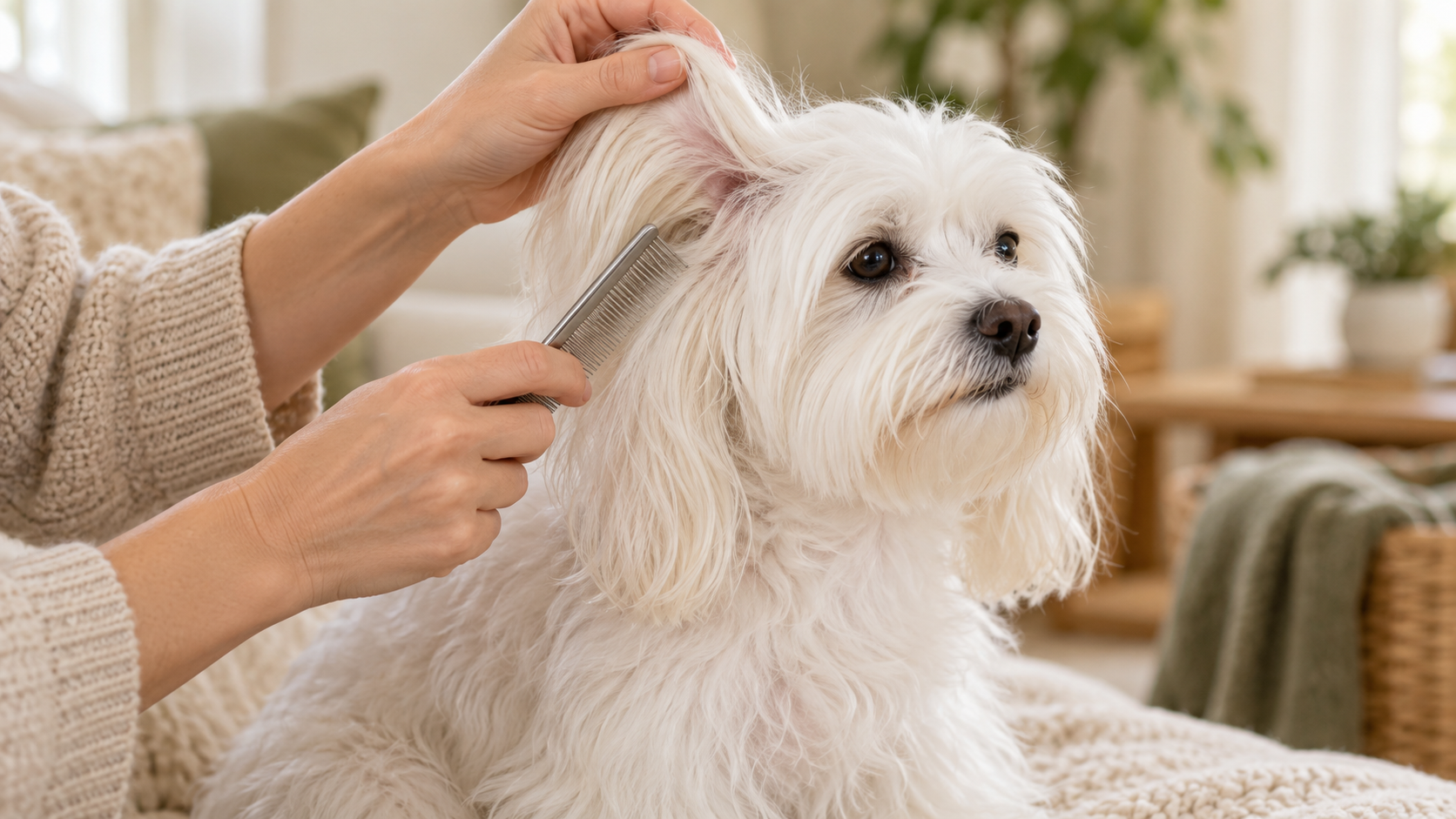
A brush can smooth the top layer of the coat while passing right over an area that is already tangled. That’s why it is important to use a metal comb with rounded teeth after brushing.
The comb should move smoothly through the hair from the roots to the ends. If it stops, there is probably still a tangled strand in that area.
Don’t force the comb through it. When the comb catches, stop and use your fingers to find the exact spot where the knot has formed.
How to Brush the Hair Behind Your Dog’s Ears Properly
For this part of your dog’s grooming routine, you will usually need:
- a small metal comb
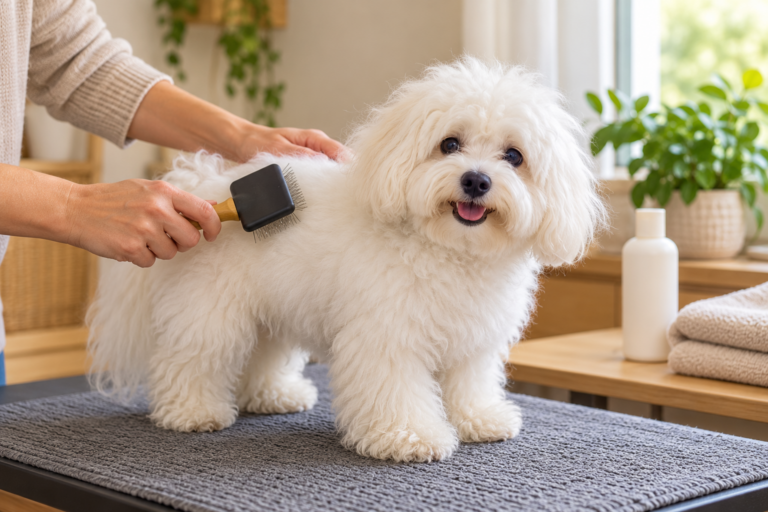
- a soft brush or small slicker brush
- a detangling spray made for dogs
- a few small treats
Start by lifting the ear and separating the hair into smaller sections. Don’t try to brush the entire area at once.
If the hair is dry and breaks easily, apply a very small amount of detangling spray. You don’t need to soak the coat. The hair only needs to be slightly damp and easier to work through with your fingers.
Hold the section of hair close to the skin with one hand and gently comb the ends with the other. This reduces pulling on the skin. Once the ends are tangle-free, gradually move the comb closer to the roots.
Use short, gentle strokes. If your dog starts getting nervous, take a break. It is much better to finish the grooming in two short sessions than to keep going until your dog loses patience and starts becoming afraid of being brushed.
Check the hair behind your dog’s ears with your fingertips, not just your eyes. You can often feel a small knot long before it becomes visible.
How Often Should You Brush Behind Your Dog’s Ears?
If your dog has a long, soft coat that mats easily, check this area every day. The actual brushing often takes less than two minutes when there are no large knots.
If your dog has a shorter haircut, a thorough brushing several times a week may be enough. However, the right schedule will depend on your dog’s coat type, activity level, and how often they scratch or roll around on soft surfaces.
Mats may form more quickly when your dog’s coat is longer, when the weather is humid, or when you frequently go for walks in the rain. During these times, it is best to check the hair every day.
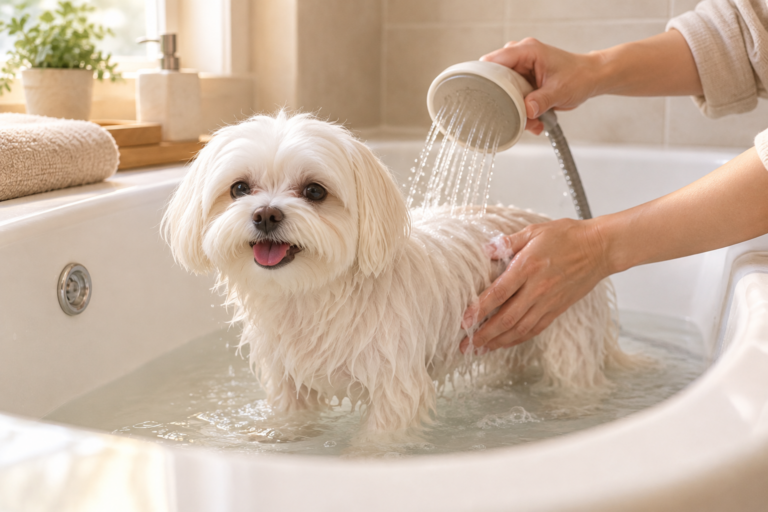
Dry the Hair Thoroughly After a Bath
Damp hair tangles much more easily. If your dog lies down, rubs their head against a towel, or rolls around on their bed while the coat is still damp, small knots can form very quickly.
After a bath, gently press the towel against the coat to absorb the water. Don’t rub the hair vigorously back and forth, because this can make fine hair even more tangled.
Carefully dry and brush the hair behind the ears. As you dry your dog, separate the strands with your fingers or a brush and make sure the area close to the skin is completely dry.
Just because the surface of the coat feels dry doesn’t mean there isn’t still moisture underneath.
Regular ear care is just as important as keeping the surrounding hair dry. If you’re unsure how to do it properly, learn how to clean your dog’s ears safely at home.
Pay Attention to Collars and Hair Accessories
A collar that constantly moves can contribute to tangles around the neck and near the lower part of the ears. Check regularly that the collar fits properly and that the hair is not becoming trapped or twisted underneath it.
If your dog doesn’t need to wear a collar all the time at home, you can remove it whenever it is safe to do so. This will reduce friction and give you an opportunity to check and brush the hair underneath.
Hair clips, elastic bands, and bows should not be placed too close to the skin or left in the same spot for days. Hair can twist around them and become tight.
Don’t Cut a Mat Close to the Skin With Scissors
When a mat is firm and close to the skin, scissors may seem like the fastest solution. However, a dog’s skin is often pulled up into the mat, making it difficult to see where the hair ends and the skin begins.
The skin behind the ears is thin and can be cut very easily.
If you cannot gently separate the mat with your fingers and a comb, it is safer to have an experienced groomer remove it. Sometimes trimming that small area short is much more comfortable for your dog than a long and painful detangling session.
It doesn’t matter if your dog has a shorter patch of hair behind one ear for a few days. What matters is keeping the skin safe and preventing your dog from associating brushing with pain.
Don’t Try to Remove a Large Mat All at Once
When owners find a larger mat, they often try to pull it out with a comb as quickly as possible. The dog starts struggling, the owner holds them more firmly, and a simple grooming session turns into a battle.
Instead, apply a small amount of detangling spray and use your fingers to divide the mat into several smaller sections. Hold the hair close to the skin to reduce pulling.
If your dog is calm and cooperative, work for a few minutes, offer a reward, and then take a break. Don’t let the desire to “just finish this one last bit” damage the trust you have built.
Teach Your Dog to Accept Having Their Ears Touched
Preventing mats is much easier when your dog is comfortable with you touching their head, lifting their ears, and using a comb around sensitive areas.
Start with very short sessions. Touch one ear, reward your dog, and end the exercise. The next time, lift the ear for a moment. Then introduce the comb and make just one or two gentle strokes.
The goal is not for your dog to tolerate grooming because they have no choice. The goal is to help them understand that being touched and brushed is safe and predictable.
It is especially helpful to start while your dog is still a puppy. However, an adult dog can also learn to accept grooming more calmly if you move slowly and don’t force them.
When Scratching Is More Than a Coat Problem
If mats keep forming behind only one ear, pay attention to how often your dog scratches that side or shakes their head.
Frequent scratching can make the hair mat more quickly, but it can also be a sign of a problem inside the ear.
Scratching isn’t the only sign to watch for. If your dog is also shaking their head more than usual, read about the most common reasons dogs keep shaking their heads.
Check whether you notice:
- red or irritated skin
- an unpleasant smell coming from the ear
- dark or unusual discharge
- sensitivity when the area is touched
- frequent head shaking
- tilting the head to one side
- repeatedly scratching the same ear
If you notice odor, redness, discharge, or sensitivity, check these dog ear infection signs that owners often miss.
In this situation, simply removing the mat is not enough. You need to find out why your dog keeps scratching the ear. A veterinarian can check for an infection, irritation, an allergic reaction, or another problem that may need proper treatment.
Common Mistakes When Caring for the Hair Behind the Ears
Most grooming mistakes are not caused by neglect. They usually happen because owners don’t realize how quickly fine hair can become tangled.
Try to avoid:
- brushing only the surface of the coat
- pulling the comb when it gets stuck
- rubbing the coat vigorously with a towel after a bath
- leaving the hair behind the ears damp
- waiting until a mat becomes visible
- cutting a tight mat close to the skin with scissors
- spending too long detangling without taking a break
- forcing a dog who is showing signs of pain or fear
The best grooming routine is not the one that takes the longest. It is the one you do regularly without causing unnecessary stress.
A Small Routine That Prevents Large Mats
The easiest way to prevent mats behind your small dog’s ears is with a quick daily check.
Run your fingers behind both ears, separate the hair, make a few gentle strokes with a brush, and then use a metal comb to make sure it moves freely through the strands. The entire routine may take only a few minutes.
When you find a small knot, deal with it right away while you can still gently separate it with your fingers. This will protect your dog’s coat and sensitive skin while saving them from an uncomfortable detangling session later.
And if your dog looks as though you have completely ruined their day after two strokes with a comb, offer a small treat. Small dogs sometimes have very big opinions about how well they should be rewarded for a visit to their at-home grooming salon.
Frequently Asked Questions
Why Does My Dog’s Hair Mat Only Behind the Ears?
The hair in this area is often finer, and the constant movement of the ears, scratching, and friction can quickly twist the strands into a mat. This is why the hair behind the ears may become tangled even when the rest of the coat looks neat.
Should I Brush Wet or Dry Hair?
It is not a good idea to brush completely dry, already tangled hair too firmly. You can lightly dampen it with a detangling spray and then gently work through it one small section at a time. After a bath, brush the coat while drying it and make sure it is completely dry.
Can I Use My Own Hair Spray or Conditioner?
It is safest to use a product made specifically for dogs. Human hair products may contain fragrances and other ingredients that are not suitable for a dog’s skin, and your dog may lick them.
Do Mats Hurt Dogs?
They can, especially when they become tight and pull on the skin every time the ear moves. Redness, moisture, and skin irritation may also be hidden underneath a large mat.
When Should I Take My Dog to a Groomer?
If the mat is firm, very close to the skin, or your dog will not let you remove it without causing pain, contact a professional groomer. Professional removal is safer than pulling with a comb or using scissors at home.
Why Do the Mats Come Back So Quickly?
Possible reasons include not brushing close enough to the skin, trapped moisture, friction, your dog’s coat texture, or frequent scratching caused by ear irritation. If the problem keeps happening on only one side, check the ear and speak with your veterinarian if necessary.