Why Do My Dog’s Paws Smell Like Corn Chips? Yeast, Bacteria and When to Worry
Why do dog paws smell like corn chips even when your dog hasn’t been anywhere near your snack cupboard? If you have ever picked up your dog’s paw and noticed that familiar Frito-like scent, you are definitely not imagining it.
You walk over to your dog while they are sleeping peacefully, give them a little cuddle, pick up one of their paws—and suddenly notice a very familiar smell.
Corn chips?
Cheese puffs?
Popcorn that has spent a little too long in a sealed bag?
No, nobody has been secretly snacking next to you. That smell really is coming from your dog’s paws.
The good news is that a mild corn chip smell is often completely normal. Many perfectly healthy dogs have that familiar scent on their feet.
However, there is a difference between a mild, familiar smell and a strong, unpleasant odor accompanied by redness, licking, swelling or pain.
Let’s look at why dog paws smell like corn chips, when it is normal and when you should take a closer look.
The Short Answer: Why Do Dog Paws Smell Like Corn Chips?
Bacteria and yeast naturally live on every dog’s skin. They are part of the normal skin microbiome and do not automatically mean that your dog has an infection.
Paws are an especially comfortable place for these microorganisms because they are often:
- warm;
- moist;
- covered in fur;
- poorly ventilated between the toes;
- exposed to soil, grass, dust and many other surfaces.
Dogs also sweat through their paw pads. Add warmth, dirt and the occasional paw-licking session, and you have an environment where microorganisms can produce a very distinctive smell.
Bacteria from the Pseudomonas and Proteus groups are often associated with the odor that reminds people of corn chips. Yeast, including Malassezia species that normally live on a dog’s skin, may also contribute to the smell.
However, this does not mean that every dog with corn chip-smelling paws has a bacterial or yeast infection.
Sometimes a dog simply has—dog feet.
Is the Corn Chip Smell on Dog Paws Normal?
A mild smell that you notice only when you bring your nose close to your dog’s paw is usually normal.
The scent may be more noticeable:
- during warm, humid weather;
- after a long walk;
- after your dog has been sleeping in a warm bed;
- when there is a lot of fur between the toes;
- if the paws were not completely dried after a bath;
- in dogs that occasionally lick their paws.
The most important thing is to know what is normal for your dog.
If your dog’s paws have always had a mild corn chip smell, the skin between the toes looks calm, your dog is not licking excessively and they are walking normally, there is usually no reason to panic.
A smell by itself is not a diagnosis.
When Is the Paw Smell No Longer Harmless?
Pay attention if the smell suddenly becomes much stronger or changes. A sweet, sour, rancid or particularly unpleasant odor can sometimes occur when yeast or bacteria begin to overgrow.
Check whether you have also noticed any of the following signs:
- frequent licking, chewing or biting at the paws;
- red skin between the toes;
- swelling or unusual warmth;
- reddish-brown staining on the fur between the toes;
- greasy, damp or sticky skin;
- scabs, sores or discharge;
- sensitivity when you touch a particular area;
- limping or avoiding putting weight on one paw;
- a bad smell coming from only one paw;
- a problem that keeps returning.
A mild odor without any other changes is usually not a problem. A strong smell combined with redness, itching or pain deserves a veterinary examination.
Why Can Yeast Overgrow on Dog Paws?
Yeast normally lives on a dog’s skin. It becomes a problem when conditions allow it to multiply more than it should.
This often happens when the paws stay damp for long periods or when the skin’s natural protective barrier becomes damaged.
For example, a dog may start licking their paws because of an allergy. The skin becomes moist and irritated. Yeast can then multiply more easily, the itching gets worse and the dog licks even more.
It becomes a cycle:
itching → licking → moisture and skin damage → more irritation → even more licking.
For dogs with recurring paw problems, simply treating the yeast is often not enough. You also need to find out why the skin became such a comfortable place for it to grow in the first place.
Possible underlying causes include:
- allergies to pollen, grass or other environmental triggers;
- contact irritation;
- food allergies or sensitivities;
- paws that frequently stay damp;
- a small injury or foreign object;
- certain hormonal or skin conditions.
This is why it is not a good idea to assume that every unusual paw smell automatically means “yeast.”
Do Bacteria on the Paws Mean That My Dog Is Dirty?
No.
Bacteria naturally live on the skin of all dogs, just as they live on our skin. Their presence does not mean that your dog is neglected or that their paws have not been washed properly.
Problems can develop when bacteria multiply excessively or enter through damaged skin.
When that happens, you may notice a stronger smell along with:
- intense redness;
- pain;
- swelling;
- moist sores;
- pus or bloody discharge;
- bumps between the toes;
- constant licking;
- limping.
It is not always possible to tell the difference between bacterial and yeast problems based only on appearance or smell. If necessary, your veterinarian can take a sample from the skin and examine it under a microscope to see what is really happening.
Your nose can warn you that something may be wrong, but it cannot replace an examination.
The American Kennel Club explains that naturally occurring bacteria and fungi can contribute to this distinctive odor, while redness, swelling and excessive licking may indicate that the paws need veterinary attention.
Why Does My Dog Lick Smelly Paws?
Your dog is probably not licking their paws because they enjoy the smell.
They are much more likely to lick because the paws itch, sting or hurt. The cause may be an allergy, irritation after a walk, a small injury, a thorn, a cracked nail or the beginning of an infection.
Licking then adds even more moisture and causes further damage to the skin.
If you want to look more closely at why your dog is doing this, read Why Does My Dog Keep Licking Their Paws? Causes, Warning Signs and What to Do.
These two problems often go together: the paws begin to itch, the dog licks them, and then they become damp and start to smell stronger.
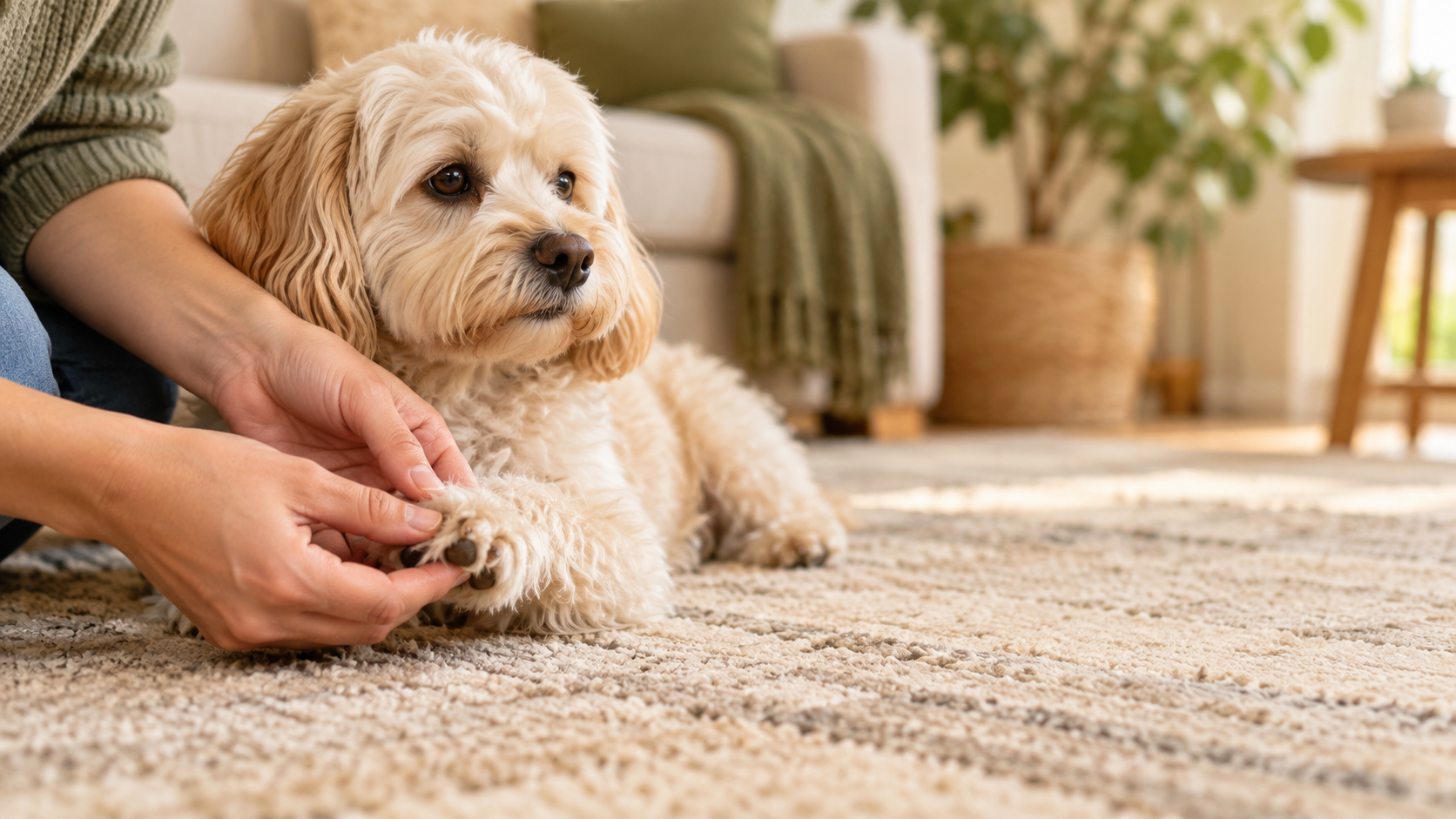
Five Things to Check on Your Dog’s Paws
If you notice a corn chip smell, wait until your dog is calm and examine each paw separately.
1. Check the Skin Between the Toes
Gently spread the toes and look at the skin. Does it appear pale and calm, or is it red, swollen and damp?
Do not forget to check the underside of the paw between the pads.
2. Compare All Four Paws
If all four paws have the same mild smell and look healthy, you are more likely noticing the normal scent of your dog’s skin.
If only one paw smells strong, look for a local problem such as a sore, thorn, damaged nail, insect bite, swelling or foreign object.
3. Look at the Fur
Reddish-brown fur around the toes often develops after repeated contact with saliva. It can be a sign that your dog is licking much more often than you realize.
They may do it at night, when they are home alone or while you think they are simply resting quietly.
Dogs can be surprisingly discreet when they are doing exactly what they are not supposed to do.
4. Smell Each Paw Separately
I know this is not the most glamorous part of living with a dog, but it can be useful.
A mild, familiar scent is very different from a sudden, strong, sour, rancid or rotten smell.
5. Watch How Your Dog Walks
If your dog is favoring one leg, licking only one paw or refusing to let you touch it, do not assume that an ordinary smell is the only issue. Pain and limping deserve a closer examination.
What Can You Do at Home?
If the paws only have a mild smell and there is no redness, itching, pain or broken skin, simple care is usually enough.
Wipe the Paws After Walks
Use a clean, damp cloth or dog-safe wipes when needed. This can remove dust, pollen, pieces of grass and other substances that may irritate the skin.
You do not need to wash your dog’s paws after every short trip outside if they are not dirty.
After a wet or muddy walk, follow these simple steps for cleaning muddy dog paws without giving your dog a full bath.
Dry Them Thoroughly
This is often more important than washing them.
After a walk in the rain, a bath or a trip through wet grass, carefully dry the spaces between the toes and paw pads.
Wiping the top of the paw while leaving moisture trapped between the toes does not really count as finishing the job—even if your dog would prefer to believe that it does.
Keep the Fur Between the Paw Pads Neat
Long, thick fur can trap moisture and dirt. If you are not sure how to trim it safely, ask a professional groomer to do it.
The skin between a dog’s toes is delicate and can be injured easily, especially if the dog suddenly moves.
Check the Paws Regularly
A quick check after a walk can help you spot:
- a thorn;
- a grass seed;
- a small piece of glass;
- a pebble;
- a scratch;
- a cracked nail;
- redness between the toes.
The sooner you find a problem, the less likely your dog is to spend the next several days licking the paw and making the irritation worse.
What Should You Avoid?
Do not try to remove every trace of your dog’s natural paw smell. Dog paws do not need to smell like lavender, vanilla or freshly washed laundry to be healthy.
Avoid using:
- human perfumes and deodorants;
- harsh soaps;
- rubbing alcohol;
- hydrogen peroxide unless your veterinarian recommends it;
- essential oils;
- frequent washing with strong shampoos;
- human antifungal creams without veterinary advice;
- vinegar or other homemade mixtures on red or damaged skin.
These products can dry out or further irritate the skin, and your dog will probably lick them off.
If medicated wipes, shampoo or another topical treatment are needed, your veterinarian should recommend the right product based on the actual cause.
Common Mistakes Dog Owners Make
“The Smell Definitely Means My Dog Has a Yeast Infection”
Not necessarily. A mild smell can be a completely normal part of the skin microbiome.
“I’ll Wash My Dog’s Paws Several Times a Day”
Washing too often can damage the skin’s protective barrier and make irritation worse, especially if the paws remain damp afterward.
“My Dog Licks Their Paws Because They Are Bored”
Boredom and stress can contribute to licking, but itching, pain, allergies, injuries and infections should be ruled out first.
“If I Put Something Nice-Smelling on the Paws, the Problem Is Solved”
Covering up the smell is not the same as treating its cause. Strong fragrances can also be very unpleasant for a dog’s sensitive nose.
“I’ll Wait a Few More Weeks”
You can monitor a mild smell when there are no other changes. However, redness, swelling, pain, discharge, sores and limping are not signs you should watch for weeks without taking action.
When Should You Take Your Dog to the Veterinarian?
Arrange a veterinary examination if:
- your dog constantly licks or chews their paws;
- the odor is new, very strong or getting worse;
- the skin is red, swollen or painful;
- you notice a sore, discharge or lump;
- your dog is limping;
- only one paw is affected;
- the problem keeps returning;
- basic home care does not help;
- your dog has similar problems with their ears or other areas of skin.
Do not wait if the paw is severely swollen, your dog refuses to put weight on the leg, seems to be in significant pain or may have a foreign object in the paw.
Your veterinarian can examine the skin and take a swab or cytology sample to determine whether yeast, bacteria or another problem is present.
That is much more reliable than guessing based on smell alone.
My Experience With “Snack-Scented Paws”
After more than 15 years of living and working with dogs, I’ve learned that the smell itself is rarely the most important clue. What matters more is whether that smell has changed and what the paws look like.
A mild, familiar corn chip scent on otherwise healthy paws has never been something I try to scrub away. Instead, I check between the toes, compare all four paws and watch for licking, redness, moisture or discomfort.
One simple habit I recommend is checking and drying your dog’s paws after wet or muddy walks. It only takes a minute, but it can help you notice a small cut, trapped grass seed or irritated skin before your dog spends the next several days licking it.
If the paws look healthy and the dog is leaving them alone, there is usually no need to turn them into a walking air freshener. But when the smell changes and persistent licking or redness appears, the paws need closer attention—not just another wipe with a towel.
Final Thoughts
A mild corn chip smell on dog paws usually comes from the natural bacteria and yeast living on the skin, combined with warmth and moisture between the toes.
If the paws look healthy, your dog is not licking excessively or limping, and the smell is not strong, there is probably no reason to worry.
However, a strong or unusual odor accompanied by redness, swelling, sores, discharge, pain or constant licking can indicate inflammation, infection, allergies, injury or another problem.
Do not focus only on removing the smell. Look at the skin and pay attention to your dog’s behavior.
Sometimes paws that smell like corn chips really are nothing to worry about.
But if your dog keeps licking the “snacks” attached to their legs, it is time to find out why.
Health notice: This article is for general educational purposes and cannot replace veterinary diagnosis or treatment. Contact your veterinarian if your dog has painful, swollen, red or wounded paws, persistent licking, discharge or difficulty walking.
Frequently Asked Questions
Yes. A mild smell without redness, itching, swelling, sores or pain is often normal and usually comes from microorganisms that naturally live on a dog’s skin.
Not necessarily. Yeast can contribute to the smell, but odor alone is not enough to diagnose an infection. Infections usually cause other signs, such as redness, itching, moisture, greasy skin and persistent licking.
If the paws look healthy, gently wipe them when needed and dry them thoroughly. There is no need to remove their natural scent completely or use fragranced products.
A sudden change in odor may be related to moisture, excessive licking, allergies, bacterial or yeast overgrowth, an injury or a foreign object. Examine the paws carefully and watch for other symptoms.
Redness combined with a strong odor may indicate inflammation or infection. Your dog should be examined by a veterinarian, especially if they are licking the paws, showing signs of pain or limping.
Do not apply vinegar or other homemade mixtures to red, cracked or damaged skin without veterinary advice. They can sting and cause further irritation.
A veterinary examination is recommended when the smell is accompanied by constant licking, redness, swelling, discharge, sores, lumps, pain, limping or a sudden change in the appearance or odor of the paws.
Do your dog’s paws have that familiar corn chip smell?
A mild scent may simply be part of their normal skin microbiome. But if the smell has changed or your dog has started licking, chewing or avoiding one paw, take a closer look rather than trying to cover the odor.Related guide: Why Does My Dog Keep Licking Their Paws? Causes, Warning Signs and What to Do