How to Help an Older Dog Stay Active Naturally
Note: Some links in this article are affiliate links, which means I may earn a small commission if you choose to purchase through them. This comes at no extra cost to you. I only recommend products I truly believe in and would confidently give to my own dog.
Have you noticed that your dog doesn’t run to the door the moment you pick up the leash anymore?
Maybe they get up more slowly after a nap. They hesitate before jumping onto the couch. After a walk, they lie down and rest much longer than they used to.
At that point, many owners think:
“Well… they’re getting old. That’s normal.”
Yes, aging brings changes. But what isn’t normal is watching your dog slowly stop enjoying life simply because we think there’s nothing we can do.
The truth is very different.
In many cases, senior dogs can stay active, happy, and full of life for years. Not because of a miracle, but because of a few simple daily habits that make a huge difference.
If you’ve already noticed your dog slowing down, you may also want to read Signs Your Dog Has Joint Pain (Most Owners Miss This).
Why Do Older Dogs Become Less Active?
Getting older isn’t just about gray hair.
As dogs age, their muscles, joints, and metabolism naturally change. Recovery takes longer, muscles become weaker, and joints lose some of their flexibility.
If you add extra weight or too little exercise, it creates a vicious cycle.
Your dog moves less because something hurts.
Then the muscles become even weaker.
And once those muscles weaken, every movement becomes harder.
That’s why many owners feel like their dog has suddenly “aged overnight.”
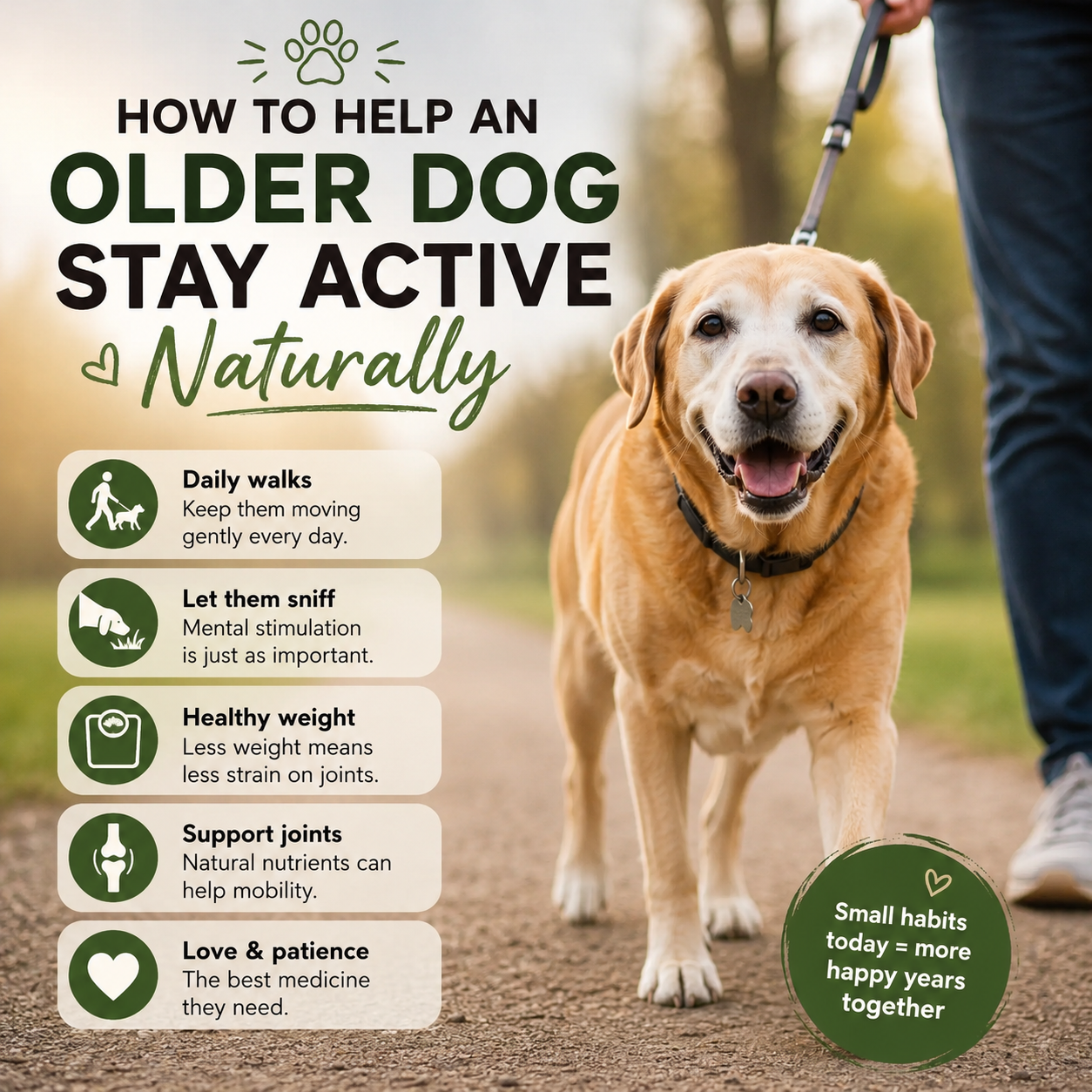
1. Don’t Stop Going for Walks
This is probably the biggest mistake owners make.
They notice their dog slowing down and assume they should rest all the time.
In reality, most senior dogs need the exact opposite.
Of course, they’re probably not up for long mountain hikes or running alongside a bike anymore.
But daily walks are still incredibly important.
Three 15 minute walks are usually much better than one long hour.
Short, regular walks help maintain muscle strength, improve circulation, and keep the joints moving.
2. Let Your Dog Sniff
Some people rush their dogs through every walk.
“Come on.”
“Not there.”
“Let’s go.”
For an older dog, sniffing isn’t wasting time.
It’s mental exercise.
Their brain is working, they’re exploring the world, and they’re staying mentally engaged.
Sometimes, ten minutes of relaxed sniffing is more tiring than thirty minutes of fast walking.
3. Keep Your Dog at a Healthy Weight
Every extra pound puts more pressure on the joints.
A balanced diet plays a huge role in maintaining a healthy weight as dogs age.
Imagine carrying a backpack that’s 10 or 20 pounds heavier every single day.
Sooner or later, your knees would start hurting.
The same thing happens to dogs.
If your dog loses a little weight under your veterinarian’s guidance, you’ll often notice they’re moving more comfortably within just a few weeks.
4. Don’t Let the Muscles Disappear
Muscles are the body’s natural support system for the joints.
The more muscle a dog loses, the harder it becomes to move comfortably.
You don’t need complicated exercises.
Walking on gentle hills, strolling on grass, or slowly climbing a few steps (if your veterinarian says it’s safe) can all help maintain muscle strength.
5. Pay Attention to the Flooring
Slippery floors can become a serious problem.
Older dogs often slip even if they seem perfectly healthy.
Every slip puts extra stress on the joints and increases the risk of injury.
Rugs, runners, or non slip mats can make moving around the house much safer and easier.
6. Give Your Dog a Comfortable Place to Rest
An active dog also needs quality rest.
A supportive bed can reduce pressure on the joints while your dog sleeps.
Many owners notice that their dog gets up much more easily after sleeping on a thicker, more comfortable bed.
7. Natural Supplements May Help
They can’t stop aging.
But for many dogs, they may help support joint health and make movement more comfortable.
Some of the most commonly used supplements include:
- Glucosamine
- Chondroitin
- MSM
- Omega 3 fatty acids
- Green lipped mussel extract
- Turmeric (in dog safe formulas)
If you’re interested in learning more about natural ways to support your dog’s joints, check out my complete guide to recognizing early joint problems.
Choose high quality products, and if your dog already has health problems, talk to your veterinarian before adding any supplement.
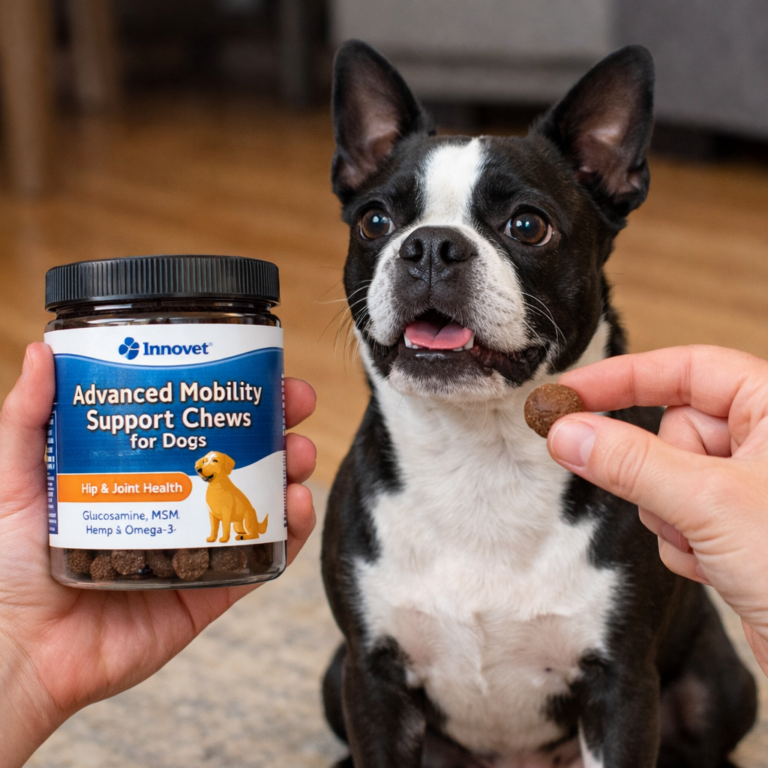
If you’re looking for a high quality joint supplement, choose one that contains proven ingredients like glucosamine, chondroitin, MSM, and omega 3 fatty acids. I always recommend choosing products from trusted manufacturers with transparent ingredient lists.
See the joint supplement I recommend for senior dogs.
8. Watch for Small Changes
Dogs rarely show pain the way people expect.
Instead of crying or whining, they often show subtle signs.
For example:
- Getting up more slowly
- Hesitating before jumping
- Wanting shorter walks than before
- Avoiding stairs
- Playing less
- Lying down more often
The sooner you notice these changes, the better your chances of helping your dog stay active.
Don’t wait until they’re limping badly.
Does Getting Older Mean the End of an Active Life?
Absolutely not.
I’ve worked with many dogs who were 10, 12, and even 14 years old that started enjoying their walks again after their owners changed just a few daily habits.
Of course, no senior dog will have the energy of a puppy.
But that’s not the goal.
The goal isn’t to make them the dog they were ten years ago.
The goal is for them to keep enjoying life.
To get excited about going for a walk.
To wag their tail when you pick up the leash.
To get out of bed without pain.
And to stay a happy member of your family for as long as possible.
Frequently Asked Questions
How do I know if my senior dog isn’t active enough?
If your dog spends most of the day lying down, gets tired quickly, or starts refusing walks more often, it’s time to talk to your veterinarian and adjust their daily routine.
How much exercise does an older dog need?
It depends on their breed, overall health, and fitness level. In most cases, several shorter walks throughout the day are better than one very long walk.
Is it normal for an older dog to walk more slowly?
Yes. Slower walking is a normal part of aging. However, sudden slowing down, limping, or refusing to move should never be ignored.
Can supplements really help my dog’s joints?
For many dogs, supplements can support joint health and improve comfort, but they aren’t a replacement for veterinary care and they can’t cure serious joint diseases.
When should I take my senior dog to the veterinarian?
If your dog has trouble getting up, limps, refuses walks, shows signs of pain, or suddenly changes their behavior, it’s best to schedule a veterinary examination.
You may also find it helpful to learn the early warning signs of joint discomfort before limping becomes severe.
Veterinary note: This article is intended for general informational and educational purposes only and should not replace professional veterinary advice, diagnosis, or treatment. If you are concerned about your dog’s health, notice new or worsening symptoms, or suspect an emergency, please contact your veterinarian promptly.