How Often Should You Bathe a Small Dog? A Practical Guide by Coat Type
If you’re wondering how often to bathe a small dog, you probably know this scene: your dog is clean and smells lovely in the morning, but after a short walk their paws are muddy, something is stuck to their belly, or they have rolled in exactly the wrong place.
There is no single bathing schedule that works for every small dog. How often your dog needs a bath depends on their coat, skin, lifestyle, and how dirty they get. As a general guide, many dogs do well with a bath every few weeks, or whenever they get genuinely dirty. Short coated dogs can often go longer between baths, while dogs whose hair keeps growing usually need a more regular bathing and grooming routine.
Keeping your dog’s coat brushed and free of tangles matters more than putting bath time on the calendar.
How often should you bathe a small dog, based on coat type?
These time frames are a starting point, not a strict rule. If your dog does not smell bad, their skin looks healthy, and their coat is clean, they may not need a bath yet.
| Coat type | General bathing schedule | What to do between baths |
|---|---|---|
| Short and smooth | Every 6 to 12 weeks, or as needed | Wipe the paws and belly; brush now and then |
| Long and silky | About every 4 to 8 weeks | Comb regularly to prevent tangles |
| Curly or continuously growing coat | About every 4 to 8 weeks, often alongside regular haircuts | Brush often and check for tangles |
| Thick double coat | Less often, as needed | Brush the undercoat thoroughly, especially during shedding season |
| Coarse, wiry coat | About every 6 to 8 weeks, or according to your grooming routine | Brush and maintain the coat based on its trim |
| Hairless | A special routine, sometimes more often | Care for the skin and ask your vet or groomer about a schedule |
VCA Animal Hospitals says that dogs who do not shed and have no health problems often need a bath about every six to eight weeks. Bathing can also help dogs with a thick undercoat during seasonal shedding. The American Kennel Club (AKC) notes that short coated dogs generally need fewer baths, while thick double coats need more brushing, but not necessarily more frequent washing. VCA: Grooming and Coat Care for Your Dog · AKC: How Often Should You Bathe Your Dog?
Short, smooth coats
Small dogs such as short haired Chihuahuas and Miniature Pinschers are often easy to keep clean between baths. If your dog mostly stays indoors and does not roll in the mud, a bath every six to twelve weeks may be enough. You may only need to bathe them when they get dirty or start to smell.
After an ordinary walk, wiping your dog’s paws, belly, and lower legs with a damp cloth is often enough. You do not need to wash their whole body every time their coat picks up a little dust.
Long, silky coats
Yorkshire Terriers, Maltese, and Shih Tzus have coats that tangle easily, especially behind the ears, under the legs, and around the paws. These dogs often have regular haircuts, so bathing every four to eight weeks may fit their grooming routine. A dog with a longer coat or one who gets dirty often may need baths closer together. A dog with a neatly maintained shorter trim may need them less often.
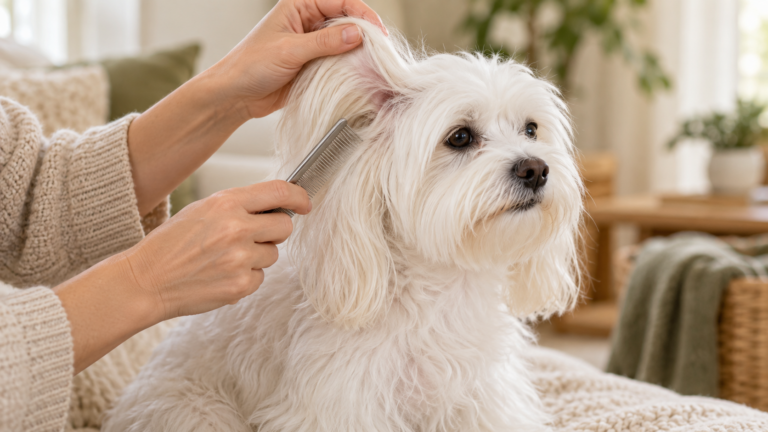
Always brush the coat carefully before bathing. Tangles can tighten when they get wet, making them harder to remove afterward. If you find a tight mat, do not pull at it with a brush or cut close to the skin with scissors. Ask an experienced groomer to take a look.
Curly coats and coats that keep growing
Miniature Poodles, Bichons, and similar dogs often have haircuts at regular intervals, and bathing usually fits into that schedule. Every four to eight weeks can be a useful starting point, along with frequent brushing at home.
With this type of coat, it is not enough to wait until your dog smells like shampoo. Small tangles can form close to the skin and go unnoticed until they become larger mats. Run your fingers and a comb over the areas behind the ears, under the collar, around the legs, and beneath the belly regularly.
Thick double coats
Some small dogs, such as Pomeranians and long haired Chihuahuas, have a thick undercoat. These coats need careful brushing, especially during shedding season, but they do not necessarily need frequent baths. Washing too often can dry out the skin and strip away the coat’s natural oils.
Pay special attention to drying a double coat completely. The fur may feel dry on the outside while still being damp underneath. If you are unsure how to dry it safely, ask a groomer who knows your dog’s coat type.
Coarse, wiry coats
For Miniature Schnauzers and some small terriers, bathing frequency often depends on how the coat is maintained and trimmed. A bath about every six to eight weeks can be a reasonable starting point, but the right schedule varies from dog to dog. Regular brushing helps remove dirt and loose hair, and your groomer can suggest a routine based on your dog’s haircut and coat condition.
Hairless dogs
Hairless does not mean there is no grooming to do. Their skin is exposed to dirt and the elements, but caring for it is different from caring for a dog with fur. The AKC shares one groomer’s recommendation to bathe hairless dogs weekly, but that schedule should not automatically be applied to every hairless dog. Choose a gentle product made for dogs, and ask your vet or a groomer familiar with the breed what is right for your dog. AKC: How to Groom a Hairless Dog
How can you tell when it is bath time?
You do not have to wait for a certain day of the month. Look at your dog and give them a sniff:
- Their coat is dusty, greasy, or smells unpleasant: It is probably time for a bath.
- They have rolled in mud or something smelly: Wash the dirty area, or give them a bath if a larger part of their coat is dirty.
- Only their paws or belly are dirty: Try warm water and a cloth first. You may not need to shampoo their whole body.
- Their skin is red, they are scratching a lot, or the smell comes back quickly: Do not just shorten the time between baths. Ask your vet for advice.
If your dog has a skin condition or allergies, your vet may recommend a specific shampoo and bathing schedule. Follow their instructions, since a medicated bath is different from an ordinary bath.
How to make bath time safer and easier
A small dog may be easier to lift, but they can still be scared of a slippery tub, a strong spray, or a sudden noise. Get the towel, brush, and shampoo ready before you put your dog in the water.
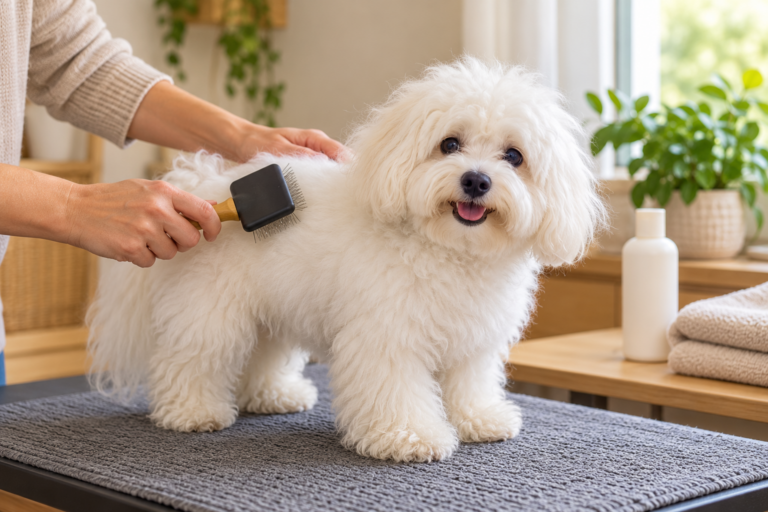
- Brush your dog before the bath. Remove loose hair and gently comb out small tangles.
- Put down a non slip mat. Your dog will feel more secure if their paws do not slide around.
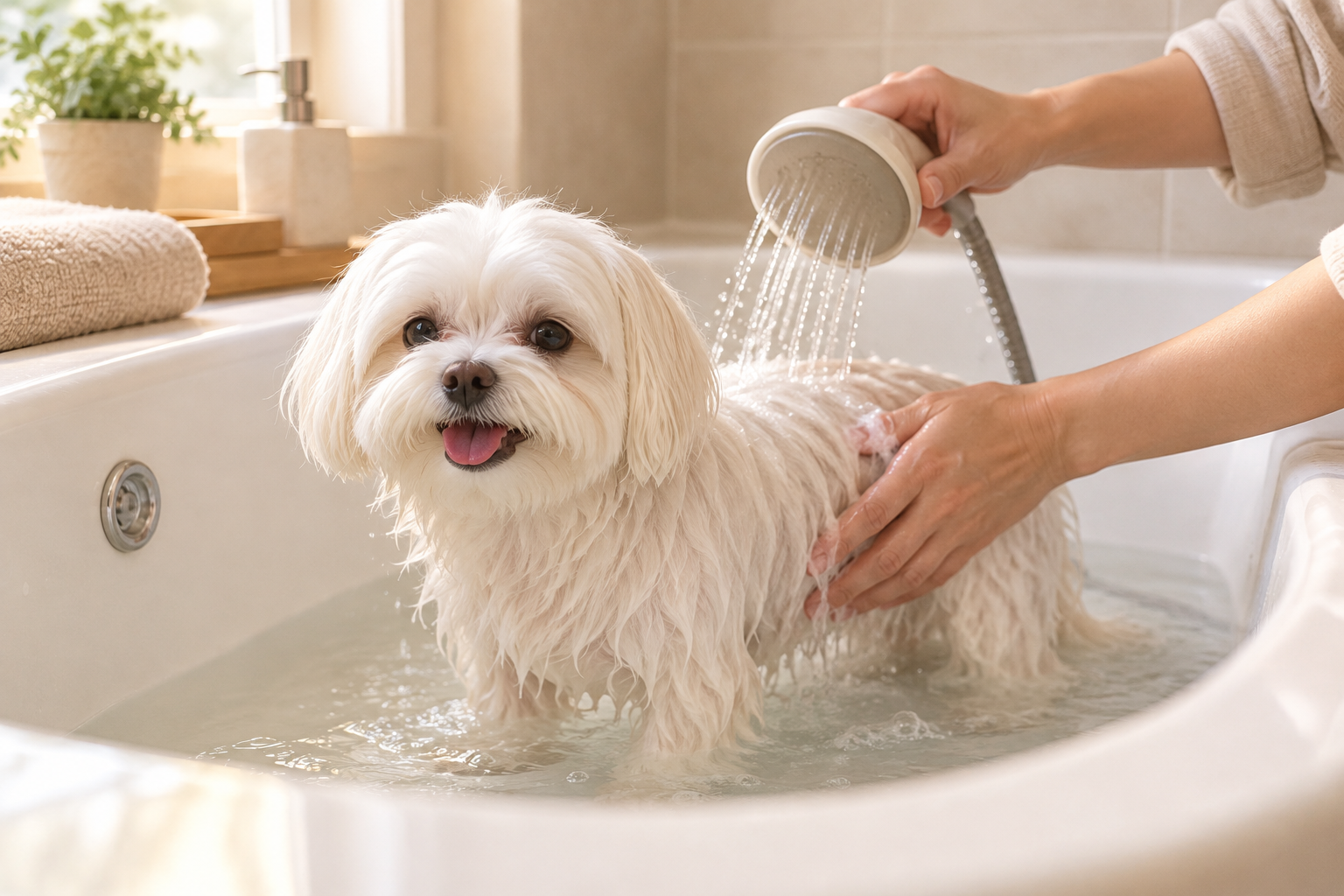
- Use lukewarm water and dog shampoo. Shampoo made for people, including baby shampoo, may be too harsh for a dog’s skin.
- Wet your dog gradually. Do not point the spray directly at their face. Keep water and shampoo out of their eyes and ears.
- Rinse the coat well. Shampoo residue can irritate the skin, so take your time rinsing.
- Dry your dog thoroughly. Use a towel to remove as much water as possible. With a thick or long coat, check that it is dry down to the skin. If you use a hair dryer, keep the air gentle and lukewarm, and hold the dryer far enough away from the skin.
- Reward calm behavior. Praise and a treat during and after the bath can help your dog feel more relaxed next time.
If your dog finds baths difficult, take it one step at a time. First reward them for coming into the bathroom, then for standing on the mat, and only then introduce the water. You do not have to finish the whole bath in one go if your dog is too frightened.
In my experience with small dogs, a brush is often more useful than another bath
In my experience working with small dogs, owners often remember bathing as the main part of grooming, while brushing gets put off until “tomorrow.” With long or curly coats, that can lead to tangles and make bath time much harder for both the dog and the owner.
A short, regular grooming routine can make a big difference. A few minutes of brushing and a quick coat check after a walk may be more useful than another bath. If your dog is clean and their skin looks healthy, you do not have to wash them just because a few weeks have passed.
Common mistakes when bathing a small dog
- Bathing by the calendar, regardless of the coat’s condition. A schedule is a guide, not a requirement.
- Washing too often because of a mild smell. Frequent bathing can dry out the skin and coat.
- Bathing a dog with tangles. Wet tangles can tighten even more.
- Using human shampoo. Choose a product made for dogs. If your dog has sensitive skin, ask your vet what to use.
- Not rinsing or drying thoroughly. Product residue and damp fur can cause problems, especially with a thick coat.
- Ignoring a smell that keeps coming back. If the unpleasant smell returns often, especially along with itching or redness, talk to your vet.
Frequently asked questions
Most dogs do not need a weekly bath. Some dogs with specific skin care needs may need a different schedule, but more frequent bathing should be discussed with your vet or groomer.
You can rinse light dirt from your dog’s paws or belly. A dog shampoo may be needed for a greasy coat or a stronger smell, but you do not have to wash their whole body every time.
If the smell comes back quickly, especially if your dog is also itchy, red, or flaky, do not just bathe them more often. Talk to your vet to find out what may be causing it.
Bathing may help remove some loose hair, but brushing is an important part of regular grooming, especially for dogs with an undercoat. A bath should not replace brushing.
A quick reminder
Bathe your dog when they are dirty or smell unpleasant, and adjust the schedule to their coat, skin, and lifestyle. Short coated dogs often need fewer baths. Long and curly coats usually need more regular care, while thick undercoats need plenty of brushing. If your dog develops itching, redness, or a smell that quickly returns, ask your vet for advice.