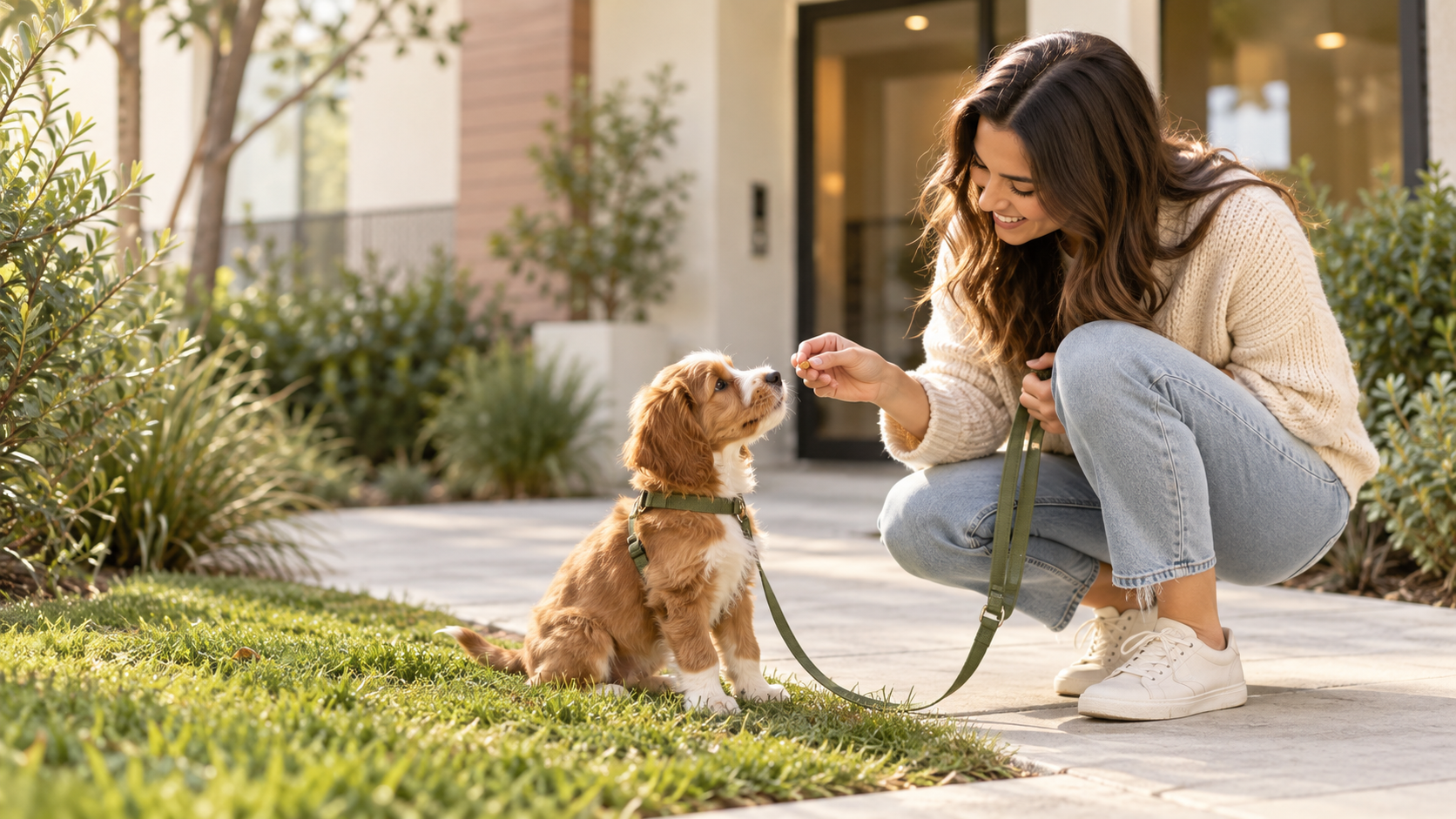
How to Potty Train a Puppy in an Apartment: A Practical Guide
You take your puppy outside and wait by the apartment building while they sniff every leaf and watch people walk by. Then, as soon as you get back inside, they pee next to the rug. If this sounds familiar, you are not alone. Apartment living can make potty training more challenging because your puppy has to get to the door, make it through the hallway, wait for the elevator, or go down the stairs. For a very young puppy, that may be too much time.
The good news is that your puppy can learn where to go potty even when you live in an apartment. They need a clear potty spot, frequent trips, close supervision, and a reward as soon as they go in the right place. Do not expect your puppy to find the door and patiently wait for you. At first, it is your job to notice when it is time to go out.
Is It Normal for a Puppy to Have Accidents in an Apartment?
Yes. A puppy who is still learning does not yet have reliable bladder and bowel control. They may get sleepy, excited during play, or drink some water, and then suddenly need to go. In an apartment building, getting to the potty spot also takes longer than it would in a home with a yard.
Accidents are expected while your puppy is learning and you are adjusting the schedule. Still, do not punish them for it. Yelling or pushing their nose toward the mess does not explain where they should go. It may only scare them or teach them to hide when they need to go potty. Instead, clean the area and think about what you can change next time: heading out sooner, taking more frequent potty breaks, or supervising more closely. The American Kennel Club also recommends calmly cleaning up accidents and rewarding the behavior you want.
First, Choose: Outside or a Potty Pad?
Before you begin, decide where you want your puppy to go potty. If you want them to go outside, make the outdoor spot their main potty area. If you use a potty pad because of your puppy’s age, your veterinarian’s advice, or difficulty getting outside quickly, choose one permanent spot for it in your apartment.
Changing the rules all the time, with a pad in the bathroom today, newspaper in the hallway tomorrow, and the balcony the next day, can confuse your puppy. They need to learn which spot and surface you expect them to use.
If your puppy is very young or has not finished their vaccinations, ask your veterinarian where it is safe to take them in your area. The risk depends on your location and local conditions, so follow your veterinarian’s advice rather than a general rule you read online.
If You Want Your Puppy to Go Outside
Choose a quiet spot and use it every time. Take your puppy through the same exit and, when possible, along the same route. At first, carrying them through the hallway or elevator may help if they often need to go before you reach the building exit.
Once you get to the potty spot, give your puppy a few minutes to go. When they finish, praise them right away and offer a small treat. Give the reward while you are still at the right spot so your puppy can more easily connect what they did with what you are praising them for. The AKC’s puppy potty training guide recommends rewarding puppies promptly when they go in the right place.
If You Are Using a Potty Pad for Now
Put the pad in a quiet, easy to reach spot, away from food and water bowls and your puppy’s sleeping area. Take your puppy to it after they wake up, eat, play, or nap. Bring them over when you notice them sniffing the floor or walking in circles, too. Praise them as soon as they use the pad.
If you plan to switch to outdoor potty breaks later, make the transition gradually and consistently. Do not expect your puppy to figure out on their own that the same rules now apply to the grass outside your building. Potty pads can be a useful tool, but it helps to have a plan for how you will use them and when you will teach your puppy to go in the place you want them to use long term. The AKC’s guide to indoor potty training explains how pads can fit into a training routine.
How to Create a Potty Routine in an Apartment
Take your puppy to their potty spot:
- As soon as they wake up
- After meals and after drinking a larger amount of water
- After playtime or excitement
- After a nap
- Before you leave them alone
- Right before bedtime
- When they start sniffing the floor, circling, stopping in the middle of play, or wandering off to a corner
Young puppies may need very frequent potty breaks, sometimes every 30 to 60 minutes while they are awake. This is only a starting point, not a schedule that works for every puppy. Age, size, activity, and individual needs all affect how often your puppy has to go. If you notice a sign that they need to go, do not wait for a certain number of minutes to pass. The AKC and VCA Animal Hospitals recommend taking puppies out regularly, including after waking, eating, and playing.
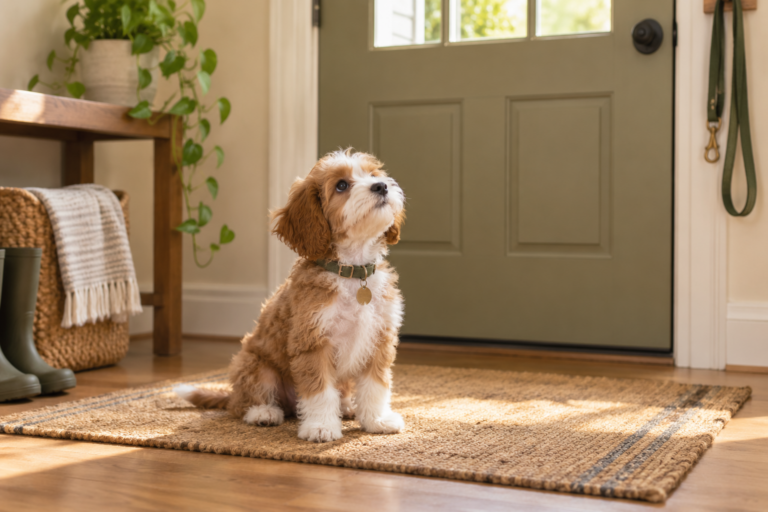
In an apartment building, remember to account for the time it takes to get outside. If your puppy is small and often cannot make it to the door in time, keep the leash, waste bags, and treats ready. When you notice the signs, pick them up or head for the exit right away. Do not stop to look for your keys and jacket first.
A simple rule to start with: take your puppy out one extra time rather than waiting until they cannot hold it any longer.
A Simple Daily Potty Schedule
Adjust this example to your puppy’s wake up time, meals, and needs:
| When | What to do |
|---|---|
| Right after waking up | Take your puppy to their potty spot |
| After breakfast | Give them another chance to go |
| After playtime or a nap | Go outside right away or take them to the pad |
| Throughout the day while they are awake | Offer frequent potty breaks based on their age and behavior |
| After their evening meal and playtime | Take them to their potty spot again |
| Right before bedtime | Take them out for one last quiet potty break |
Download the free puppy potty training PDF and keep the key steps handy while your puppy learns.
If your puppy does not go outside, come back in, but keep them close and supervise them carefully. Try again after a short time. If you let them wander into another room right away, they may find a quiet corner and go there.
For a more detailed schedule by age, read Puppy Potty Training Schedule by Age.
How to Reward Your Puppy
As soon as your puppy goes in the right place:
- Wait until they finish.
- Praise them calmly.
- Offer a small treat right away.
- Continue your walk or playtime afterward.
The order matters. If you go straight back inside as soon as your puppy goes potty, they may start holding it because they want to stay outside. Praise them, give them a treat, and let them sniff around for a little while before you head home.
Use the same short word or phrase, such as “go potty,” when you reach their potty spot. Over time, your puppy may learn to connect the cue with what you want them to do.
What Should You Do After an Accident?
If you catch your puppy in the act, interrupt them with a gentle sound, without yelling, and take them to the designated potty spot right away. If they finish there, praise them.
If you find the mess later, scolding will not help. Your puppy will not connect the punishment with something that happened earlier. Clean the area thoroughly with a pet safe product made to remove pet odors. Lingering smells may encourage your puppy to use the same spot again.
Then ask yourself what may have led to the accident:
- Did your puppy wait too long for the next potty break?
- Had they just woken up or finished playing?
- Were they left unsupervised in another room?
- Were they distracted outside and did not go?
- Had the potty pad been moved or become hard to reach?
If accidents keep happening, shorten the time between potty breaks and limit your puppy’s access to the whole apartment while they are still learning. Keep them in the same room with you or use a safe, small play area. A crate can be part of the routine if your puppy is comfortable with it, but it should not replace regular potty breaks and supervision.
Common Apartment Potty Training Mistakes
Waiting for Your Puppy to Ask to Go Out
A young puppy may not know how to tell you they need to go. Even if they learn to walk toward the door, they may not be able to wait while you get ready and make your way out of the building.
Waiting Too Long Between Potty Breaks
If accidents happen at similar intervals, your schedule probably needs to be adjusted. Do not wait for your puppy to “hold it a little longer.” Offer potty breaks at intervals they can manage successfully.
Playing Before Your Puppy Goes Potty
There are lots of interesting smells and things to see outside. Your puppy may forget why you went out. First, give them a chance to go in their familiar potty spot. Then continue the walk.
Punishing Your Puppy for an Accident
Punishment does not teach your puppy where to go. Calmly clean the spot, adjust the schedule, and help your puppy succeed next time.
Switching Between Potty Pads and Outdoor Trips Without a Clear Plan
If you sometimes expect your puppy to use a pad and other times expect them to go outside, they may not understand what has changed. Choose the main potty spot and stay consistent while they are learning.
When Should Accidents Be Discussed With a Veterinarian?
Accidents can happen during training, but contact your veterinarian if your puppy often tries to pee, strains or seems to be in pain, has blood in their urine, suddenly drinks much more water, or starts having frequent accidents again after being potty trained. A change in potty habits can sometimes have a medical cause, so it is important to have your veterinarian assess the situation. See VCA Animal Hospitals’ guide to house training for more information.
Frequently Asked Questions
It depends on your puppy’s age, size, and activity level. A very young puppy may need a potty break every 30 to 60 minutes while awake, as well as after sleeping, eating, drinking, and playing. Watch your puppy and adjust the routine to their needs.
A potty pad can be helpful when your puppy is very young, cannot safely get outside or reach the outdoor potty spot quickly enough, or your veterinarian has recommended using one. Choose one permanent spot and keep it there while your puppy is learning the routine.
Your puppy may have been distracted outside, may not have relaxed enough to go, or may not have finished. Wait a few minutes after they pee the first time and give them another chance. If you come back inside without success, keep them close and try again soon. You can also read Why Does My Puppy Pee Inside After Going Outside?.
There is no single timeline that works for every puppy. Progress depends on age, previous habits, routine, and consistency. Look for accidents to become less frequent over time and for your puppy to start recognizing the routine. One bad day does not mean all your hard work has been wasted.
Final Thoughts
Living in an apartment means you have to plan the trip to your puppy’s potty spot, but your puppy can still learn where to go. Take them out often, especially after waking, eating, and playing. Reward them right away when they succeed, and calmly clean up accidents.
At first, you may go down the stairs or wait for the elevator more often than you imagined. It can be tiring, but your puppy is not trying to make your life harder. They are still learning the rules of their new home.
A consistent routine today can mean fewer accidents tomorrow. Save this guide so you can refer to it while your puppy is learning.
For more help, read How to Teach Your Puppy Where to Go Potty Without Stress, Punishments, or Mess or take a look at my practical guide, Potty Training Your Puppy: Teach Them Where (and When) to Go.