
WHY DOES YOUR DOG STILL ACT HUNGRY AFTER EATING? (THE TRUTH MOST OWNERS MISS)
You already gave your dog breakfast.
The bowl is empty.
Your dog finished every bite in less than a minute.
And then…
Five minutes later, he’s standing next to the kitchen, staring at you like he hasn’t eaten in three days.
Sound familiar?
Most owners immediately think:
“Poor thing. He must still be hungry.”
So they add more food.
Then another treat.
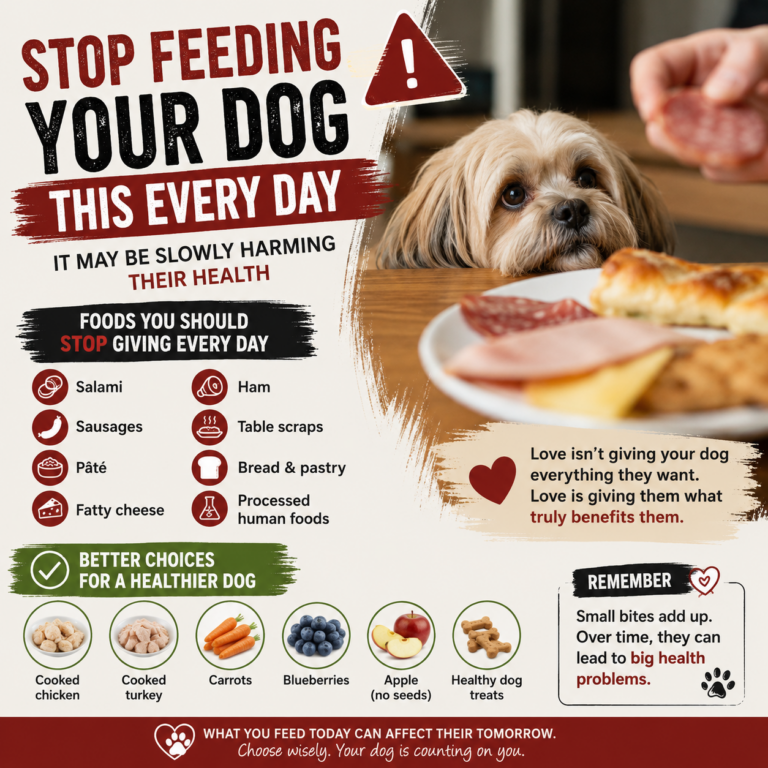
Then a piece of cheese.
Then a little meat from the table.
And that’s where a problem begins that most people never recognize.
Why does my dog act hungry after eating?
A dog that acts hungry after eating is not always truly hungry. Many dogs learn that begging leads to extra food, treats, or attention. However, sudden increases in appetite can sometimes indicate a medical condition and should be discussed with a veterinarian.
Is my dog hungry or just begging?
If your dog only asks for food when people are eating or when food is visible, he may be begging rather than experiencing true hunger. Dogs quickly learn behaviors that bring rewards.
Can poor quality food make dogs feel hungry?
Yes. Foods with lower quality ingredients and less protein may leave some dogs feeling less satisfied than diets rich in high quality protein and balanced nutrition.
THE TRUTH IS THAT A DOG ASKING FOR FOOD ISN’T ALWAYS HUNGRY
In fact, very often, they’re not hungry at all.
They’ve simply learned that this strategy works.
Many owners accidentally reinforce this behavior without realizing it. You can read more about that in my article about why owners often reward bad behavior without noticing.
DOGS ARE EXPERTS AT STUDYING PEOPLE
Dogs study us far better than we study them.
They know when we’re happy.
They know when we’re sad.
They know when we’re about to give in.
And they quickly learn which behaviors bring rewards.
If a dog once got extra food because of a sad puppy face…
He’ll try it again.
If it worked ten times…
He’ll try it an eleventh time.
That has nothing to do with hunger.
It has everything to do with experience.
SOME DOG BREEDS ARE NATURALLY FOOD OBSESSED
Over the years of working with dogs, I’ve noticed something interesting.
Some dogs simply love food more than others.
Labradors are probably the most famous example.
But they’re not the only ones.
Beagles, Cocker Spaniels, Pugs, and many other breeds often act as if they could eat all day long.
That doesn’t mean they need more food.
It simply means food is a stronger motivator for them.
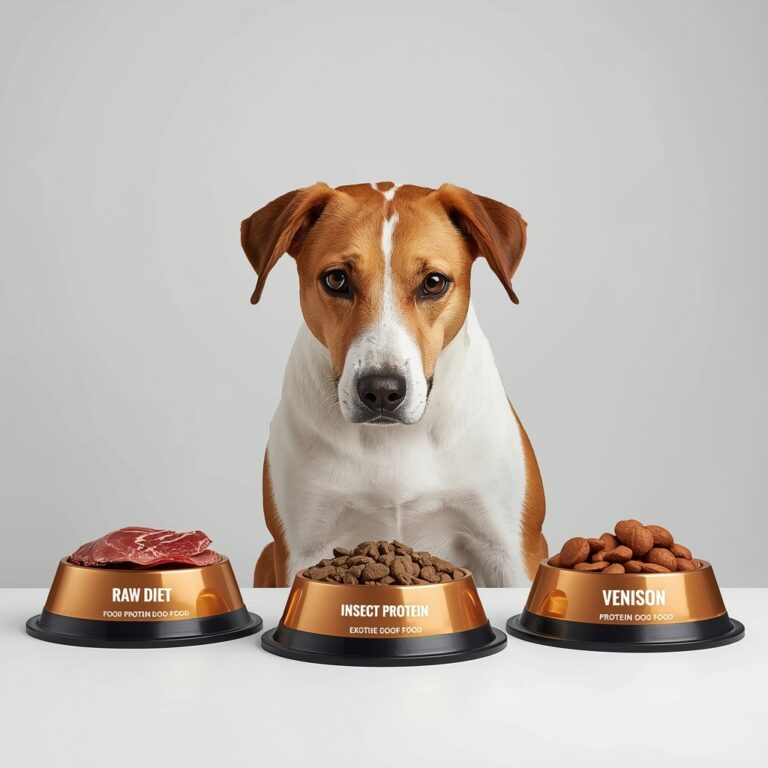
MAYBE THE FOOD ISN’T SATISFYING ENOUGH
This is the part many owners overlook.
Not all dog foods are created equal.
Two meals can contain the same number of calories.
But one may keep a dog feeling full much longer.
Foods that contain more high quality protein and fewer empty carbohydrates usually provide better satiety.
If you’re wondering whether your dog’s food could be affecting energy levels and overall health, this guide may help.
If your dog eats and still seems hungry all the time, it’s worth taking a closer look at the ingredient list.
Sometimes the problem isn’t the amount of food.
The problem is the quality.
YOUR DOG MAY BE LOOKING FOR ATTENTION, NOT FOOD
This happens much more often than people realize.
Your dog comes over to you.
You give him a treat.
He gets interaction.
He gets attention.
He gets a response.
And he learns:
“When I ask for food, they pay attention to me.”
The next time, he may not be asking for food at all.
He may be asking for you.
He’s simply using food as the tool.
Sometimes what looks like hunger is actually a request for interaction, connection, or reassurance.
WHEN CONSTANT HUNGER COULD BE A HEALTH PROBLEM
This is where you should be careful.
If your dog’s appetite has suddenly increased and you also notice:
• Weight loss
• Increased thirst
• More frequent urination
• Fatigue
• Changes in behavior
It’s time to talk to your veterinarian.
Certain medical conditions can cause an unusually increased appetite.
That’s why you should never automatically assume your dog is simply spoiled.
The same learning process explains why many dogs seem to ignore commands or repeat unwanted behaviors.
HOW CAN YOU TELL IF YOUR DOG IS REALLY HUNGRY?
Ask yourself one simple question:
Would your dog behave the same way if food wasn’t visible?
If your dog eats, then goes to sleep, plays, or relaxes, he’s probably full.
If he constantly circles around the kitchen only when you’re there or when food is nearby, there’s a good chance he’s looking for an opportunity, not another meal.
Big difference.
THE TRUTH MOST DOG OWNERS NEVER REALIZE
Your dog isn’t thinking:
“I’m starving.”
Very often, he’s thinking:
“It worked last time.”
And that’s exactly why so many dogs seem hungry even when they’re physically full.
They’re not trying to trick you.
They’re not being naughty.
They’re simply doing what life has taught them gets results.
Dogs learn from consequences every single day. What we reward is often what we get more of.
And dogs are incredibly good students.
Sometimes even better than their owners.
Written by Nataša Miranović