
YOUR DOG IS NOT STUBBORN – YOU ARE CONFUSING HIM
Before you call your dog stubborn, ask yourself one important question: Does your dog really understand what you want?
Your dog ignores you when you call him.
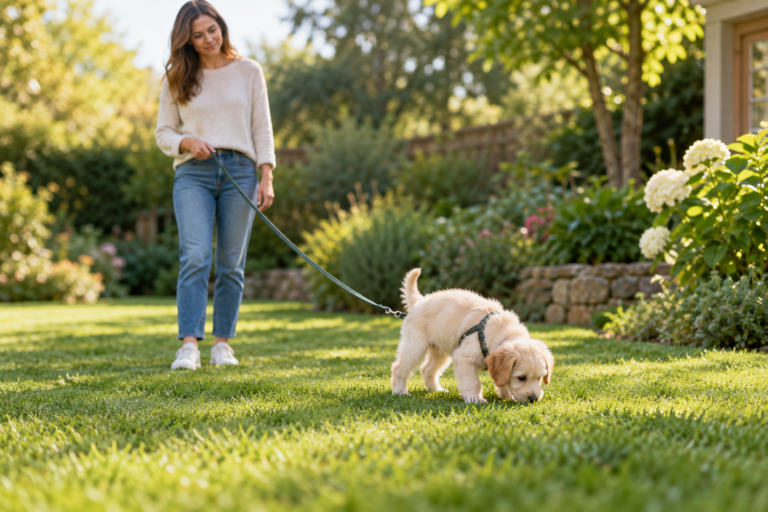
He refuses to walk on a leash.
He sits down when you want him to move, pulls in the opposite direction, or suddenly seems to forget a command he knew yesterday.
And what do many owners say?
“My dog is so stubborn!”
But what if stubbornness has nothing to do with it?
What if your dog is confused, frightened, distracted, or simply hasn’t learned what you’re expecting him to do?
After more than 15 years of hands-on experience with dogs, I’ve seen how easily people mistake confusion for disobedience.
And sometimes, that misunderstanding creates a much bigger problem than the original behavior.
Your dog isn’t necessarily trying to challenge you. He may be trying to understand you.
Is Your Dog Really Stubborn, or Does He Just Not Understand?
Dogs don’t come into our homes knowing human rules.
They don’t automatically understand that they shouldn’t jump on visitors, pull on a leash, bark at the door, or run toward something exciting.
They learn through experience, repetition, consequences, and the signals we give them.
The problem begins when we assume they already know something we haven’t properly taught.
Think about it.
You teach your dog to sit in your quiet living room. He learns quickly, and you’re pleased with his progress.
The next day, you take him to a busy park.
You say “sit.”
He looks at another dog, sniffs the grass, and ignores you.
You repeat the command.
Nothing.
Now you’re frustrated because you believe he knows exactly what you’re asking.
But does he?
Your dog may understand “sit” perfectly in your living room without yet understanding how to respond in a completely different environment.
Learning a command in one place doesn’t mean a dog can automatically perform it everywhere.
If your dog listens at home but seems to ignore you outdoors, read my guide on why your dog ignores you outside and how distractions affect training.
7 Reasons Your Dog Seems Stubborn
Before blaming your dog, consider what might actually be happening.
1. You’re Sending Mixed Messages
One day, your dog is allowed on the sofa.
The next day, you tell him to get down.
Sometimes you laugh when he jumps up to greet you. Other times, you scold him for doing exactly the same thing.
Your dog doesn’t understand why the rules keep changing.
He simply learns that certain behaviors sometimes work and sometimes don’t.
Consistency doesn’t mean being strict or harsh.
It means making expectations predictable.
If you don’t want your dog jumping on visitors, teach him an alternative behavior, such as keeping four paws on the floor, and reward it consistently.
2. You Expect Results Without Teaching the Behavior
This is one of the most common mistakes I see.
People put a leash on a puppy and expect him to walk calmly beside them.
They call a dog who has never practiced recall around distractions and expect him to come immediately.
They tell an excited young dog to stay still without ever gradually teaching him how.
When the dog doesn’t respond, they call him stubborn.
But you cannot expect a dog to perform a skill he hasn’t learned.
Every new behavior needs to be introduced, practiced, and gradually made more challenging.
3. Your Dog Is Afraid
Fear is often mistaken for stubbornness.
A frightened dog may freeze, refuse to move, pull away, tremble, or try to escape.
Some dogs become unusually quiet. Others bark, growl, or react defensively.
These are not necessarily signs of a dog trying to control the situation.
They may be signs that the dog feels unsafe.
And forcing a frightened dog to obey can make the problem worse.
I learned just how damaging this misunderstanding can be while working with a little Pomeranian.
My Experience: The Pomeranian Everyone Called Stubborn
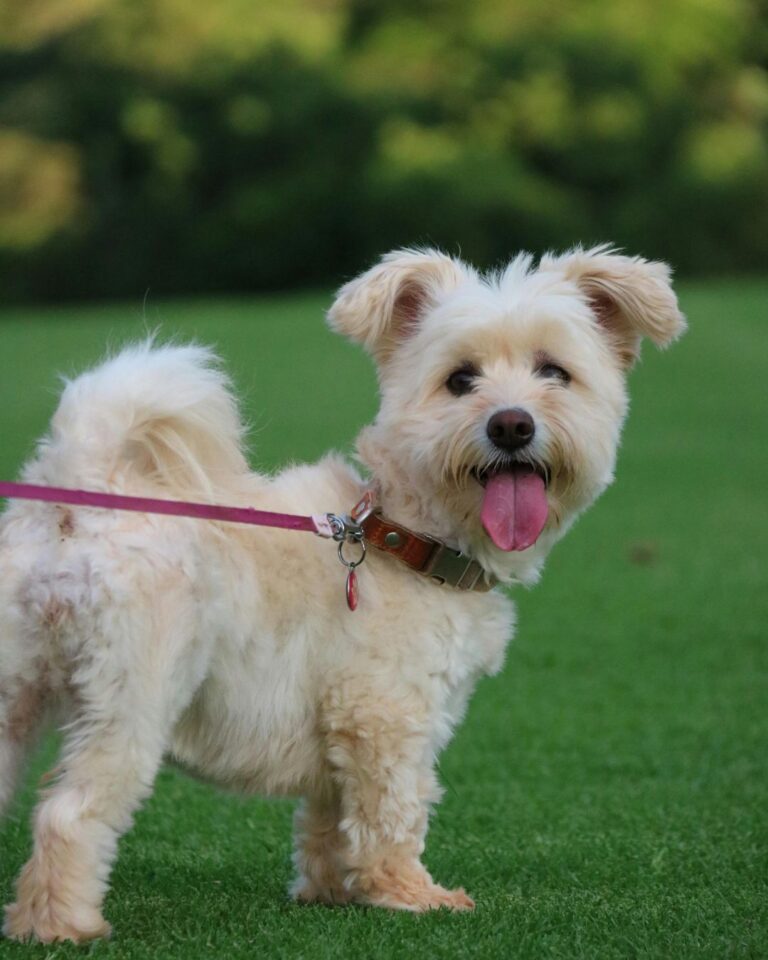
I once worked with a female Pomeranian who was cheerful, playful, and full of energy.
She loved interacting with people and behaved like a happy, lively little dog.
But the moment she saw a leash, everything changed.
She would suddenly freeze, sit down, and begin trembling.
It was heartbreaking to watch such a playful dog become so frightened by something as ordinary as a leash.
Her owner was convinced she was stubborn.
He believed she was deliberately refusing to cooperate.
When we talked about her behavior, I discovered what had happened.
The owner and his family expected her to walk nicely beside them as soon as they attached the leash.
Nobody had gradually introduced her to it.
Nobody had taught her what she was supposed to do.
When she hesitated or refused to move, they pulled her forward and scolded her.
And with every unpleasant experience, her fear grew stronger.
Eventually, even seeing someone approach with the leash was enough to make her tense.
She wasn’t being stubborn. She had learned to associate the leash with fear.
I knew that pulling her forward or forcing her to walk would only reinforce that association.
So we started again, slowly.
First, I helped her become comfortable with the leash without expecting her to walk anywhere.
Then, when she was ready, I let her move with a short, lightweight leash attached, in a safe environment where she was supervised and couldn’t become tangled.
There was no pressure to follow me.
No pulling.
No scolding.
After approximately 15 days of gradual practice, she began walking with the short leash trailing behind her.
That was an important step, but we didn’t rush.
Only after she became completely comfortable did I begin gently guiding her while walking.
I rewarded every small step she took in the direction we were practicing.
Little by little, she learned that walking on a leash could be safe and enjoyable.
Today, that same Pomeranian happily goes on long walks.
She accepts the leash whether it’s attached to her collar or harness.
And the dog her family once considered stubborn?
She simply needed someone to understand why she was afraid.
This experience reminded me of something I have seen many times over the years: when we change the way we teach, we often change the way a dog responds.
Not every fearful dog will progress at the same pace. Some need considerably more time, and severe fear may require help from a qualified, reward-based behavior professional.
4. You’re Repeating Commands Without Giving Your Dog Time to Respond
“Sit. Sit! SIT!”
Sound familiar?
Repeating a command louder and louder doesn’t necessarily make it clearer.
Sometimes, it simply adds pressure.
Other times, your dog learns that the first few repetitions don’t matter.
Instead, give one clear cue that your dog already understands.
Allow a moment for him to respond.
If he doesn’t, consider whether the environment is too distracting or the task is too difficult.
Make the exercise easier rather than immediately raising your voice.
5. You’re Asking Too Much in a Distracting Environment
Your dog might respond beautifully at home but struggle outside.
Why?
Because the outside world is full of interesting smells, moving people, unfamiliar sounds, and other dogs.
For some dogs, those distractions are incredibly difficult to ignore.
Start training in a quiet environment.
Then gradually introduce distractions while keeping the exercises easy enough for your dog to succeed.
A dog who struggles in the park may need more practice, not more punishment.
6. You’re Accidentally Rewarding the Wrong Behavior
Dogs learn from what happens after their behavior.
Imagine your dog jumps up and you immediately begin talking to him, touching him, or pushing him away.
For some dogs, that attention may make jumping more rewarding.
Or perhaps your dog pulls toward an interesting smell, and you follow him.
He learns that pulling can get him where he wants to go.
This doesn’t mean every unwanted behavior is caused by attention.
But it does mean we should look carefully at what our dogs are learning from everyday interactions.
If leash pulling is becoming a habit, read How to Stop Your Dog From Pulling on the Leash.
7. Your Dog May Be Tired, Uncomfortable, or in Pain
Not every training problem is a training problem.
A dog who suddenly refuses to walk, sit, climb stairs, or respond normally may be experiencing physical discomfort.
Pain, illness, fatigue, sensory changes, and age-related difficulties can all affect behavior.
If your dog suddenly begins resisting familiar activities, especially if you notice limping, stiffness, trembling, or other unusual symptoms, arrange a veterinary examination.
Never assume a sudden change in behavior is simply stubbornness.
What to Do When Your Dog Doesn’t Listen
You don’t need to become louder, stricter, or more intimidating.
You need to become clearer.
Here are six practical steps I recommend.
Step 1: Make Sure Your Dog Understands the Cue
Start in a quiet room.
Ask for a simple behavior your dog has already practiced.
Reward him when he responds.
If he struggles, simplify the exercise.
Step 2: Reward the Behavior You Want
Don’t spend all your time reacting to mistakes.
Notice when your dog makes a good choice.
Reward calm behavior, attention, walking beside you, or responding to a cue.
Rewards can include treats, praise, toys, or access to an activity your dog enjoys.
Choose something your dog genuinely values.
Step 3: Keep Training Sessions Short
Five minutes of focused, enjoyable training can be more productive than a long session filled with frustration.
Young puppies and easily distracted dogs may benefit from even shorter sessions.
Finish while your dog is still interested and successful.
Step 4: Practice in Different Environments
Once your dog understands a behavior at home, practice in another quiet location.
Gradually introduce new surroundings and distractions.
Don’t expect perfect performance immediately.
Every environment is another opportunity to help your dog understand what the cue means.
Step 5: Watch Your Dog’s Body Language
Pay attention to what your dog is telling you.
A relaxed dog may move freely, take treats, and show interest in the activity.
A worried dog may freeze, tremble, avoid eye contact, move away, or refuse food.
Body language must always be interpreted in context.
If your dog looks frightened or overwhelmed, stop and make the situation easier.
A dog who feels unsafe needs support, not pressure.
Step 6: Be Patient and Consistent
Choose clear cues.
Use the same cues consistently.
Reward the behaviors you want to see again.
And remember that learning isn’t always a straight line.
Some days your dog will make wonderful progress.
Other days, distractions, excitement, or stress may make familiar tasks more difficult.
That’s normal.
What Owners Often Get Wrong
| Common mistake | What your dog may experience | Better approach |
|---|---|---|
| Repeating commands angrily | Confusion or stress | Give one clear cue and simplify the task |
| Pulling a frightened dog on a leash | Increased fear | Reintroduce the leash gradually with positive experiences |
| Changing household rules | Unpredictable expectations | Agree on consistent rules and cues |
| Training only inside the house | Difficulty responding elsewhere | Practice gradually in different environments |
| Punishing mistakes | Fear or avoidance | Reward desired behavior and prevent repeated mistakes |
| Expecting immediate results | Tasks that are too difficult | Break training into small, achievable steps |
Can Dogs Actually Be Stubborn?
People often use the word “stubborn” to describe a dog who doesn’t do what they want.
But that label doesn’t tell us why the behavior is happening.
Some dogs are highly independent.
Some are more motivated by exploring their environment than by following a cue.
Others may have learned that a particular behavior leads to something rewarding.
Breed tendencies, temperament, previous experiences, and motivation can all influence how a dog responds.
But describing a dog as stubborn shouldn’t replace understanding the reason behind his behavior.
Ask yourself:
- Does my dog know what I’m asking?
- Have we practiced this behavior in this environment?
- Is something more rewarding competing for his attention?
- Could he be frightened, overwhelmed, or uncomfortable?
- Am I making it easy for him to succeed?
Those questions will help you much more than simply deciding your dog is difficult.
How Long Does It Take to Change a Dog’s Behavior?
There is no universal timeline.
Some dogs learn a simple new behavior in a few short sessions.
Others need weeks or months to become comfortable with something they previously feared.
The Pomeranian I worked with began making meaningful progress after approximately 15 days, but that doesn’t mean every dog will respond in the same way.
Her progress came from gradual exposure, careful observation, and allowing her to move forward at a pace she could handle.
The goal isn’t to force quick results.
The goal is to help your dog learn with confidence.
If your dog shows intense fear, panic, aggression, or persistent avoidance, seek guidance from a qualified professional who uses humane, reward-based methods.
Frequently Asked Questions
Your dog may respond differently to different people because they use different cues, rewards, body language, or routines. Practice consistent, reward-based training and make sure everyone in the household communicates clearly.
Not necessarily. He may be frightened, uncomfortable, distracted, unfamiliar with the leash, or experiencing pain. Look at the situation and his body language before deciding how to respond.
Punishment can increase fear and stress without teaching your dog what you want him to do. Instead, check whether he understands the cue, reduce distractions, and reward successful responses.
Dogs don’t always generalize learned behaviors automatically. A cue practiced in a quiet room may need to be taught again in progressively more distracting environments.
Yes. Adult and senior dogs can learn new walking habits through patient, consistent, reward-based training. Progress depends on factors such as previous experiences, physical comfort, and how long the behavior has been practiced.
Final Thoughts: Your Dog Needs Understanding, Not Labels
The next time your dog refuses to do something, resist the temptation to immediately call him stubborn.
Look at what is happening.
Think about what he has learned.
Consider what he might be feeling.
Sometimes the solution is more practice.
Sometimes it’s a clearer cue.
Sometimes it’s a reward that matters more to your dog.
And sometimes, as I learned with that frightened little Pomeranian, the most important thing you can give a dog is the chance to feel safe again.
Your dog isn’t always refusing to listen. Sometimes, he simply doesn’t understand, isn’t ready, or doesn’t feel safe enough to respond.
Before you ask your dog to change his behavior, make sure you’ve given him the understanding, patience, and guidance he needs to succeed.
Because good training isn’t about winning a battle against your dog.
It’s about learning to work together.
References and Further Reading
- American Veterinary Society of Animal Behavior (AVSAB). Humane Dog Training Position Statement. https://avsab.org/resources/position-statements/
- RSPCA. Dog Training and Behaviour Advice. https://www.rspca.org.uk/adviceandwelfare/pets/dogs
- American Kennel Club. Dog Training Resources. https://www.akc.org/expert-advice/training/
- Fear Free Pets. Resources on Reducing Fear, Anxiety, and Stress in Pets. https://fearfreepets.com/