Puppy Won’t Pee Outside in the Rain? 7 Gentle Ways to Help
Your puppy happily goes outside on sunny days, but the moment it starts raining, everything changes. Here’s how to help without forcing, scolding, or starting potty training all over again.
You put on your jacket, grab the leash, and take your puppy outside.
It’s raining.
Your puppy takes one look at the wet grass, freezes, and refuses to move. You wait patiently, hoping they’ll finally pee.
Five minutes pass. Then ten.
Nothing.
You go back inside, dry those tiny paws, and just as you turn around, your puppy squats on the floor.
Sound familiar?
If your puppy won’t pee outside in the rain, you’re not alone. Many puppies, especially small breeds, find wet weather uncomfortable or unfamiliar.
The good news? Your puppy hasn’t necessarily forgotten their potty training. They may simply need help learning that going potty outside is still safe and comfortable when the weather changes.
Let’s look at why this happens and what you can do about it.
Why Does My Puppy Refuse to Pee Outside When It’s Raining?
Before trying to solve the problem, it’s important to understand what your puppy may be experiencing.
Dogs don’t see rainy weather the way we do.
For a young puppy, rain can completely change a familiar environment.
1. Wet Grass Feels Strange Under Their Paws
Imagine walking barefoot across cold, soaking-wet grass.
Some puppies don’t mind it at all. Others lift their paws, hesitate, or try to return to the house immediately.
Puppies are still learning about different surfaces and sensations. Wet grass, muddy soil, and puddles may feel unfamiliar.
This doesn’t mean your puppy is being stubborn.
It means they need time to become comfortable with something new.
2. Rain Sounds Can Be Frightening
Rain hitting leaves, rooftops, and windows can create unfamiliar noises.
Add wind, thunder, or passing cars splashing through puddles, and the outdoor environment may suddenly feel overwhelming.
A puppy who normally enjoys being outside might become distracted or frightened.
And when a puppy feels unsafe, relaxing enough to pee can become difficult.
3. Small Puppies Get Cold More Easily
Small and young puppies can lose body heat relatively quickly, particularly when their coats become wet.
Breeds such as Yorkshire Terriers, Chihuahuas, and other small dogs may be especially uncomfortable during cold, rainy weather.
If your puppy is shivering, lifting their paws, or desperately trying to get back inside, don’t turn potty time into a battle.
Comfort and safety come first.
4. Your Puppy Hasn’t Learned That Potty Rules Apply in Every Weather
This is something many owners overlook.
Your puppy may understand:
I pee on the grass when we go outside.
But when that grass is wet, the ground feels different, and rain is falling on their back, the situation may no longer seem familiar.
Puppies don’t always generalize what they’ve learned from one situation to another.
They need practice in different environments and weather conditions.
5. Your Puppy Is Too Distracted to Pee
Some puppies don’t seem frightened by rain. They’re simply too interested in everything happening around them.
They sniff puddles, chase falling leaves, or watch water dripping from the roof.
Others spend the entire time looking toward the door.
Either way, they may forget why they went outside in the first place.
7 Gentle Ways to Help a Puppy Pee Outside in the Rain
You don’t need to drag your puppy into the rain or stand outside for half an hour.
Small, consistent steps are usually much more helpful.
1. Choose a Sheltered Potty Spot
If possible, find an outdoor area that offers some protection from the rain.
It could be:
- A grassy area beside a covered porch
- A sheltered corner of your yard
- A safe spot under an overhang
- A small outdoor potty area protected by a canopy
The goal isn’t to avoid rain forever.
It’s to make the first rainy-day experiences easier.
My tip: Try to use the same potty spot regularly. Familiar smells and surroundings can help your puppy recognize what they’re supposed to do.
If you use a covered area, make sure it is safely accessible and doesn’t expose your puppy to runoff, slippery surfaces, or other hazards.
2. Keep Rainy Potty Breaks Short and Purposeful
A rainy potty trip doesn’t need to become a long walk.
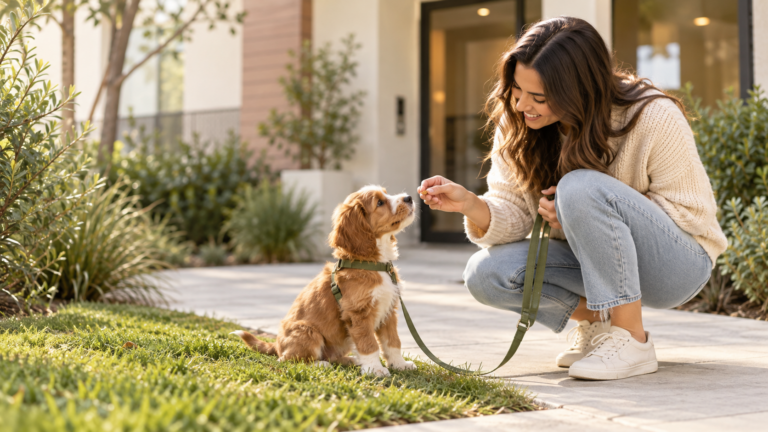
Take your puppy directly to their usual potty spot.
Stand quietly and give them a few minutes to sniff and settle.
Avoid constantly repeating commands or pulling on the leash.
If they don’t pee, calmly return inside and try again shortly.
During the waiting period, supervise your puppy closely or keep them in a comfortable, appropriately sized puppy-safe area.
This helps prevent an accident while you’re waiting for the next opportunity.
Important: Don’t repeatedly delay a puppy who clearly needs to urinate. Very young puppies need frequent potty opportunities, and the interval should reflect their age and individual needs.
3. Reward Immediately After They Pee
This is one of the most effective ways to help your puppy understand what you want.
The moment your puppy finishes peeing outside, offer a reward.
It could be:
- A tiny, puppy-safe treat
- Gentle praise
- A favorite toy
- A few seconds of happy attention
The important thing is timing.
Reward your puppy immediately after they finish, while you’re still outside.
If you wait until you get back into the house, your puppy may not connect the reward with peeing outdoors.
And remember: not every puppy is motivated by food.
Some dogs respond much better to your voice, affection, or a favorite game.
Choose what genuinely makes your puppy happy.
4. Practice Being Outside Before Your Puppy Needs to Pee
Don’t make every rainy-day experience about toilet training.
When the weather is mild and there’s only light rain, take your puppy outside for a very short, pleasant experience.
Let them sniff near the doorway.
Reward calm behavior.
Allow them to explore a small wet area at their own pace.
Then return inside before they become uncomfortable.
Over time, your puppy can learn that wet grass and light rain aren’t necessarily something to fear.
Never force a frightened puppy to remain outside.
And skip outdoor practice during thunderstorms, strong winds, freezing rain, or other unsafe conditions.
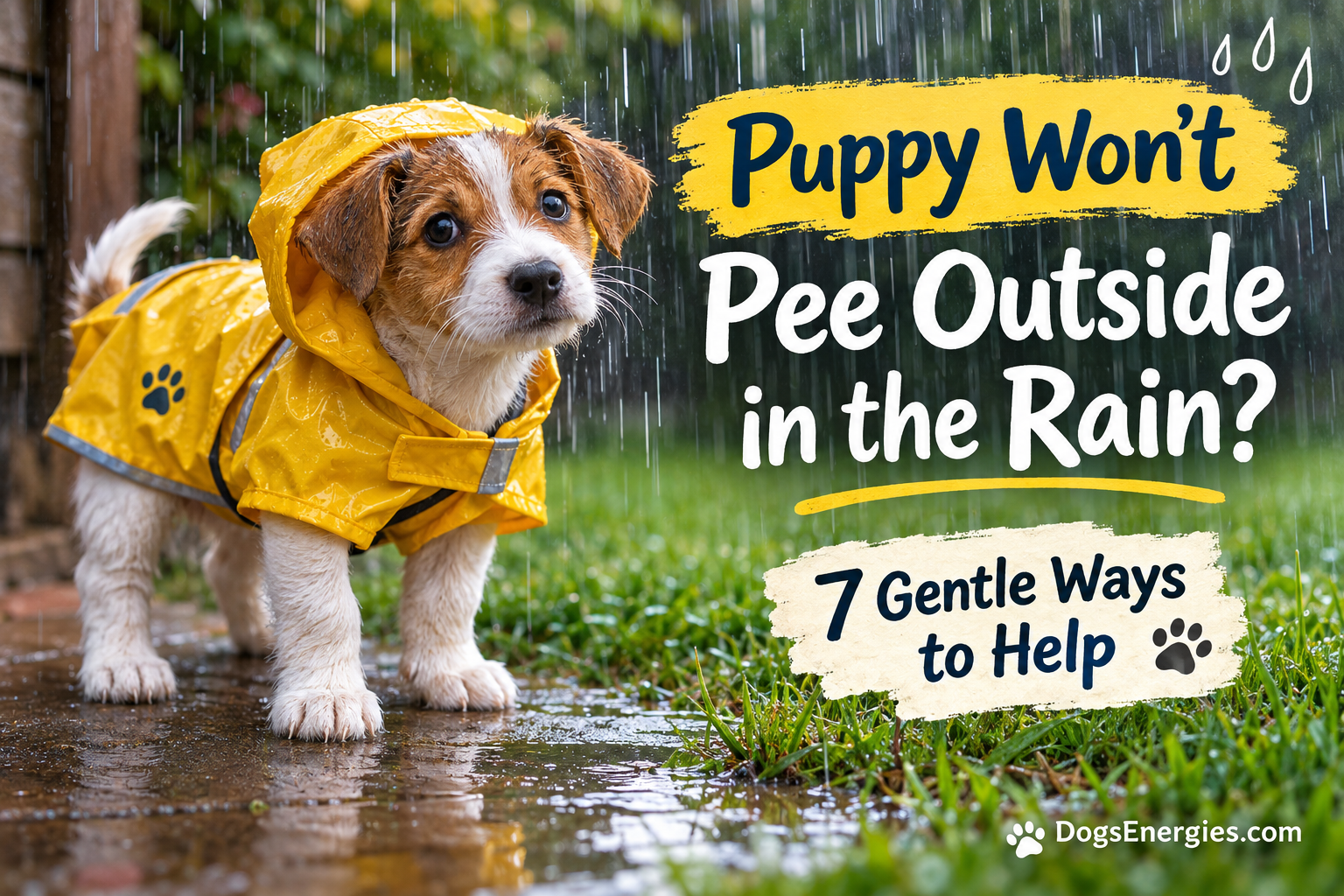
5. Consider a Comfortable Puppy Raincoat
Some puppies dislike the feeling of rain falling directly onto their backs.
A lightweight, well-fitting raincoat may make outdoor potty breaks more comfortable.
But there’s one important detail.
Not every puppy likes wearing clothes.
If your puppy has never worn a coat, introduce it indoors first.
Let them sniff it, reward them for approaching it, and gradually practice wearing it for short periods.
Make sure the coat doesn’t restrict movement, interfere with toileting, or cause rubbing.
A raincoat should make your puppy more comfortable, not introduce another problem.
6. Follow a Consistent Potty Schedule
Rainy days are not the time to abandon your puppy’s routine.
Offer potty breaks at predictable moments, especially:
- After waking up
- After meals
- After drinking
- After playing
- Before bedtime
Young puppies may need additional breaks between these times.
A consistent routine makes it easier to anticipate when your puppy is likely to pee.
It also reduces the chance that they’ll become desperate to go while you’re waiting for the rain to stop.
If you’re unsure how often your puppy needs a potty break, read our Puppy Potty Training Schedule by Age guide.
7. Stay Calm When Accidents Happen
This may be the most important tip of all.
Your puppy goes outside, refuses to pee, comes back inside, and has an accident.
It’s frustrating.
But scolding won’t teach them that they should have peed in the rain.
Instead, it may make them nervous about toileting around you.
If you catch your puppy beginning to pee indoors, calmly interrupt only if you can do so without frightening them, and take them to their potty spot.
If the accident has already happened, simply clean it up.
Use an enzymatic cleaner suitable for pet urine to remove lingering odors.
Then adjust your supervision and timing for the next potty break.
Potty training works best when your puppy feels safe, not afraid of making mistakes.
What to Do When Your Puppy Comes Inside and Immediately Pees
This is one of the most common rainy-day frustrations.
You spent ten minutes outside.
Your puppy did nothing.
And thirty seconds after coming indoors, there’s a puddle on the floor.
Why?
Your puppy may have been too cold, uncomfortable, distracted, or worried to relax outside.
Once indoors, they feel comfortable again.
And that’s when they finally pee.
Here’s what to try next time.
- Take your puppy to their usual outdoor potty spot.
- Give them a short, calm opportunity to pee.
- If nothing happens, return inside without making a fuss.
- Keep your puppy under close supervision rather than allowing them to wander freely.
- Try another potty break soon, especially if they are showing signs that they need to go.
- Reward immediately when they successfully pee outside.
You may need to repeat this process several times.
That’s okay.
The goal is to prevent indoor accidents while helping your puppy become more comfortable outdoors.
If your puppy also refuses to poop outdoors, read our guide on Why Won’t My Puppy Poop Outside? 9 Common Reasons and What to Do.
Should You Use Puppy Pads When It’s Raining?
This depends on your living situation and your long-term potty training goals.
For a healthy puppy who is already learning to toilet outdoors, switching to puppy pads every time it rains may make the routine less consistent.
Your puppy could learn that rainy days mean peeing indoors is acceptable.
However, puppy pads or a designated indoor potty area can be useful in certain circumstances.
For example:
- You live in an apartment with limited immediate outdoor access.
- Your puppy is very young and cannot yet manage longer intervals.
- Severe weather makes outdoor access unsafe.
- Your veterinarian recommends a temporary indoor toileting arrangement.
If you choose an indoor potty option, use one designated location and reward your puppy consistently for using it.
Understand that transitioning to outdoor-only toileting may require additional training.
Living in an apartment? Our guide to Potty Training a Puppy in an Apartment explains how to build a practical routine when outdoor access isn’t always easy.
My preference: When conditions are safe, I would focus on helping a puppy feel comfortable toileting outside rather than automatically introducing pads whenever it rains.
But safety always comes before training rules.
Rainy-Day Potty Training Mistakes to Avoid
Sometimes, what we do with good intentions actually makes the problem worse.
| Common mistake | What to do instead |
|---|---|
| Pulling the puppy onto wet grass | Let them approach gradually |
| Standing outside until they’re miserable | Use short, supervised attempts |
| Scolding after an indoor accident | Clean up and adjust the routine |
| Waiting too long between potty breaks | Offer frequent opportunities |
| Rewarding only after returning indoors | Reward immediately outside |
| Forcing a raincoat onto a frightened puppy | Introduce clothing gradually |
Small changes in your approach can make a big difference.
How Long Does It Take to Teach a Puppy to Pee in the Rain?
There isn’t one fixed timeline.
Some puppies become comfortable after a few positive experiences.
Others need days or weeks of gradual practice, especially if they’re sensitive to unfamiliar sounds, textures, or weather conditions.
Your puppy’s age, temperament, previous experiences, and the intensity of the rain all matter.
Don’t compare your puppy with another dog.
Instead, look for small signs of progress.
Maybe yesterday your puppy wouldn’t step off the porch.
Today they walked onto the wet grass.
Tomorrow they might sniff around comfortably.
And eventually, they may pee outside without hesitation.
These small improvements are worth celebrating.
When Is Refusing to Pee a Medical Concern?
Most rainy-day potty problems are related to comfort, training, or the environment.
However, not every change in urination is behavioral.
Contact your veterinarian promptly if your puppy:
- Repeatedly tries to pee but produces little or no urine
- Cries or appears painful when urinating
- Has blood in their urine
- Suddenly urinates much more frequently
- Seems unusually tired, weak, or unwell
- Has a sudden change in urinary habits without an obvious explanation
Veterinary note: If your puppy is repeatedly straining to urinate and little or no urine comes out, seek emergency veterinary care. A urinary blockage can be life-threatening. Don’t assume the weather is responsible.
A puppy who has not urinated for an unusually long period also needs prompt veterinary advice, even if they otherwise seem comfortable.
A Simple Rainy-Day Potty Routine
Here’s an easy routine to remember when the weather turns wet.
Before going outside: Have your leash, treats, and towel ready. Choose a sheltered potty spot if possible.
During the potty break: Stay calm, give your puppy time to sniff, and avoid turning the trip into a stressful experience.
If your puppy pees: Reward immediately, then head inside and dry them off.
If your puppy doesn’t pee: Return indoors, supervise closely, and offer another opportunity soon.
Afterward: Keep the experience positive, whether your puppy succeeded or not.
Consistency matters more than having a perfect day.
Frequently Asked Questions
Yes. Some puppies are sensitive to wet surfaces, cold temperatures, or unfamiliar sounds. Others enjoy rainy weather from the beginning. Gradual, positive experiences can help many puppies become more comfortable.
If your puppy is small and needs help safely reaching a potty area, carrying them may be practical. But avoid placing a frightened puppy onto wet grass and forcing them to remain there. Give them a chance to explore at their own pace.
Some puppies may delay urination when they’re uncomfortable, but intentionally making a young puppy wait for hours isn’t a good training strategy. Offer regular opportunities and seek veterinary advice if your puppy cannot urinate normally.
Many puppies do learn with patient, consistent practice. Positive reinforcement, a familiar potty location, and gentle exposure to mild rain can help.
Avoid unnecessary exposure to dangerous weather. Thunderstorms can also be frightening for puppies. If conditions are unsafe, use a suitable temporary toileting arrangement and return to outdoor training when the weather improves.
Final Thoughts: Your Puppy Isn’t Giving You a Hard Time
When your puppy refuses to pee outside in the rain, it’s easy to feel like all your potty training progress has disappeared.
But one rainy day doesn’t erase everything they’ve learned.
Your puppy may simply be telling you that the world feels a little different when it’s wet, cold, and noisy.
And that’s something you can help them understand.
Start with short potty breaks. Find a comfortable spot. Reward every success. Be patient with mistakes.
Most importantly, don’t turn potty training into a struggle between you and your puppy.
A confident puppy learns more easily than a frightened one.
With consistency, patience, and a little understanding, rainy-day potty breaks can gradually become just another part of your puppy’s everyday routine.
And one day, you may find yourself standing in the rain, watching your puppy calmly do their business, wondering why it ever seemed so difficult.
Need More Help With Puppy Potty Training?
Rainy days are only one part of teaching a puppy where and when to go.
If you’re still dealing with indoor accidents, confusing potty schedules, or a puppy who refuses to toilet outdoors, start with our free Puppy Potty Training PDF.
For a more complete step-by-step approach, explore our e-book:
Potty Training for Puppies – Teach Your Dog Where (and When) to Go
A practical guide to building a consistent routine, understanding your puppy’s needs, and making potty training less stressful for both of you.