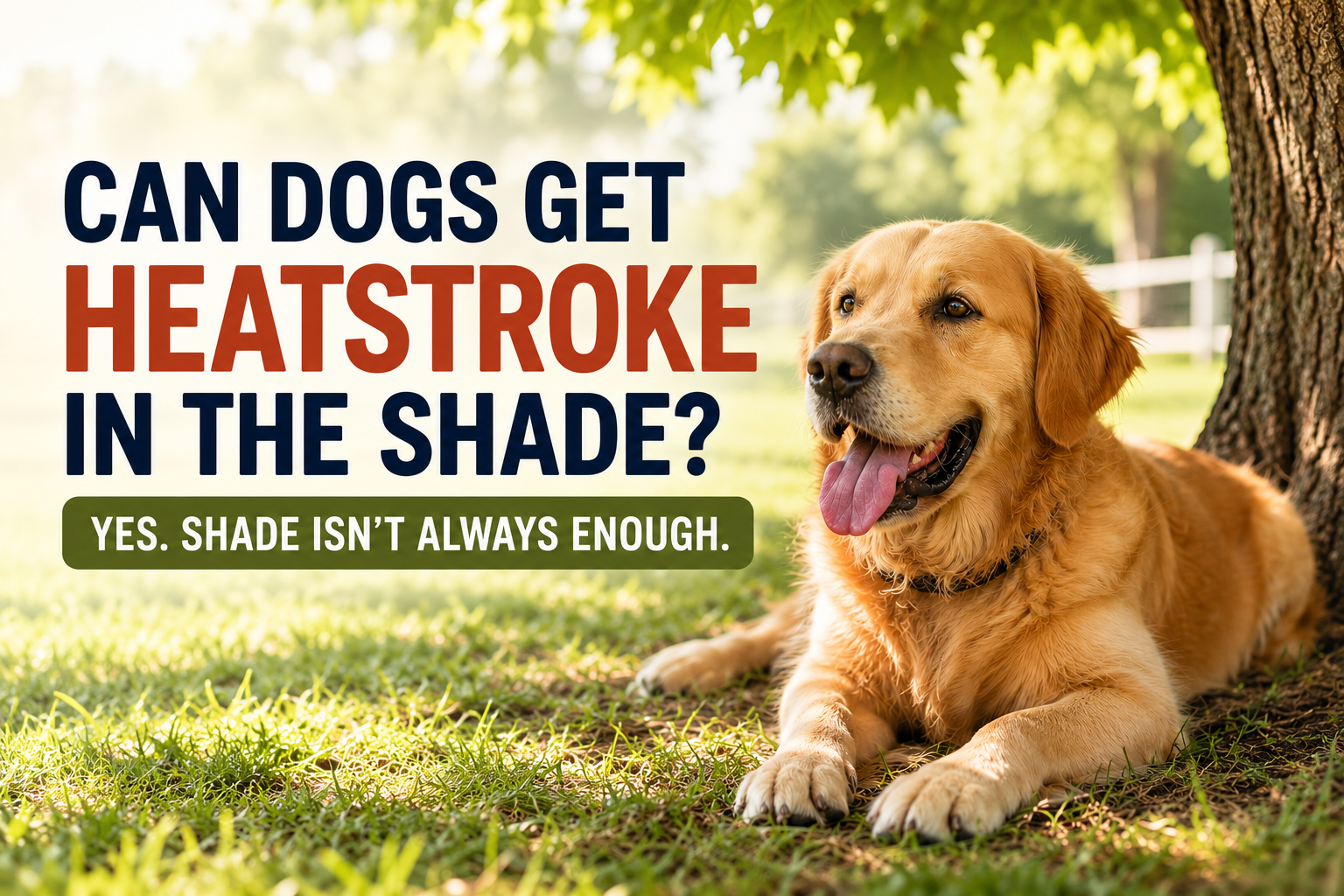
Can Dogs Get Heatstroke Even in the Shade? Yes. And It Happens More Often Than Most Owners Realize.
Quick Answer
Can dogs get heatstroke even in the shade?
Yes. Shade helps protect a dog from direct sunlight, but it does not always make the surrounding air cool enough. On hot or humid days, a dog can still overheat in the shade, especially if there is little airflow, they have been exercising, or they are more vulnerable to heat.
Most owners know not to leave a dog in a sunny yard or a parked car on a hot day. But shade can create a false sense of security. A covered patio, a spot beneath a tree, or a shaded kennel may still be too hot for a dog to rest safely.
In this guide, you’ll learn why shade may not be enough, which dogs are at greater risk, what signs to watch for, and what to do if you suspect heatstroke.
Why Shade May Not Be Enough
Shade blocks direct sunlight, which is helpful. But it does not necessarily cool the air around your dog. If the weather is hot, the shaded area can still feel warm, particularly when there is little breeze or the space is enclosed.
Dogs rely mainly on panting to release excess body heat. They do have sweat glands in their paw pads, but sweating is not their main way of cooling down. Hot, humid conditions and strenuous activity can make it harder for a dog to cool themselves effectively.
That is why shade should be one part of a safe outdoor space, not the only protection you provide. Your dog also needs access to fresh water, good airflow, and a cooler place to go when the weather becomes uncomfortable.
Can a Dog Get Heatstroke Under a Tree?
Yes. A tree can provide useful shade, but it cannot guarantee that the area beneath it is cool enough. If your dog stays outside for a long time in hot weather, they may still become dangerously overheated.
Pay attention to how your dog is acting. If they are panting heavily, slowing down, or trying to lie on a cooler surface, bring them indoors or to a cooler, well ventilated place. Do not wait for them to collapse before taking action.
Which Dogs Are at Greater Risk?
Any dog can develop heat related illness. Some dogs may be more vulnerable, including:
- Short nosed breeds such as Boston Terriers, Pugs, and Bulldogs
- Older dogs
- Dogs carrying extra weight
- Dogs with heart or breathing problems
- Dogs with thick or dark coats
- Dogs exercising or playing vigorously in hot weather
Short nosed dogs may have a harder time cooling themselves through panting. Older dogs and dogs with certain health conditions may also have more difficulty coping with heat.
If your dog is at higher risk, be especially cautious on hot or humid days. Keep outdoor activity brief and give your dog the option to rest somewhere cool. You can also read our guide on how to keep your small dog cool during a heatwave.
Signs Your Dog May Be Overheating
Watch your dog closely in warm weather. Possible early signs of overheating include:
- Heavy or rapid panting
- Excessive drooling
- Restlessness
- Slowing down or refusing to walk
- Weakness or difficulty standing
- A very red tongue or gums
- Vomiting or diarrhea
More serious signs can include confusion, stumbling, collapse, seizures, or loss of consciousness. These signs need immediate veterinary attention.
Heatstroke is a medical emergency. If you think your dog may have heatstroke, contact a veterinarian or emergency clinic right away.
What to Do if You Suspect Heatstroke
Act quickly, and call a veterinarian while you prepare to leave for the clinic.
- Move your dog out of the heat and into a cool, well ventilated area.
- Begin cooling your dog with cool water. Do not use ice or ice cold water.
- If possible, keep your dog in air conditioning or in front of a fan while you travel.
- Offer water if your dog is alert and able to drink, but do not force them.
- Contact a veterinarian or emergency clinic immediately and follow their instructions.
Do not wait to see whether your dog improves on their own. Heatstroke can damage a dog’s organs, and a veterinarian should assess them as soon as possible.
For more information, see Cornell University’s guide to heatstroke in dogs.
Common Mistakes to Avoid
A few common assumptions can put dogs at risk during hot weather:
- Assuming shade alone will keep a dog cool
- Leaving a dog outside for a long time because water is available
- Encouraging exercise or play when the dog is already panting heavily
- Waiting for severe signs before moving the dog to a cooler place
- Leaving a dog in a parked car, even briefly
Water and shade are important, but they do not make every outdoor space safe in extreme heat. When the weather is very hot or humid, keeping your dog indoors in a cool area may be the safest choice.
How to Help Prevent Heatstroke
During hot weather:
- Walk your dog during cooler parts of the day.
- Keep fresh water available.
- Take breaks and let your dog rest.
- Avoid strenuous exercise when it is hot or humid.
- Make sure your dog can move to a cool, well ventilated area.
- Bring your dog indoors if they seem uncomfortable or start panting heavily.
- Never leave your dog alone in a parked car.
For additional warm weather advice, read the AVMA’s warm weather safety tips for pets.
The Most Important Thing to Remember
Shade can help, but it does not guarantee that your dog is safe from heat. The surrounding air may still be hot, and dogs can struggle to cool themselves in hot, humid, or poorly ventilated places.
Watch your dog’s behavior, offer water, limit activity, and move them to a cooler space if they seem uncomfortable. If you suspect heatstroke, contact a veterinarian immediately.
Frequently Asked Questions
Yes. Shade reduces direct sunlight, but the air around your dog may still be hot. A dog can overheat in the shade, especially during hot or humid weather, after exercise, or in a poorly ventilated space.
Not always. Shade is helpful, but dogs also need fresh water, airflow, rest, and access to a cooler place when the weather is hot.
Short nosed dogs, older dogs, dogs carrying extra weight, and dogs with heart or breathing problems may be more vulnerable. Any dog can overheat in hot weather or during strenuous activity.
Move your dog out of the heat, begin cooling them with cool water, and contact a veterinarian or emergency clinic immediately. Do not use ice or ice cold water, and do not delay veterinary care to see whether your dog improves.
Some dogs recover with prompt veterinary treatment, but heatstroke can cause serious damage to the body. If you suspect it, seek veterinary care immediately.
Veterinary note: This article is intended for general informational and educational purposes only and should not replace professional veterinary advice, diagnosis, or treatment. If you are concerned about your dog’s health, notice new or worsening symptoms, or suspect an emergency, please contact your veterinarian promptly.