
Why Dogs Get Ear Infections More Often in Summer (And How to Prevent Them)
Does your dog shake their head more often in the summer, scratch their ears, or have a bad smell coming from one ear?
Many owners assume it’s just a little dirt or water left over after swimming. But summer is actually the time of year when ear infections become much more common in dogs.
The good news? Most ear infections can be prevented if you recognize the early warning signs and avoid a few common mistakes.
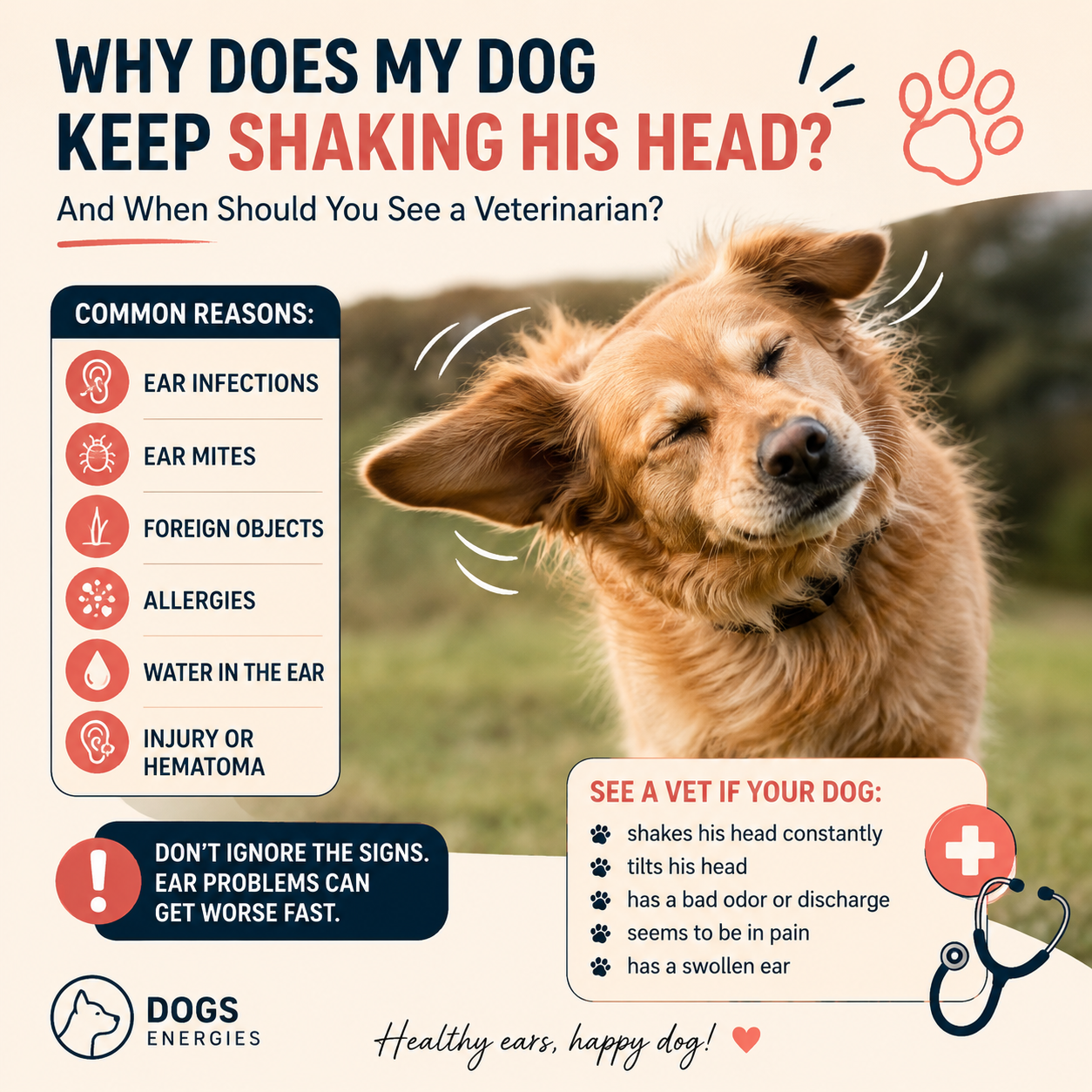
If your dog is already shaking their head repeatedly, don’t ignore it. Read our guide on Why Does My Dog Keep Shaking His Head? (And When Should You See a Veterinarian?) to learn when it’s a normal behavior and when it’s time to see your vet.
Why Are Ear Infections More Common in Summer?
Heat and humidity create the perfect environment for bacteria and yeast to grow.
The American Veterinary Medical Association also recommends paying close attention to your dog’s ears after swimming, especially during warm weather.
Add swimming in pools, lakes, or the ocean, and it’s easy for moisture to stay trapped inside your dog’s ear canal.
Dogs at the highest risk include those that:
- Have floppy ears
- Have a lot of hair inside their ear canals
- Swim frequently
- Suffer from allergies
For these dogs, just a few days of hot, humid weather can be enough for the first symptoms to appear.
1. Water Gets Trapped Inside the Ear
Many dogs love summer because they love swimming.
The problem is that water trapped deep inside the ear canal creates the perfect breeding ground for bacteria and yeast.
The more often your dog gets wet, the greater the risk of developing an ear infection.
After every swim, gently dry the outside of the ears with a soft towel and let your dog shake their head naturally.
Never insert cotton swabs deep into your dog’s ear canal.
2. Heat Helps Bacteria and Yeast Grow Faster
Hot weather doesn’t just affect us.
It also creates ideal conditions for microorganisms.
Even a small amount of moisture or earwax inside the ear can allow bacteria and yeast to multiply very quickly.
That’s why symptoms sometimes seem to appear almost overnight.
3. Summer Allergies Can Trigger Ear Problems
Pollen, grass, dust, and other environmental allergens are everywhere during the summer.
For many dogs, the first sign of an allergy isn’t itchy skin or watery eyes.
It’s their ears.
They may start shaking their head, scratching their ears, or rubbing them against the carpet or furniture.
If the underlying allergy isn’t treated, an ear infection often follows.
4. Hair Inside the Ears Holds Moisture
Dogs with a lot of hair inside their ear canals have less airflow.
That means moisture stays trapped much longer.
This doesn’t mean every dog needs the hair removed from their ears.
For some dogs, pulling ear hair can actually cause irritation.
Your veterinarian can show you the safest way to care for your dog’s ears based on their breed and individual needs.
How Can You Spot the Early Signs?
Don’t wait until your dog starts crying in pain.
The first symptoms are often subtle.
Watch for these warning signs:
- Frequent head shaking
- Scratching one or both ears
- Tilting the head to one side
- A bad smell coming from the ear
- Redness inside the ear
- Brown or yellow discharge
- Pulling away when you touch the ears
The sooner you act, the easier the treatment usually is.
Not every ear problem looks the same. If you’re unsure whether your dog has an infection, learn about the warning signs in Dog Ear Infection Signs Most Owners Miss (And What To Do Next).
How to Prevent Ear Infections During Summer
Prevention only takes a few minutes.
Dry the Ears After Every Swim
Gently dry the outside of the ears with a soft towel.
If your veterinarian recommends it, you can also use a dog-safe ear drying solution.
Check the Ears Regularly
Take a quick look inside your dog’s ears once a week.
Healthy ears should be light pink, free of strong odors, and without heavy wax buildup.
Don’t Overclean the Ears
One of the biggest mistakes owners make is cleaning their dog’s ears too often.
Overcleaning can damage the ear’s natural protective barrier and actually increase the risk of infection.
Only clean your dog’s ears when necessary or as recommended by your veterinarian.
Manage Allergies Early
If your dog develops ear problems every summer, bacteria may not be the real cause.
Seasonal allergies could be the underlying issue.
Treating the allergy often helps prevent repeated ear infections.
When Should You See a Veterinarian?
Don’t try to treat the problem yourself if you notice:
- A strong, foul odor
- Thick discharge
- Blood
- Swelling
- Pain when the ear is touched
- Constant head shaking
- Loss of balance
Some ear infections affect the deeper parts of the ear and can lead to serious complications without proper treatment.
A Common Mistake Many Owners Make
If your dog stops shaking their head after a day or two, it’s easy to assume the infection is gone.
Unfortunately, that’s often not true.
The infection may still be there and come back even worse a few weeks later.
That’s why it’s so important to complete the entire treatment your veterinarian prescribes, even if your dog seems completely better.
Final Thoughts
Summer is the season of swimming, outdoor adventures, and long walks.
Unfortunately, it’s also the season when ear infections become much more common.
Ear infections aren’t the only health risk during hot weather. Learn how to recognize the early warning signs of overheating in Can Dogs Get Heatstroke Even in the Shade?
Checking your dog’s ears regularly, drying them after swimming, and acting quickly when you notice the first symptoms can prevent much bigger problems later.
Your dog only needs a few minutes of your attention, and those few minutes could save them days of pain and uncomfortable treatment.
Veterinary note: This article is intended for general informational and educational purposes only and should not replace professional veterinary advice, diagnosis, or treatment. If you are concerned about your dog’s health, notice new or worsening symptoms, or suspect an emergency, please contact your veterinarian promptly.
Related Articles
- Why Does My Dog Keep Shaking His Head? (And When Should You See a Veterinarian?)
- Dog Ear Infection Signs Most Owners Miss (And What To Do Next)
- Can Dogs Get Heatstroke Even in the Shade?
FAQ
Why do dogs get ear infections more often in the summer?
Heat, humidity, frequent swimming, and seasonal allergies create ideal conditions for bacteria and yeast to grow inside the ear.
Is it normal for my dog to shake their head after swimming?
One or two quick head shakes are completely normal. But if your dog keeps shaking their head for hours after swimming, water may be trapped in the ear or an infection could be developing.
Should I clean my dog’s ears after every swim?
Not necessarily. In most cases, gently drying the outside of the ears is enough. Only use ear cleaners if your veterinarian recommends them or if your dog actually needs them.
Which dogs are most likely to get ear infections?
Dogs with floppy ears, dogs with a lot of hair inside their ear canals, frequent swimmers, and dogs with seasonal allergies are generally at the highest risk.
Can a dog ear infection go away on its own?
Sometimes the symptoms seem to improve for a short time, but the infection often remains. Without proper treatment, it can become more severe or turn into a chronic problem.