
The Truth About Healthy Dog Food Marketing: What Every Dog Owner Should Know
Quick Answer: Dog food labels often use attractive words such as “premium,” “natural,” “holistic,” and “superfood” to make products sound healthier. But these claims do not automatically mean a food provides better nutrition. To choose the right food for your dog, look beyond the packaging. Check the nutritional adequacy statement, life stage, calorie information, manufacturer transparency, and how your dog responds over time.
You walk into a pet store.
Rows of colorful dog food bags are waiting for you.
One promises natural ingredients. Another claims premium nutrition. A third features a happy dog running through a beautiful green meadow.
And then you notice the price.
Surely, the most expensive food must be the healthiest?
Not necessarily.
After more than 15 years of hands-on experience with dogs, I’ve learned something that I wish more owners understood.
The price of dog food doesn’t always reflect its nutritional quality, and a famous brand isn’t automatically the best choice for every dog.
I’ve seen owners spend a considerable amount of money on food they genuinely believed was excellent, while their dogs showed signs that something wasn’t quite right.
The problem isn’t that owners don’t care.
Quite the opposite.
Most people want to give their dogs the very best.
But dog food marketing knows exactly how to appeal to that desire.
And sometimes, the beautiful story on the packaging distracts us from the questions we should really be asking.
Why Healthy Dog Food Marketing Is So Convincing
Dog food companies understand something important about their customers.
We don’t see our dogs as just animals.
They’re members of our families.
We worry about their health, their happiness, and how long they’ll stay with us.
So when a package promises better digestion, a shinier coat, stronger immunity, or a longer life, it’s difficult not to pay attention.
Marketing sells more than food.
It sells reassurance.
It makes us feel that choosing a particular product means we’re being responsible dog owners.
And there’s nothing wrong with wanting that reassurance.
The problem begins when we confuse advertising promises with scientific evidence.
A picture of fresh meat doesn’t tell you whether the finished food is nutritionally balanced.
A beautiful green meadow doesn’t tell you how the food was manufactured.
And a high price doesn’t guarantee that the formula will suit your dog.
Your dog doesn’t eat the advertisement.
Your dog eats what’s inside the bag.
Dog Food Marketing Terms: What Do They Really Mean?
Some words on dog food packaging have specific regulatory meanings. Others are primarily promotional.
Understanding the difference can help you avoid paying extra for claims that don’t tell you much about the food itself.
| Marketing term | What you should know |
|---|---|
| Premium or Super Premium | These terms do not have a specific nutritional standard under AAFCO definitions. |
| Holistic | There is no universally established regulatory definition that guarantees superior nutrition. |
| Natural | In the United States, AAFCO provides guidance for this term, but natural does not automatically mean healthier or more nutritious. |
| Grain Free | Describes the absence of grains, not necessarily better nutritional quality. |
| Human Grade | Has specific requirements when properly used, but does not automatically mean the food is nutritionally superior. |
| Veterinarian Recommended | Ask what the claim means, who made the recommendation, and whether evidence supports it. |
| Superfood Formula | A marketing expression that does not establish whether the complete diet meets your dog’s nutritional needs. |
One of the biggest mistakes owners make is assuming that all these words mean the same thing.
They don’t.
A food can contain natural ingredients and still be unsuitable for your dog’s nutritional requirements.
A grain free product isn’t automatically healthier than one containing grains.
And an expensive food may not provide any meaningful advantage over a more affordable, well formulated alternative.
Remember: an impressive label is not the same as evidence of good nutrition.
My Experience With a Dog Who Ate One of the Most Expensive Foods
There’s one situation I remember particularly well.
A dog had been eating food from one of the most famous and expensive brands on the market for more than six months.
The owner genuinely believed he was providing excellent nutrition.
The brand was well known. The food was expensive. And he had been convinced that it was one of the best choices available.
But I noticed something that concerned me.
The dog’s coat had lost its natural shine.
It looked dry and dull.
The stool also suggested that something wasn’t quite right.
I talked to the owner about reconsidering the food.
And believe me, that wasn’t easy.
He trusted the brand.
He trusted the recommendation.
And like many owners, he believed that if a food was among the most expensive products available, it must also be among the best.
For quite some time, I couldn’t convince him to try something different.
Eventually, he agreed.
The dog’s food was changed.
And within about a month, we could already see a noticeable improvement in the coat and stool.
The change was encouraging.
But I want to make something clear.
This experience doesn’t prove that the previous brand was bad or that the food caused every problem we observed. Coat and digestive changes can have several causes, including medical conditions.
What it taught me was something I’ve continued telling owners for years.
The best food isn’t necessarily the most expensive food. It’s a nutritionally appropriate food that meets your individual dog’s needs.
And sometimes, owners need to question even the most confident recommendations.
Why Expensive Dog Food Isn’t Always Better
Let’s be clear about one thing.
I’m not saying that expensive dog food is always a waste of money.
Some products cost more because of specialized formulations, research, manufacturing standards, testing, or particular nutritional requirements.
Veterinary therapeutic diets, for example, may be designed to help manage specific medical conditions and should be used under veterinary guidance.
But a higher price alone doesn’t establish better quality.
When you buy dog food, you’re not paying only for the ingredients.
The price can also reflect packaging, advertising, distribution, brand positioning, and other business costs.
A well known brand may invest heavily in research and quality control.
Another brand may invest heavily in marketing.
You can’t reliably distinguish between them simply by looking at the price tag.
That’s why I always encourage owners to compare the actual nutritional information and ask manufacturers meaningful questions.
What You Should Really Check on a Dog Food Label
Many owners turn the bag around, read the first few ingredients, and assume they’ve discovered everything they need to know.
But choosing dog food isn’t quite that simple.
An ingredient list can tell you what ingredients are included.
It cannot, by itself, tell you whether the finished food provides the correct balance of nutrients.
Here are the things I would pay closer attention to.
1. Look for a Nutritional Adequacy Statement
For dog foods sold in the United States, look for the AAFCO nutritional adequacy statement.
This helps you understand whether the product is intended to provide complete and balanced nutrition for a particular life stage.
For example, the statement may indicate that the food is formulated to meet AAFCO nutrient profiles for adult maintenance.
Other products may be appropriate for growth, reproduction, or particular life stages.
Some products are intended only for intermittent or supplemental feeding.
This matters because a food designed as a treat or topper should not automatically replace a complete daily diet.
2. Check Whether the Food Matches Your Dog’s Life Stage
A growing puppy doesn’t have exactly the same nutritional requirements as an adult dog.
And a large breed puppy has some important nutritional considerations that differ from those of smaller breeds.
Your dog’s age, body condition, activity level, reproductive status, and medical needs all matter.
Don’t choose a food simply because the packaging says it’s suitable for dogs.
Check which dogs it’s actually designed to feed.
3. Don’t Judge Food by the First Ingredient Alone
You’ve probably heard advice like this:
“Always choose dog food with meat as the first ingredient.”
It sounds reasonable.
But it oversimplifies how pet food labels work.
Ingredients are generally listed by weight before processing, and their moisture content can influence their position.
Fresh meat contains a considerable amount of water.
That means its position on the list doesn’t automatically tell you how much protein it contributes to the finished product.
Likewise, an unfamiliar ingredient name doesn’t necessarily mean the ingredient is harmful.
What matters is the overall nutritional formulation and the quality control behind it.
4. Look at Calories and Feeding Instructions
Two foods can have very different calorie densities.
If you feed the same volume of each, your dog may receive significantly different amounts of energy.
This is especially important for small dogs, where relatively small differences in portions can matter.
Check the calorie content and use the feeding guide as a starting point.
Then adjust portions according to your dog’s body condition, activity level, and veterinary recommendations.
If you’re concerned about a dog who seems unusually tired or gains weight easily, you may also find my guide to choosing food for small dogs with low energy helpful.
5. Ask Who Formulates the Food
A beautiful ingredient list is not enough.
I also want to know who is responsible for developing the recipe.
Does the manufacturer employ appropriately qualified nutrition professionals?
Does the company conduct nutritional testing?
What quality control procedures are in place?
Can the manufacturer provide detailed nutritional information when requested?
These questions may not sound exciting.
But they’re far more useful than a picture of a happy dog on the front of a bag.
How to Tell Whether Your Dog’s Food Is Working
Your dog can’t explain whether a particular formula agrees with them.
But you can observe changes in their condition.
Here are some things worth monitoring.
| What to observe | What deserves attention |
|---|---|
| Coat | Persistent dryness, dullness, or unusual hair loss |
| Skin | Itching, redness, flaking, or recurring irritation |
| Stool | Ongoing diarrhea, constipation, or unusual changes |
| Body condition | Unexplained weight gain or loss |
| Appetite | Persistent refusal to eat or sudden changes |
| Energy | Unusual tiredness or reduced interest in normal activities |
| Digestion | Frequent vomiting or ongoing digestive discomfort |
These signs don’t automatically mean the food is responsible.
Skin problems can have many causes.
Digestive symptoms can be associated with infections, parasites, dietary changes, food sensitivities, or other medical conditions.
And changes in energy may have nothing to do with nutrition.
That’s why persistent or concerning symptoms should be discussed with your veterinarian.
Still, observing your dog over time is valuable.
It helps you recognize changes and provide useful information when discussing their diet with a professional.
Should You Trust Dog Food Recommendations From Pet Stores?
Pet store employees can be helpful.
Some have considerable product knowledge and genuinely want to guide owners toward suitable choices.
But selling pet food and providing individualized veterinary nutritional advice are not the same thing.
Retail recommendations may also be influenced by which products a store carries, promotional arrangements, or commercial priorities.
That doesn’t mean every recommendation is dishonest.
It means you should ask questions before accepting one.
If someone tells you a particular food is the best, ask:
- Best for which dogs?
- What nutritional evidence supports that recommendation?
- Is it appropriate for my dog’s age and health?
- Who formulated the food?
- Does the company conduct quality control and nutritional testing?
- Why would this product be a better choice than another complete and balanced food?
A confident recommendation isn’t automatically an informed recommendation.
And you shouldn’t feel uncomfortable asking for an explanation.
Grain Free, Natural, Raw, and Minimally Processed: Are They Healthier?
Dog food trends change constantly.
One year, everyone talks about grain free diets.
Another year, raw feeding becomes popular.
Then come air dried, freeze dried, and cold pressed foods.
Each approach is marketed with its own promises.
But the way food is processed doesn’t automatically tell us whether it’s nutritionally superior.
Grain Free Dog Food
Grains are not inherently harmful to dogs.
Many dogs digest appropriately prepared grains without problems.
The FDA has investigated reports of canine dilated cardiomyopathy associated with certain diets, including some containing high proportions of pulses or legumes. The relationship is complex, and a definitive causal explanation has not been established.
Don’t assume grain free is a healthier choice unless your dog has a specific reason to avoid particular ingredients.
Raw Dog Food
Raw diets are sometimes promoted as more natural.
However, raw animal products can carry harmful bacteria and other pathogens, creating risks for both pets and people.
Raw diets also require careful formulation to avoid nutritional deficiencies or imbalances.
Natural does not automatically mean safe.
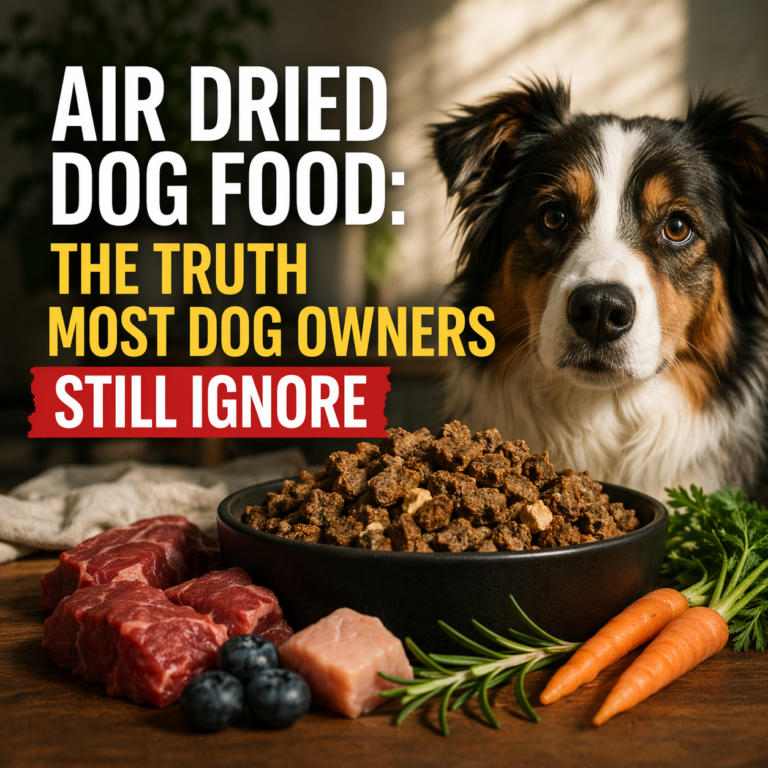
Air Dried and Cold Pressed Food
These foods may appeal to owners looking for alternatives to traditional kibble.
But the processing method alone doesn’t guarantee superior nutrition.
A complete and balanced formulation, appropriate quality control, and your dog’s individual needs still matter.
If you’re comparing alternatives, read my guide to cold pressed dog food to understand what makes it different from traditional kibble.
What to Do If You Think Your Dog’s Food Isn’t Suitable
Before replacing your dog’s food, try to understand what you’re observing.
Is your dog having occasional soft stools, or has the problem become persistent?
Has the coat changed gradually?
Has appetite changed?
Has anything else changed in your dog’s routine or health?
These details matter.
If your dog has persistent digestive problems, unexplained weight changes, or other concerning symptoms, speak with your veterinarian before assuming food is the cause.
When a diet change is appropriate, it is usually best to make the transition gradually.
A Simple Seven Day Dog Food Transition Schedule
For a healthy dog whose veterinarian has not recommended a different approach, this is a common starting schedule.
| Days | Old food | New food |
|---|---|---|
| 1–2 | 75% | 25% |
| 3–4 | 50% | 50% |
| 5–6 | 25% | 75% |
| 7 | 0% | 100% |
Some dogs need a slower transition, especially those with sensitive digestion.
Remember that different foods may contain different numbers of calories. Adjust the total quantity rather than assuming equal volumes provide equal nutrition.
Monitor stool quality, appetite, and overall condition throughout the change.
If vomiting, diarrhea, or other concerning symptoms occur, contact your veterinarian.
Five Mistakes Owners Make When Choosing Dog Food
Over the years, I’ve noticed several mistakes that come up repeatedly.
Mistake 1: Assuming expensive means better.
Price can reflect many things. It doesn’t guarantee that a food is the right choice for your dog.
Mistake 2: Believing every marketing claim.
Words such as premium, holistic, and superfood may sound reassuring without providing meaningful nutritional evidence.
Mistake 3: Judging food only by the ingredient list.
Ingredients matter, but nutritional balance, formulation expertise, and quality control matter too.
Mistake 4: Changing foods too frequently.
Constantly switching products without a clear reason can make it harder to understand how your dog responds and may cause digestive upset.
Mistake 5: Ignoring changes in the dog.
A familiar brand or attractive package shouldn’t prevent you from noticing persistent problems with your dog’s coat, stool, appetite, or body condition.
And there’s one more mistake I would add.
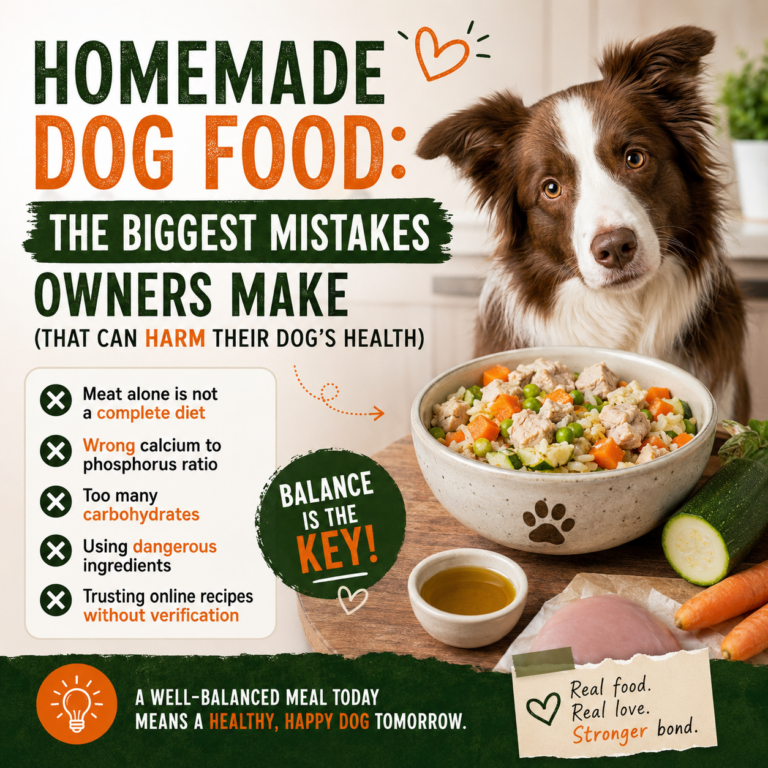
Don’t assume that homemade food is automatically healthier than commercial food.
Home prepared diets can be nutritionally incomplete if they’re not properly formulated.
I explain some of the most common problems in Homemade Dog Food: The Biggest Mistakes Owners Make.
My Personal Advice After Years of Working With Dogs
I have nothing against well known dog food brands.
And I don’t believe that every expensive product is overpriced or unnecessary.
But I do believe owners should understand what they’re buying.
I’ve seen how difficult it can be to convince someone to reconsider a food they’ve trusted for years.
Sometimes the owner feels that changing the food means admitting they made a mistake.
But that’s not how I see it.
We all make decisions based on the information available to us.
And sometimes we learn something new.
The important thing is to remain willing to reconsider those decisions when our dogs need us to.
A dog doesn’t care whether the food comes in an expensive bag.
A dog doesn’t recognize famous brands.
And a dog certainly doesn’t care about advertising campaigns.
What matters is receiving safe, appropriate, balanced nutrition.
That’s what I want owners to focus on.
Frequently Asked Questions About Healthy Dog Food Marketing
Not necessarily. In the United States, terms such as premium and super premium do not establish a specific higher nutritional standard. Evaluate the food’s nutritional adequacy, manufacturer expertise, quality control, and suitability for your dog.
No. Natural is not the same as nutritionally complete or superior. A food can meet the applicable definition of natural without being the best choice for a particular dog.
Sometimes. A higher price may reflect research, specialized formulations, testing, or manufacturing practices. But price alone is not proof of better nutrition.
Not necessarily. Ingredients are generally listed by weight before processing, and moisture content affects their order. The complete nutritional formulation is more important than focusing on one ingredient.
Look at nutritional adequacy, life stage, body condition, stool consistency, coat and skin health, appetite, and overall well being. Regular veterinary checkups help you evaluate whether the diet is meeting your dog’s needs.
Some digestive changes may become noticeable within days or weeks, while changes in coat condition or body condition may take longer. Results vary, and improvement after changing food does not necessarily prove the previous food caused the problem.
Not automatically. A dull coat can have several causes, including skin disease, parasites, grooming issues, or nutritional problems. If the change persists, consult your veterinarian before making assumptions.
Final Thoughts: Look Beyond the Beautiful Packaging
The next time you stand in front of a shelf full of dog food, I want you to remember something.
You don’t have to choose the most expensive bag.
You don’t have to believe every promise.
And you don’t have to follow a recommendation simply because someone sounds confident.
Ask questions.
Look for evidence.
Understand your dog’s nutritional needs.
And pay attention to changes in their health and condition.
Because responsible feeding isn’t about buying the food with the most impressive marketing.
It’s about making informed decisions for the dog who depends on you.
And that’s something no advertising campaign can replace.
Continue Learning About Dog Nutrition
If you want to make more confident decisions about your dog’s meals, treats, and everyday feeding routine, explore more practical advice in the Dogs Energies Nutrition section.
Save this guide for the next time you’re comparing dog food labels. Sometimes the most useful information is the information that isn’t printed in large letters on the front of the bag.
References and Further Reading
- WSAVA Global Nutrition Guidelines — Guidance on nutritional assessment and choosing pet foods.
- AAFCO: The Business of Pet Food — Information about pet food labeling, ingredients, and nutritional adequacy.
- FDA: Pet Food — Information about pet food regulation and safety.
- FDA: Investigation into Potential Link Between Certain Diets and Canine Dilated Cardiomyopathy — Background on the investigation into diet associated heart disease.
This article is based on practical experience with dogs and general veterinary nutrition guidance. It is intended for educational purposes and does not replace individualized advice from your veterinarian.