
Signs Your Dog Has Joint Pain (That Owners Often Miss)
Note: Some links in this article are affiliate links, which means I may earn a small commission if you choose to purchase through them. This comes at no extra cost to you. I only recommend products I truly believe in and would confidently give to my own dog.
Most dog owners expect a dog with joint pain to start limping. In reality, that’s often not the first sign.
Dogs are very good at hiding pain. Instead of an obvious limp, they usually make subtle changes in their behavior. Many owners assume these changes are simply due to aging, tiredness, or laziness, when their dog is actually trying to avoid movements that cause discomfort.
The earlier joint problems are recognized, the better the chances of slowing their progression and improving your dog’s quality of life.
Here are the warning signs you should never ignore.
If you’re looking for ways to protect your dog’s mobility as they age, you may also want to read our guide on How to Keep Your Dog Active and Healthy: The Joint Truth Most Owners Ignore.
1. Getting Up More Slowly After Rest
One of the earliest signs of joint pain is that your dog takes longer to get up after sleeping or lying down for a while.
You may notice that your dog:
- Hesitates for a few seconds before standing up
- Puts more weight on the front legs
- Appears stiff during the first few steps
After walking for a few minutes, many dogs seem to move normally again, which is why owners often assume nothing is wrong.
2. No Longer Wants to Jump
If your dog used to jump onto the couch, bed, or into the car without hesitation but now waits for you to lift them or avoids jumping altogether, pain could be the reason.
Keeping your dog active, maintaining a healthy weight, and supporting long-term joint health can make a significant difference.
This doesn’t mean your dog has become spoiled.
Jumping places significant stress on the hips, knees, and spine, so dogs naturally avoid it when those joints hurt.
3. Avoids Stairs
Climbing stairs puts extra strain on the joints.
Pay attention if your dog:
- Slows down on the stairs
- Stops before climbing
- Walks down very carefully
- Refuses to use the stairs altogether
This is especially common in senior dogs, but younger dogs with early joint problems may also show this behavior.
4. Doesn’t Want to Walk as Far
Did your dog once love long walks but now wants to head home much sooner?
That can be one of the first signs of joint pain.
Many owners think their dog has simply become calmer with age, but discomfort while moving is often the real reason.
5. Changes in Mood
Pain affects more than just the body—it also changes behavior.
A dog living with joint pain may become:
- Irritable
- More withdrawn
- Less interested in playing
- Less social than usual
Some dogs may even growl when someone touches a painful area, even if they’ve never reacted that way before.
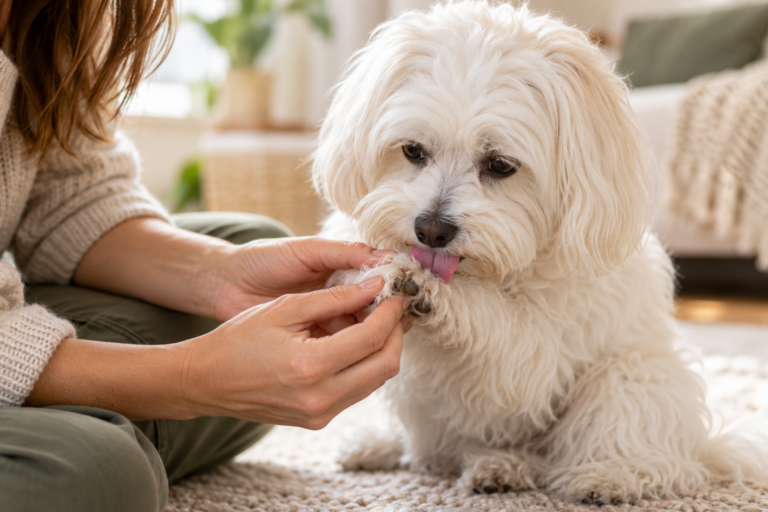
6. Repeatedly Licks the Same Joint
Dogs often try to relieve discomfort on their own.
If you notice your dog frequently licking:
- A knee
- An elbow
- A hock (ankle)
- A paw
it may be a sign that the area is painful.
Of course, excessive licking can have other causes, so it’s important to look for additional symptoms as well.
7. Changes the Way They Sit or Lie Down
Dogs with joint pain often choose positions that feel more comfortable.
You may notice that your dog:
- Sits unevenly
- Lies on one side more often
- Avoids certain positions
- Frequently changes position while resting
These changes usually happen gradually, making them easy to overlook.
8. Seems Stiffer in Cold or Damp Weather
Many dogs with arthritis or other joint conditions become noticeably stiffer when the weather is cold or damp.
If your dog gets up more slowly or moves less comfortably during colder weather, it’s a good idea to discuss it with your veterinarian.
Which Dogs Are More Likely to Develop Joint Problems?
Joint problems can affect dogs of any age or breed, but they’re more common in:
- Senior dogs
- Overweight dogs
- Large breeds
- Very active dogs
- Dogs with inherited hip or elbow conditions
Even small dogs can develop arthritis and other joint disorders, so changes in movement should never be ignored.
How Can You Help Your Dog?
If you suspect your dog has joint pain, don’t wait until they develop a noticeable limp.
The best thing you can do is:
- Schedule a veterinary examination
- Keep your dog at a healthy weight
- Avoid excessive jumping and high-impact activities
- Adjust the length and intensity of daily walks
- Use joint supplements or medications only as recommended by your veterinarian
Early intervention can often slow the progression of joint disease and help your dog stay active longer.
Looking for extra joint support?
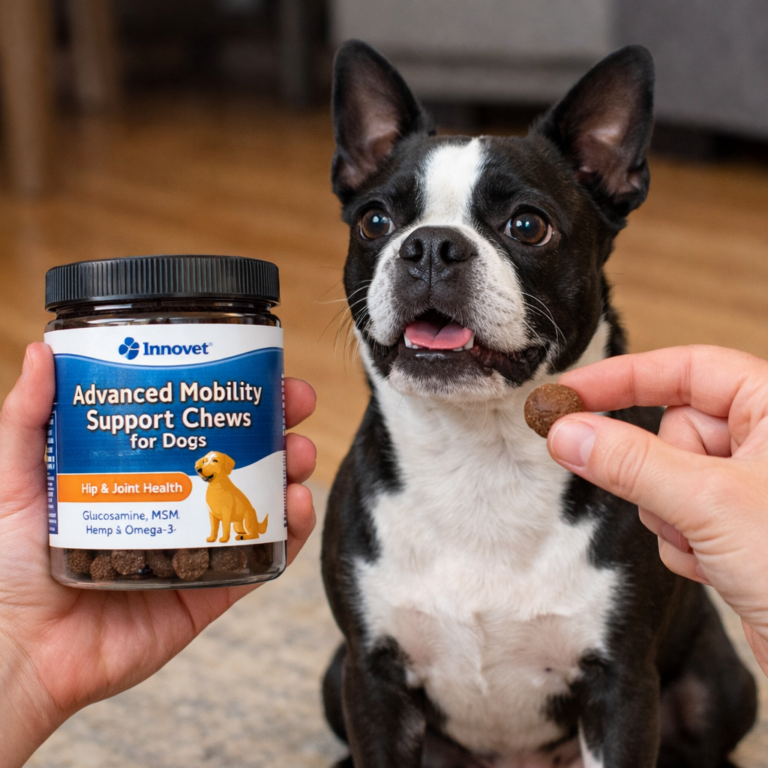
In addition to maintaining a healthy weight and regular veterinary care, some dogs may benefit from high-quality joint supplements. If your veterinarian recommends one, choose a trusted product with ingredients such as glucosamine, chondroitin, or MSM.
Frequently Asked Questions
Does every dog with joint pain limp?
No. Many dogs don’t limp for months. Instead, they show subtle changes in behavior and movement.
Is joint pain a normal part of aging?
No. Aging increases the risk of joint disease, but pain should never be considered a normal part of getting older.
Can young dogs develop joint problems?
Yes. Injuries, inherited orthopedic conditions, and intense physical activity can all contribute to joint problems, even in young dogs.
When should I see a veterinarian?
If the changes last for more than a few days or gradually become worse, it’s time to schedule a veterinary examination to determine the cause.
Final Thoughts
Joint pain rarely appears overnight. More often, it develops gradually through small changes that owners easily mistake for normal aging or fatigue.
If your dog is getting up more slowly, avoiding jumps, taking shorter walks, or losing interest in play, don’t assume it’s simply getting older. These subtle changes are often the earliest signs of joint pain.
The sooner the underlying problem is identified, the better the chances of helping your dog stay active, comfortable, and pain-free for many years to come.
Veterinary note: This article is intended for general informational and educational purposes only and should not replace professional veterinary advice, diagnosis, or treatment. If you are concerned about your dog’s health, notice new or worsening symptoms, or suspect an emergency, please contact your veterinarian promptly.