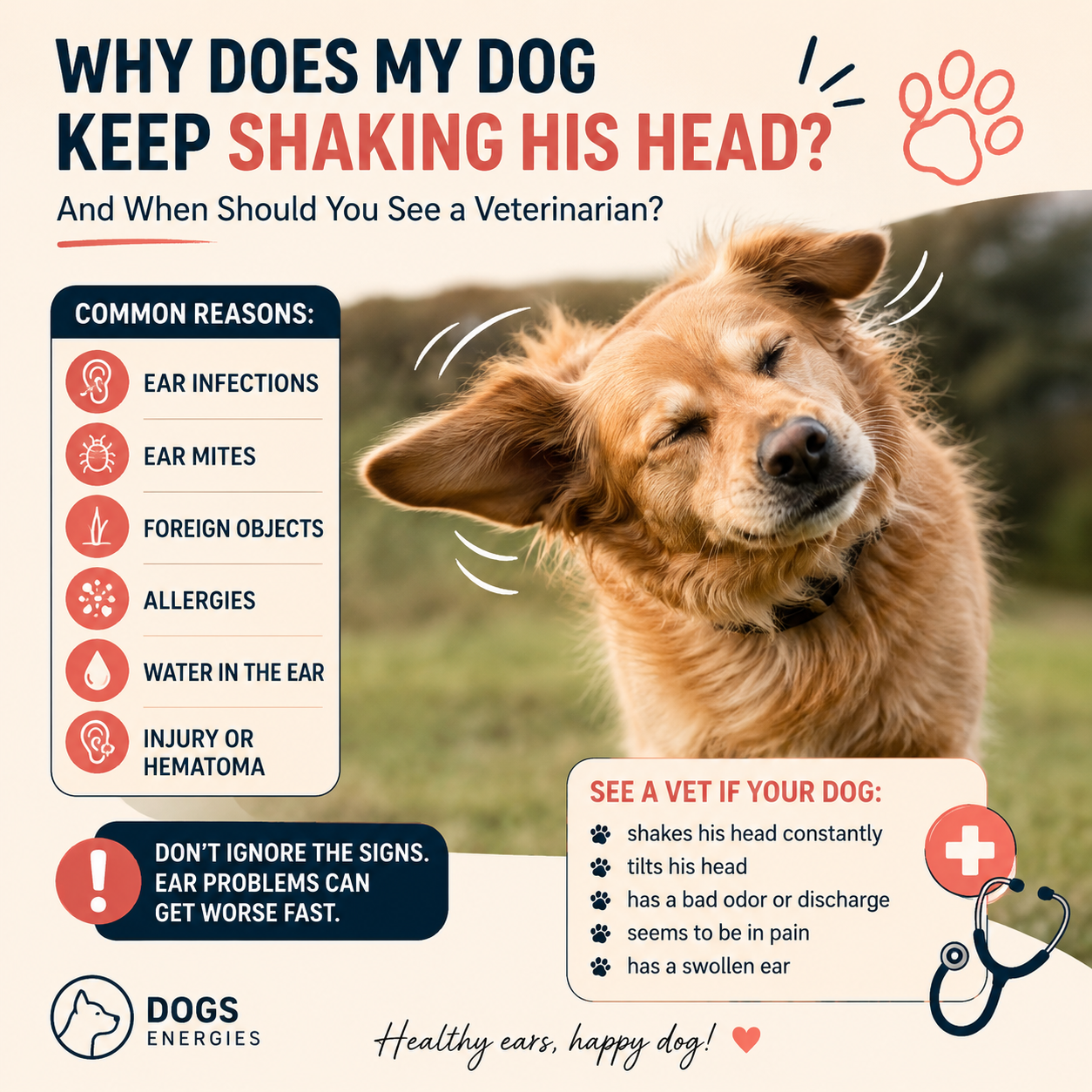
Why Does My Dog Keep Shaking His Head? Causes and When to See a Vet
Quick Answer
Dogs may shake their heads because of an itchy or painful ear, an ear infection, ear mites, allergies, water or debris in the ear, or another problem affecting the ear canal. A brief shake now and then can be normal. Frequent, forceful, or repeated head shaking usually means something is bothering your dog and should be checked.
Look at the outside of your dog’s ears for redness, swelling, discharge, or an unusual smell, but do not put anything into the ear canal. Contact your veterinarian if the shaking continues, returns, or comes with pain or other symptoms.
Is It Normal for Dogs to Shake Their Heads?
Occasional head shaking is usually normal. A dog may shake their head after waking up, playing, scratching an itch, or getting a little water near the ear during a bath.
The pattern matters. A few quick shakes that stop are different from repeated or forceful shaking throughout the day. If your dog keeps shaking their head, scratches one or both ears, rubs their head on furniture, or seems uncomfortable when you touch an ear, arrange a veterinary check.
Dogs cannot tell us where it hurts. Changes in how often they shake their head can be a useful sign that something is irritating them.
Common Reasons Your Dog May Keep Shaking Their Head
Several different problems can cause similar signs. Head shaking alone cannot tell you what the cause is, so avoid trying to diagnose or treat the ear yourself.
1. Ear inflammation or infection
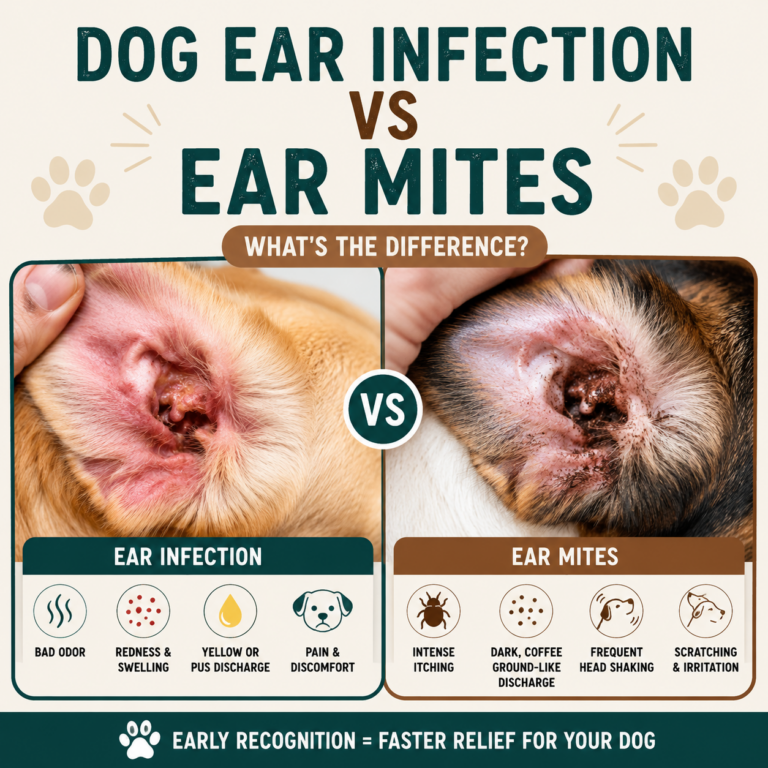
Inflammation of the ear canal can make an ear itchy, sore, or sensitive. Bacteria or yeast may be involved, but ear problems can also be linked to allergies, parasites, moisture, or a foreign object.
You may notice:
- Redness or swelling
- A strong or unusual smell
- Discharge or more wax than usual
- Scratching or rubbing at the ear
- Pain when the ear is touched
- Repeated head shaking
These signs can have different causes and may look alike. A veterinarian can examine the ear and decide what treatment, if any, is needed. You can also read our guide to dog ear infection signs most owners miss.
2. Ear mites
Ear mites are tiny parasites that can irritate the ear canal. They are more common in puppies and can spread between animals that have close contact.
Dark, crumbly debris that looks a little like coffee grounds may occur with ear mites, but its appearance does not confirm the cause. Other ear problems can produce debris too. A veterinarian can check a sample and recommend the right treatment.
For more information, see our guide to dog ear infections vs. ear mites.
3. Something caught in the ear
A grass seed, plant fragment, or other small object may irritate the ear canal. This is one possibility if the shaking starts suddenly, especially after your dog has been walking or running through grass. Your dog may shake their head more on one side, but that does not confirm that an object is present.
Do not reach into the ear with tweezers or try to pull out anything you cannot easily see at the entrance. An object can be pushed deeper, and the ear can be injured. Contact your veterinarian for advice.
4. Allergies or itchy skin
Allergies can affect a dog’s skin and ears. Some dogs with recurring ear problems also lick their paws or have itchy, red skin. These signs do not prove that allergies are the cause, but they are useful details to tell your veterinarian.
If the ear problem keeps returning, ask your veterinarian whether an underlying cause should be investigated.
5. Water or moisture after a bath or swim
A little water near the ear may prompt a brief shake. If your dog keeps shaking their head after a bath or swim, or develops redness, an odor, discharge, or sensitivity, contact your veterinarian. Moisture can contribute to ear irritation, but it is not possible to tell from head shaking alone whether an infection has developed.
After swimming or bathing, dry the outside of your dog’s ears gently with a towel. Do not push cotton, tissues, or other objects into the ear canal.
6. Swelling of the ear flap
Repeated head shaking or ear scratching can sometimes cause a fluid-filled swelling in the ear flap, called an aural hematoma. The flap may look puffy or feel soft and swollen. Contact your veterinarian if you notice this; do not try to drain or press on it at home.
How to Check Your Dog’s Ears Safely at Home
You can look at the visible part of your dog’s ears if they are comfortable with you doing so. Use good light and stop if your dog pulls away, cries, growls, or seems painful.
Look for:
- Redness or swelling
- Discharge or unusual amounts of wax
- A strong or unusual smell
- Scratches, sores, or a swollen ear flap
- A difference between the two ears
A normal-looking outer ear does not rule out a problem deeper in the ear canal. Do not insert a finger, cotton swab, or other object to investigate.
If your dog’s ears look healthy and your veterinarian has advised routine cleaning, follow their instructions. See our guide on how to clean a dog’s ears safely at home.
What Not to Do
When your dog is shaking their head, avoid these common mistakes:
- Do not put cotton swabs or other objects into the ear canal.
- Do not pour alcohol, hydrogen peroxide, oil, or home remedies into the ear.
- Do not use leftover ear drops or medication prescribed for another pet.
- Do not try to remove a deeply lodged object yourself.
- Do not clean a painful, swollen, or discharging ear before speaking with your veterinarian.
The right treatment depends on what is causing the problem. A veterinary examination can help prevent the wrong product or cleaning method from making an irritated ear worse.
When Should You Contact a Veterinarian?
Contact your veterinarian if your dog keeps shaking their head, the shaking returns, or you notice itching, redness, discharge, an unusual smell, or sensitivity around the ear. You do not need to wait a set number of hours if your dog seems uncomfortable or the symptoms are getting worse.
Seek urgent veterinary care if your dog has:
- Severe or sudden pain
- Blood coming from the ear
- A rapidly swelling ear flap
- A persistent head tilt or trouble keeping their balance
- Unusual eye movements, weakness, or difficulty standing
These signs need prompt assessment. If possible, take a short video of the head shaking to show the veterinarian, especially if it happens intermittently.
Frequently Asked Questions
The cause may not be visible from the outside. Irritation, inflammation, a problem deeper in the ear canal, or another issue can still be present. If the shaking continues or returns, contact your veterinarian.
A problem may be affecting one ear more than the other, but the pattern alone cannot identify the cause. Check only the visible outer ear and arrange a veterinary examination if the shaking continues or your dog seems uncomfortable.
Yes. Allergies can affect the skin and ears in some dogs. Paw licking, itchy skin, or recurring ear problems may be useful details to share with your veterinarian.
Not automatically. If the ear is painful, swollen, red, or producing discharge, ask your veterinarian before cleaning it. Cleaning may be unsuitable for some ear problems, and objects should never be pushed into the canal.
Repeated shaking or scratching can contribute to an aural hematoma, a fluid-filled swelling in the ear flap. Contact your veterinarian if you notice swelling.
Final Thoughts
An occasional head shake may be nothing more than a brief response to an itch or water near the ear. Repeated or forceful shaking, especially with scratching, pain, discharge, or an unusual smell, deserves attention.
Check only the outside of the ear, avoid putting products or objects into the canal, and contact your veterinarian if the problem persists, returns, or worsens. Early advice can help identify the cause and guide safe treatment.
Veterinary note: This article is for general informational and educational purposes only. It does not replace professional veterinary advice, examination, diagnosis, or treatment. If your dog has persistent or worsening symptoms, seems to be in pain, or shows urgent signs such as bleeding, a swollen ear flap, head tilt, or loss of balance, contact a veterinarian promptly.