How to Protect Dog Paws From Road Salt and Ice: A Winter Safety Guide
Winter walks can be wonderful. The fresh air, quiet streets, and the excitement of a dog discovering new smells make even a short walk enjoyable.
But winter also brings something many dog owners overlook: road salt.
We often think about keeping our dogs warm when temperatures drop. We buy cozy coats, avoid freezing weather, and shorten our walks. Yet the paws touching cold sidewalks, icy paths, and chemically treated roads deserve just as much attention.
Road salt and ice-melting products can irritate your dog’s paw pads, cause discomfort, and sometimes lead to more serious problems.
The good news? You don’t need to stop enjoying winter walks.
With a few simple habits, you can protect your dog’s paws and keep winter outings comfortable and safe.
Can Road Salt Hurt Your Dog’s Paws?
Yes. Road salt and certain ice-melting chemicals can irritate your dog’s paw pads, especially when exposure is frequent or the skin is already dry or damaged.
Some dogs develop redness, dryness, or painful cracks after walking on treated sidewalks.
Others may suddenly stop walking, lift one paw, or try to lick their feet.
And there is another concern.
Dogs naturally clean their paws by licking them. If road salt or de-icing chemicals remain on their feet, they may swallow some of those substances.
Depending on the product and the amount swallowed, this can cause anything from mild stomach upset to potentially serious poisoning.
That’s why cleaning your dog’s paws after winter walks is more than a grooming habit. It’s an important part of winter safety.
5 Signs Road Salt May Be Irritating Your Dog’s Paws
Dogs can’t tell us when something hurts, but they often show us through their behavior.
Watch for these signs:
- Suddenly lifting a paw: Your dog may hold one foot off the ground or refuse to put weight on it.
- Excessive paw licking: Repeated licking after a walk may indicate irritation or discomfort.
- Redness between the toes: The skin may look inflamed or unusually sensitive.
- Dry or cracked paw pads: Cold weather and repeated exposure to irritants may contribute to damaged skin.
- Refusing to continue walking: A dog who suddenly stops may be experiencing pain from salt, ice, or another injury.
Not every lifted paw means road salt is responsible. Ice, cuts, foreign objects, and other paw problems can cause similar symptoms.
What’s normal, and when should you worry?
| Usually less concerning | Needs attention |
|---|---|
| Brief paw lifting on very cold ground that stops after moving to a safer surface | Persistent limping or refusing to walk |
| Mild dryness without discomfort | Bleeding, deep cracks, or open wounds |
| Occasional paw cleaning | Repeated licking with redness or swelling |
| Normal walking after paw cleaning | Pain that continues after paws are rinsed |
If your dog has significant pain, swelling, bleeding, or persistent limping, contact your veterinarian.
7 Simple Ways to Protect Dog Paws From Road Salt and Ice
Veterinary guidance from VCA Animal Hospitals highlights several practical ways to protect dogs’ paws during cold weather, including protective footwear and proper paw care.
1. Choose Safer Walking Routes
One of the easiest ways to protect your dog’s paws is to avoid heavily salted sidewalks whenever possible.
Look for routes with less visible salt or chemical residue.
A quiet path, a cleared area with minimal de-icer, or a safe section of your yard may be a better option.
However, untreated icy surfaces can be slippery, so avoiding salt should never mean choosing a dangerous route.
My tip: During winter, I prefer shorter, more comfortable walks instead of pushing a small dog to stay outside longer than necessary.
A successful walk isn’t measured by distance. It’s measured by whether your dog feels safe and comfortable.
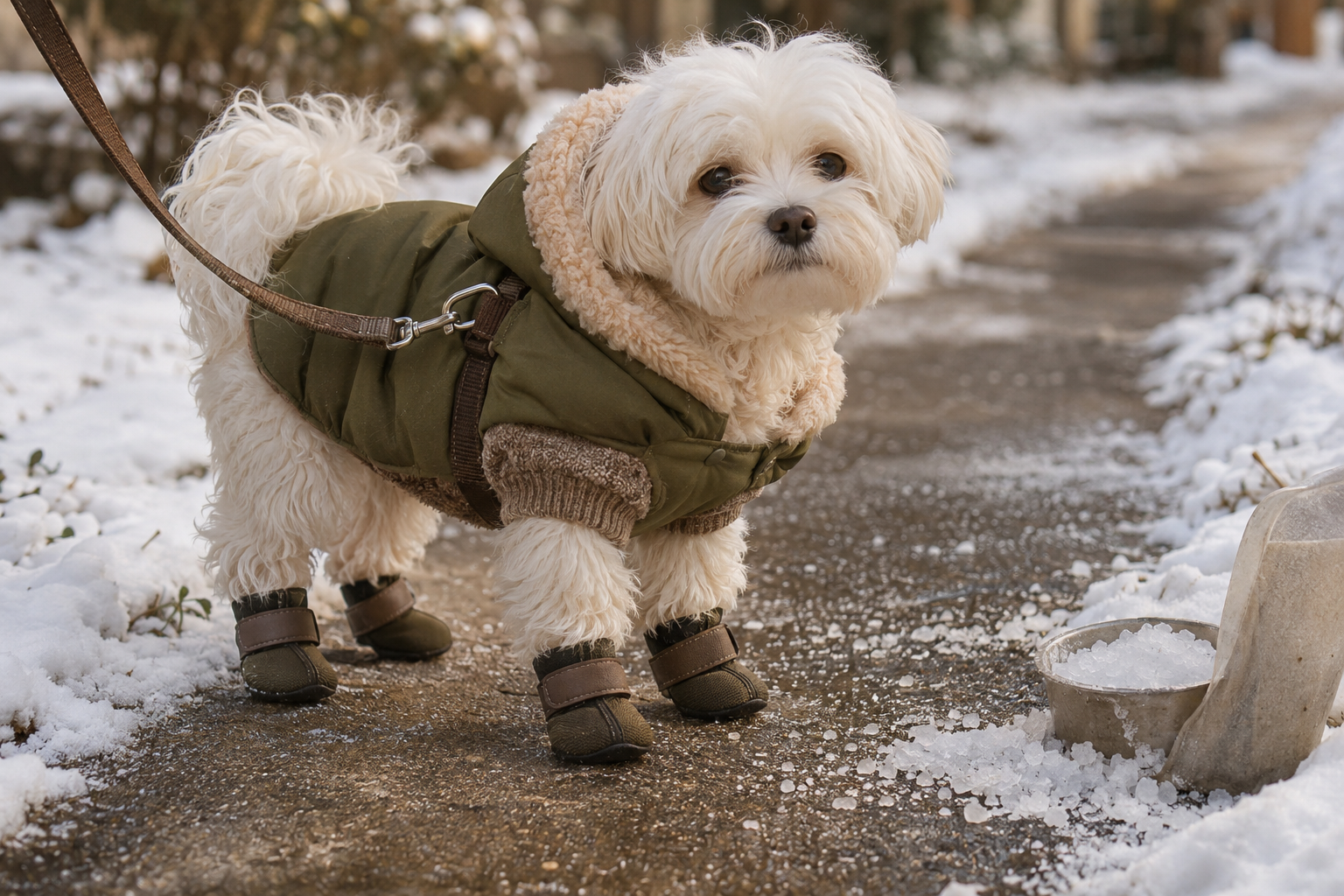
2. Try Dog Boots for Extra Protection
Dog boots create a physical barrier between your dog’s paws and the ground.
They can help protect against:
- Road salt and de-icing chemicals
- Ice and packed snow
- Rough, frozen surfaces
- Cold ground
But there’s one thing many owners discover quickly.
Not every dog likes wearing boots.
Some dogs freeze in place, lift their legs dramatically, or walk as if they’ve forgotten how their feet work.
If your dog reacts this way, don’t force a long walk immediately.
Start indoors. Let your dog sniff the boots, reward calm behavior, and gradually introduce wearing them for short periods.
Choose boots that fit securely without squeezing the paws or restricting movement.
A comfortable fit matters more than how cute the boots look.
3. Use a Dog-Safe Paw Balm
A paw balm designed for dogs can help protect and moisturize paw pads during cold weather.
Some protective waxes form a temporary barrier that may reduce direct contact with moisture and irritants.
Apply the product according to its instructions, ideally before heading outside if it is intended for pre-walk protection.
Remember that paw balm isn’t a complete replacement for boots, and it doesn’t make exposure to road salt harmless.
You still need to clean your dog’s paws afterward.
Avoid using random human creams or heavily fragranced products. Some ingredients may be unsuitable for dogs, particularly if licked.
4. Clean Your Dog’s Paws After Every Winter Walk
This is one of the most important habits you can develop.
Even when your dog’s paws look clean, small amounts of salt or chemical residue may remain between the toes or on the paw pads.
After returning home:
- Check each paw for visible salt, ice, or debris.
- Rinse the paws with lukewarm water or wipe thoroughly with a clean, damp cloth.
- Gently clean between the toes and around the pads.
- Dry each paw carefully with a soft towel.
- Check for redness, cracks, or other signs of irritation.
Avoid very hot water, harsh soaps, and vigorous rubbing.
For small dogs, this routine usually takes only a few minutes.
And those few minutes can prevent a lot of discomfort.
If you want a simple everyday cleaning routine, read our guide on How to Clean Muddy Dog Paws After a Walk.
5. Keep the Fur Between Paw Pads Neatly Trimmed
Dogs with longer fur around their paws may collect snow, ice, and debris between their toes.
This can make walking uncomfortable.
Keeping excess fur neatly trimmed may help reduce the buildup of snow and ice.
However, don’t shave the area aggressively or cut close to the skin.
If you’re unsure how to trim the fur safely, ask a professional groomer.
If your dog also dislikes regular grooming, our guide on How to Brush a Dog That Hates Being Brushed: A Gentle 7-Day Plan can help you introduce grooming more gradually and positively.
6. Shorten Walks When Conditions Are Harsh
Small dogs can be especially sensitive to cold conditions, although tolerance varies with breed, coat, age, health, and individual needs.
A Boston Terrier, Yorkshire Terrier, or Bolognese may have very different comfort levels during winter.
Watch your dog rather than relying on a fixed walking time.
If your dog starts shivering, repeatedly lifting their paws, slowing down, or looking uncomfortable, it’s time to head somewhere warm.
Several short outings may be more comfortable than one long walk in freezing conditions.
And if your dog needs extra warmth, our article Do Dogs Need Winter Coats? explains when a coat may help.
7. Check Your Dog’s Paws Regularly
Winter paw care shouldn’t begin only when your dog starts limping.
Make a quick paw inspection part of your daily routine.
Look for:
- Dry or rough paw pads
- Small cracks
- Redness between the toes
- Swelling
- Unusual licking
- Cuts or trapped debris
Early attention to minor changes may help prevent worsening irritation.
If the skin is broken or painful, don’t experiment with home treatments. Ask your veterinarian for guidance.
What If Your Dog Licks Road Salt?
A small lick of residue doesn’t automatically mean your dog will become seriously ill, but swallowing de-icing products can be dangerous.
The risk depends on the chemical ingredients, the amount swallowed, and your dog’s size and health.
The ASPCA also recommends taking precautions around ice-melting products because some ingredients can irritate paws or cause problems if swallowed.
Possible signs of exposure include:
- Drooling
- Vomiting
- Diarrhea
- Unusual thirst
- Weakness or lethargy
- Tremors or seizures in severe cases
If you see your dog licking salt from the ground, gently stop them and move away from the area.
If you suspect your dog swallowed a de-icing product, contact your veterinarian or an animal poison control service promptly, even if symptoms haven’t appeared.
Don’t induce vomiting or give home remedies unless a veterinary professional instructs you to do so.
If possible, keep the product packaging or take a photograph of the label to help identify the ingredients.
Are Pet-Safe Ice Melts Really Safe for Dogs?
You may have seen products labeled “pet-safe” or “pet-friendly.”
These labels can be helpful when choosing products for your own driveway, but they don’t guarantee that a product is completely harmless.
Different ice melts contain different ingredients, and some may still irritate paws or cause problems if swallowed.
When choosing a de-icer:
- Read the ingredient list and product instructions.
- Follow the recommended application amount.
- Store the product securely away from pets.
- Prevent your dog from eating granules or licking treated surfaces.
- Clean your dog’s paws after walking on treated ground.
Even when you use a product marketed for pets, basic precautions still matter.
My Winter Paw Care Routine for Small Dogs
After years of caring for small dogs, I’ve learned that simple, consistent routines are often more useful than buying every new pet product.
Small dogs live close to the ground, and winter conditions can make ordinary walks less comfortable.
I prefer to pay attention to how a dog behaves rather than insist on completing a planned route.
If the weather is unpleasant, there’s nothing wrong with a shorter walk.
And when we return home, checking and cleaning the paws is a simple habit worth maintaining.
You don’t need an elaborate grooming station.
A soft towel, lukewarm water, and a few minutes of attention can make a real difference.
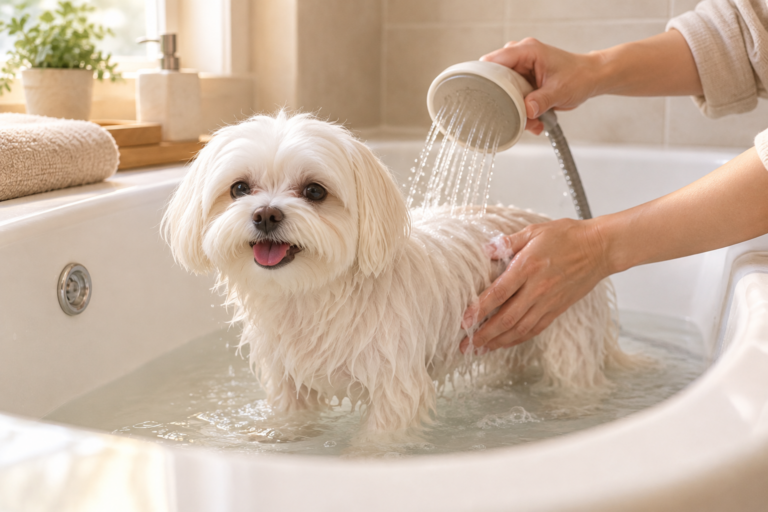
Winter paw cleaning is just one part of keeping your dog comfortable. If you’re wondering how cold weather affects your dog’s regular grooming routine, read our guide on How Often Should You Bathe a Small Dog?.
The goal isn’t to make winter complicated.
It’s to help our dogs enjoy it safely.
Common Winter Paw Care Mistakes
Even caring dog owners sometimes make small mistakes without realizing it.
Skipping paw cleaning because the sidewalk looks dry
Salt residue can remain on surfaces even when there is no visible snow.
Assuming a winter coat protects the whole dog
A coat may help keep the body warm, but it doesn’t protect paw pads from chemical irritants.
Using paw balm instead of washing paws
Protective products may help, but residue still needs to be removed.
Forcing a dog to wear uncomfortable boots
Poorly fitting boots can cause rubbing or interfere with normal walking.
Ignoring repeated paw licking
Persistent licking may signal irritation, injury, allergies, or another problem that needs attention.
Waiting too long when a dog is limping
A dog who continues to limp or shows significant discomfort should be examined by a veterinarian.
Quick Winter Paw Protection Checklist
Save this checklist for the next cold day.
| Before the walk | After the walk |
|---|---|
| Check weather and ground conditions | Rinse or wipe away salt residue |
| Choose a safer walking route | Dry between the toes |
| Use well-fitting boots if needed | Inspect pads for redness or cracks |
| Apply dog-safe protective balm if appropriate | Watch for excessive licking |
| Plan a walk suited to your dog’s comfort | Contact your vet if pain or irritation persists |
Frequently Asked Questions
Road salt and some de-icing chemicals can cause irritation, and prolonged contact may lead to painful skin damage. The severity depends on the substance, exposure, and condition of the skin.
Yes, particularly when walking on sidewalks or roads treated with salt or ice-melting products. Lukewarm water and thorough drying are usually sufficient for routine cleaning.
They serve different purposes. Boots provide a physical barrier, while protective balms may offer limited protection and help maintain paw pad moisture. For heavily salted routes, properly fitted boots generally provide more complete coverage.
Plain petroleum jelly is sometimes used as a temporary moisture barrier, but it isn’t a substitute for proper paw protection or cleaning. A dog-specific product may be more practical. Ask your veterinarian before applying products to damaged skin.
Cold surfaces, ice, snow buildup, salt irritation, or an injury may be responsible. If your dog continues lifting a paw after moving to a warmer, safer surface, inspect it and contact your veterinarian if discomfort persists.
Final Thoughts: Small Habits Make Winter Walks Safer
Winter doesn’t have to mean giving up the walks your dog loves.
But it does mean paying attention to things we might overlook during warmer months.
Road salt, ice, and cold surfaces can all affect your dog’s paws.
Fortunately, prevention doesn’t need to be difficult.
Choose safer routes, protect the paws when necessary, clean them after walks, and watch for changes in your dog’s behavior.
Sometimes the smallest routines are the ones that make the biggest difference.
And our dogs depend on us to notice those little things.
Veterinary note: This article is for educational purposes and is not a substitute for professional veterinary advice. If your dog has painful, cracked, bleeding, or swollen paws, persistent limping, or possible exposure to toxic de-icing products, contact your veterinarian.