How to Keep a Small Dog Busy Indoors: 12 Easy Activities That Actually Work
Rainy days, cold weather, or simply a busy afternoon don’t have to mean a bored dog. These simple indoor activities can keep your small dog entertained, mentally stimulated, and happily tired — without turning your living room into a playground.
Small dogs may have tiny paws, but their need for activity, attention, and mental stimulation is anything but small.
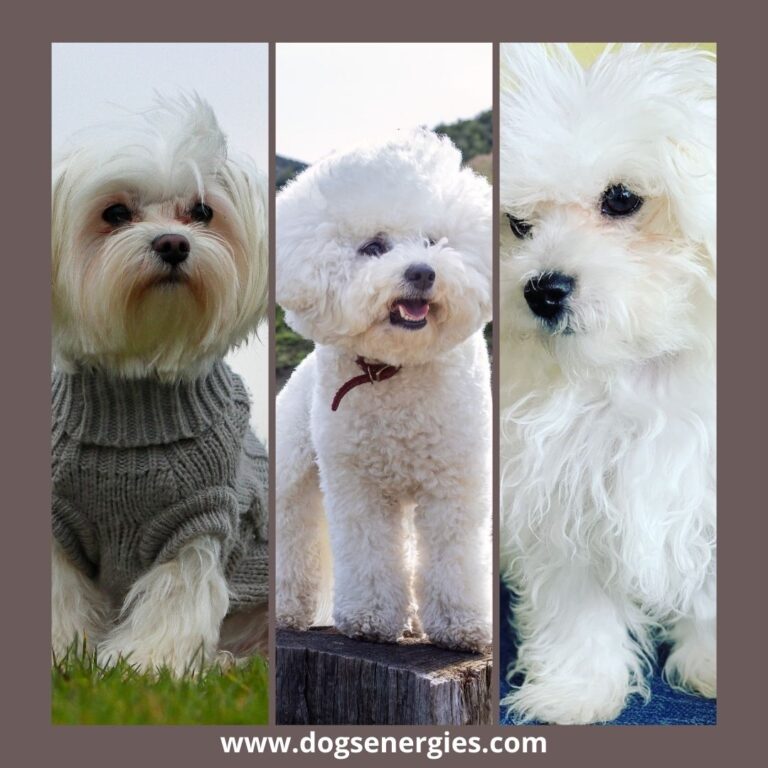
If you live with a Boston Terrier, Bolognese, Yorkie, Chihuahua, or another small breed, you’ve probably noticed something interesting: your dog can spend hours sleeping peacefully, then suddenly decide that your slippers, sofa cushions, or favorite blanket are the most exciting things in the world.
Sometimes, all that energy needs is a better direction.
The good news? You don’t need a large house, expensive dog toys, or hours of free time to keep a small dog busy indoors.
A few minutes of sniffing, searching, learning, or playing together can make a surprising difference.
After years of living with small dogs, I’ve learned that the best activities are often the simplest ones. And sometimes, an ordinary towel or a few pieces of kibble can be more interesting to a dog than a brand-new toy.
Here are 12 easy indoor activities worth trying.
Why Small Dogs Need Indoor Activities
It’s easy to assume that a small dog doesn’t need much exercise because of their size.
But being small doesn’t mean having less curiosity, intelligence, or energy.
Small dogs need opportunities to:
- Use their sense of smell.
- Explore and solve simple problems.
- Practice familiar skills and learn new ones.
- Play and interact with their owners.
- Move their bodies safely.
- Relax after enjoyable activities.
Without enough physical and mental stimulation, some dogs may start barking more, chewing household items, following their owners constantly, or demanding attention.
If your little companion seems to follow you from room to room, you may also enjoy our article Why Does My Dog Follow Me Everywhere?
However, these behaviors don’t always mean boredom. Anxiety, discomfort, lack of rest, or other needs can look similar.
The goal isn’t to keep your dog entertained every minute. It’s to create a healthy balance between activity and relaxation.
And that’s exactly what these indoor games can help you do.
1. Turn Mealtime Into a Sniffing Game
Best for: Dogs who love food and need an easy mental challenge.
One of the simplest ways to keep a small dog busy indoors is to make finding food part of the fun.
Instead of serving every meal in a regular bowl, try turning a portion of your dog’s usual kibble into a little treasure hunt.
How to play:
- Ask your dog to wait, or have someone gently hold them in another room.
- Hide a few pieces of kibble in easy-to-find places.
- Let your dog enter the room.
- Encourage them to search by saying, “Find it!”
- Praise them when they discover the food.
Start with visible pieces on the floor. As your dog understands the game, make the hiding places slightly more challenging.
You can use corners of the room, the edges of a clean rug, or safe spaces around furniture.
Avoid hiding food near electrical cords, cleaning products, or anything your dog might swallow.
My tip: Use part of your dog’s regular daily food allowance instead of adding lots of extra treats.
Sniffing is a natural canine behavior, and scent-based games provide an opportunity for mental enrichment without requiring much space.
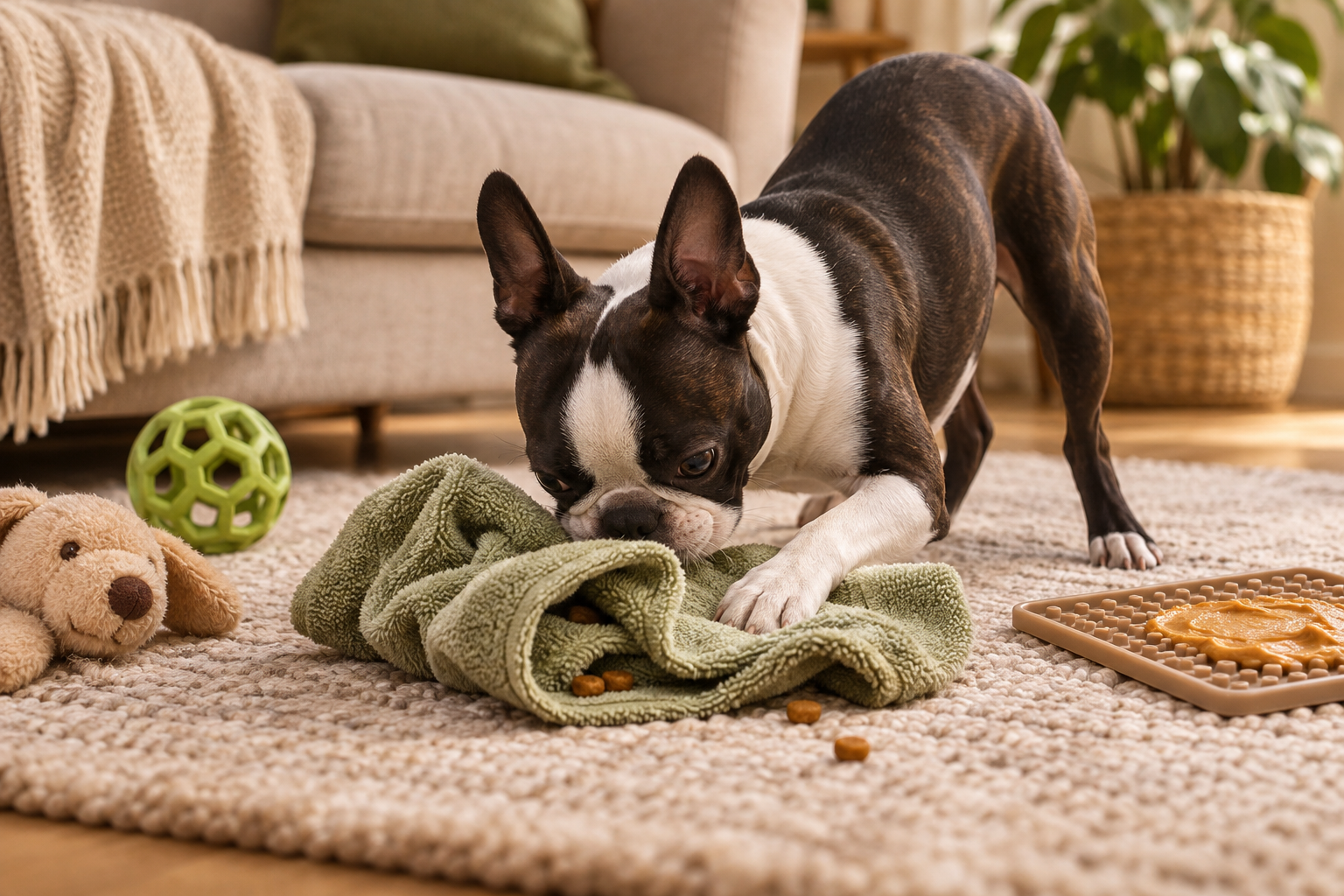
2. Make a Simple Snuffle Towel
Best for: Small dogs who enjoy sniffing and searching.
You don’t need to buy a snuffle mat to create a fun indoor activity.
A clean towel can work beautifully.
How to make it:
- Lay a towel flat on the floor.
- Sprinkle a small amount of dry kibble across it.
- Fold or loosely roll the towel.
- Let your dog investigate and find the hidden pieces.
For beginners, keep the towel loosely folded so the food is easy to reach.
As your dog becomes more confident, you can add another fold.
Avoid tight knots, especially if your dog becomes frustrated or starts biting the fabric.
Always supervise this game and remove the towel if your dog tries to tear or eat it.
A simple activity like this can turn an ordinary afternoon into an interesting little adventure.
3. Play Hide-and-Seek With Your Dog
Best for: Building connection and practicing recall.
This is one of my favorite indoor games because it combines play, training, and interaction.
And you don’t need any special equipment.
Ask your dog to stay with another family member while you hide somewhere easy — perhaps behind a door or beside the sofa.
Then call your dog in a cheerful voice.
When they find you, celebrate with praise, gentle petting, or a small treat.
Start with easy hiding places and gradually make the game more challenging.
For dogs that haven’t learned to stay yet, simply have another person hold them briefly while you hide.
Why I like this game: Your dog isn’t just looking for a reward. They’re looking for you.
It’s a lovely way to strengthen your bond while practicing an important everyday skill.
If your dog is still learning to come when called, keep the game positive and avoid making it too difficult.
4. Teach One New Trick in Five Minutes
Best for: Curious dogs and owners with limited time.
Training doesn’t always have to be serious.
In fact, short, playful sessions can be a wonderful way to keep a small dog mentally engaged.
Try teaching something simple, such as:
- Touching your hand with their nose.
- Giving a paw.
- Spinning slowly in a circle.
- Going to their bed on cue.
- Finding a favorite toy by name.
Choose one skill at a time.
Reward small steps toward the behavior, and finish before your dog becomes frustrated or loses interest.
Five minutes of enjoyable training can be more useful than a long session filled with repeated commands.
I’ve seen how differently small dogs respond to rewards. Some are highly motivated by food, while others become much more enthusiastic when they receive praise or affection.
The important thing is discovering what your own dog finds rewarding.
If you’re unsure which reward works best, read our guide on what is a reward for a dog
5. Create a Mini Indoor Obstacle Course
Best for: Active small dogs who enjoy movement.
You can create a simple indoor adventure using things you already have at home.
Try arranging:
- Two cushions to walk around.
- A low, stable obstacle to step over.
- A short tunnel made from a suitable pet tunnel.
- A mat where your dog can stop and sit.
- A toy waiting at the finish line.
Guide your dog through the course slowly, using treats or encouraging words.
The goal is not speed or jumping ability.
It’s coordination, confidence, and having fun together.
Important: Avoid high jumps, slippery floors, unstable furniture, or activities that force your dog into awkward movements.
For puppies, senior dogs, and dogs with joint or breathing difficulties, choose gentle, low-impact activities appropriate to their abilities.
A Boston Terrier, for example, may enjoy a little obstacle course, but energetic play should be kept comfortable and never pushed to the point of heavy breathing or exhaustion.
6. Try a Lick Mat for Quiet Entertainment
Best for: Calm enrichment and supervised quiet time.
Some indoor activities are exciting.
Others are wonderfully peaceful.
A lick mat can be useful when you want to give your dog something enjoyable to focus on while you prepare dinner or take a short break.
Spread a thin layer of dog-safe food over the mat, such as:
- Plain pumpkin puree without added sugar or spices.
- A little plain, unsweetened yogurt, if your dog tolerates dairy.
- A small amount of xylitol-free peanut butter.
- Part of your dog’s usual wet food.
You can refrigerate the mat to make the food last a little longer.
Licking is a natural behavior, and some dogs find repetitive licking soothing. However, a lick mat isn’t a treatment for anxiety, and not every dog finds it relaxing.
Always supervise your dog, especially if they tend to chew silicone or swallow pieces of toys.
For an easy homemade idea, see our Easy Pumpkin Lick Mat Recipe for Small Dogs.
7. Play the Three-Cup Treat Game
Best for: Dogs who enjoy solving little puzzles.
This game is simple, inexpensive, and surprisingly entertaining.
You’ll need three sturdy, lightweight cups and a few small treats.
Here’s how it works:
- Place the cups upside down on the floor.
- Let your dog watch you hide a treat under one cup.
- Encourage them to find the treat.
- Lift the cup when your dog indicates the correct one.
- Gradually change the cup positions as your dog learns.
At first, don’t move the cups around.
Make the game easy enough that your dog succeeds.
Once they understand the idea, you can gently slide the cups into different positions.
Avoid fragile cups or containers with sharp edges, and don’t let your dog chew or swallow the materials.
This is a fun way to introduce simple problem-solving without buying a puzzle toy.
8. Rotate Your Dog’s Favorite Toys
Best for: Dogs who seem bored with their toy collection.
Have you ever bought your dog a new toy, only to discover that they lose interest in it a few days later?
Sometimes, the problem isn’t the toy.
It’s that the toy is always available.
Instead of leaving every toy on the floor, try keeping a few favorites out and storing the rest.
Every few days, switch them.
An old toy that hasn’t been seen for a while may suddenly become interesting again.
You can rotate different types of toys:
- Soft toys for carrying.
- Safe chew toys.
- Treat-dispensing toys.
- Tug toys.
- Interactive puzzle toys.
Check toys regularly for loose parts, damaged seams, and choking hazards.
You don’t need a huge toy collection. A small selection used thoughtfully is often enough.
9. Play a Gentle Game of Tug
Best for: Playful small dogs who enjoy interaction.
Tug-of-war can be a fun indoor game when played gently and safely.
Choose a soft tug toy suitable for your dog’s size.
Hold one end and invite your dog to grab the other.
Use gentle movements rather than pulling hard or lifting your dog off the ground.
Take occasional breaks and practice a cheerful “drop it” cue by offering a reward.
A few simple rules make the game safer:
- Keep the toy low and movements gentle.
- Avoid jerking your dog’s head or neck.
- Stop if your dog becomes uncomfortable or overly excited.
- Let your dog win sometimes.
- Avoid tug if your dog has dental pain or another condition that makes it uncomfortable.
Tugging doesn’t automatically make a dog aggressive. For many dogs, it’s simply an enjoyable game with their favorite person.
10. Give Your Dog a Safe Chewing Activity
Best for: Dogs who enjoy chewing and need a quiet activity.
Chewing is a natural behavior for dogs.
For puppies, it can become especially noticeable during teething.
Providing appropriate chewing opportunities may help redirect their attention away from shoes, furniture, and household objects.
Choose chew toys designed for your dog’s size and chewing style.
Look for products that are durable but not excessively hard, and avoid anything that could splinter or break into swallowable pieces.
As a general precaution, extremely hard chews can damage teeth.
Always supervise new chewing activities.
If your puppy frequently grabs your hands, sleeves, or trousers, read our practical guide on how to stop puppy biting hands and clothes.
Remember that chewing isn’t always caused by boredom. Puppies also explore the world with their mouths, and they need plenty of sleep.
11. Teach Your Dog to Find a Favorite Toy
Best for: Dogs who enjoy toys more than treats.
Not every dog is highly food-motivated.
Some would happily choose their favorite squeaky toy over a biscuit.
If that sounds like your dog, try a toy-searching game.
Start by showing your dog a familiar toy.
Say its name, such as “Find your ball,” and place it somewhere easy to see.
When your dog approaches or touches it, reward them with praise or a short play session.
Repeat the game several times.
Once your dog understands, begin placing the toy behind a cushion or just outside their direct view.
Over time, some dogs can learn to recognize several toys by name.
Don’t rush the process.
The goal is to make searching enjoyable, not to test your dog’s intelligence.
12. Finish With a Calm Resting Activity
Best for: Dogs who become overexcited after play.
One mistake owners sometimes make is trying to entertain their dogs constantly.
But dogs need rest just as much as they need stimulation.
After a few minutes of indoor games, offer your dog a chance to settle.
You might:
- Invite them to rest on their favorite bed.
- Offer a suitable chew or supervised lick mat.
- Sit beside them for gentle petting.
- Create a quiet space away from household noise.
Some small dogs are naturally energetic and love attention.
Others prefer short bursts of activity followed by a long nap.
Neither is wrong.
A happy indoor day doesn’t mean a dog must be busy all day. It means their needs for activity, companionship, and rest are being met.
How Much Indoor Activity Does a Small Dog Need?
There isn’t one perfect number of minutes for every small dog.
Age, breed, health, personality, and daily routine all matter.
A young, energetic terrier may enjoy several short games throughout the day, while a senior Bolognese might prefer gentle sniffing activities and more rest.
For many healthy adult small dogs, starting with a few 5–10-minute enrichment sessions can be practical.
Watch your dog’s response and adjust.
| Your dog’s situation | Indoor activities to try |
|---|---|
| Energetic adult dog | Hide-and-seek, gentle tug, trick training |
| Curious puppy | Easy scent games, short training, safe chewing |
| Senior small dog | Gentle sniffing, simple food puzzles, relaxed interaction |
| Dog recovering from illness | Only activities approved by your veterinarian |
| Dog who gets excited easily | Simple sniffing games, lick mats, calm settling practice |
| Dog who dislikes toys | Food searches, reward-based training, owner interaction |
Indoor enrichment complements daily walks and outdoor exploration. It doesn’t automatically replace them.
A Simple 20-Minute Indoor Enrichment Routine
You don’t need to plan an entire afternoon.
Here’s a simple routine you can adapt for a healthy small dog.
| Time | Activity |
|---|---|
| 5 minutes | Search for kibble hidden around the room |
| 5 minutes | Practice one familiar trick and one new skill |
| 5 minutes | Play gentle tug or find-the-toy |
| 5 minutes | Offer a supervised lick mat or quiet settling activity |
That’s 20 minutes of varied engagement, not a requirement to keep your dog active continuously.
You can also split these activities throughout the day.
And if your dog is satisfied after only two activities, that’s perfectly fine.
The best routine is the one that suits your dog — and your real life.
Common Mistakes When Entertaining a Small Dog Indoors
Even well-intentioned owners sometimes make indoor play more complicated than it needs to be.
Making games too difficult. If your dog can’t solve a puzzle, they may become frustrated. Begin with easy challenges and gradually increase difficulty.
Using too many treats. Food games are wonderful, but calories add up quickly in small dogs. Use part of their normal daily meals whenever possible.
Choosing toys that are too large or too small. A toy should suit your dog’s mouth, strength, and chewing habits without creating a choking risk.
Encouraging nonstop excitement. Some dogs need help learning how to settle after play. Alternate active games with quieter activities.
If your puppy becomes especially energetic in the evening, our guide on how to calm a puppy during the evening witching hour explains how to handle those challenging moments.
Ignoring signs of tiredness. Walking away, losing interest, excessive panting, or becoming irritable can be signs that it’s time for a break.
Replacing every walk with indoor games. Unless outdoor activity is temporarily unsafe or restricted, most dogs still benefit from regular walks, fresh air, and opportunities to explore.
How Do You Know Your Small Dog Is Happily Occupied?
You don’t need to measure success by how exhausted your dog looks afterward.
Instead, look for signs that your dog is comfortable and enjoying the activity.
A dog who is happily engaged may:
- Approach the activity willingly.
- Show curiosity without becoming frantic.
- Continue playing with a relaxed body.
- Respond positively to your encouragement.
- Settle comfortably afterward.
If your dog repeatedly walks away, freezes, becomes frustrated, or seems overwhelmed, make the activity easier or stop.
And remember: a dog who chooses to nap peacefully isn’t necessarily bored.
Sometimes, rest is exactly what they need.
Frequently Asked Questions
Try hiding kibble around the room, practicing simple tricks, playing hide-and-seek, or using a clean towel for a supervised sniffing game. Many dogs enjoy activities that involve their nose and interaction with their owner.
Indoor games provide valuable mental stimulation and some physical activity, but they generally shouldn’t replace regular walks. Outdoor time offers new smells, environmental enrichment, and opportunities for movement that are difficult to recreate completely indoors.
Try scent games, a lick mat, short training sessions, gentle tug, or a simple indoor obstacle course. Choose activities based on your dog’s energy level and physical abilities.
Offer a safe, age-appropriate independent activity, such as a suitable food puzzle, during a supervised break. Schedule short play sessions between work tasks and encourage your dog to rest comfortably nearby. Not all dogs can safely use toys or chews without supervision.
Restlessness can have several causes, including overstimulation, insufficient rest, anxiety, unmet needs, or physical discomfort. If the behavior is new, persistent, or accompanied by other symptoms, consult your veterinarian.
Final Thoughts: A Happy Small Dog Doesn’t Need Constant Entertainment
Living with small dogs has taught me something important: happiness often comes from the simplest moments.
A little sniffing game on the living room floor.
Five minutes spent learning a new trick.
Finding a favorite toy hidden behind a cushion.
Or simply curling up beside you after a few minutes of play.
You don’t need to fill every hour with activities or buy every new dog toy you see.
What matters most is understanding your dog’s individual needs.
Start with one or two indoor games, see what your dog enjoys, and build a simple routine that works for both of you.
Because sometimes, the best enrichment isn’t an expensive toy.
It’s a little creativity — and a few happy minutes together.
Which indoor activity does your small dog enjoy the most? I’d love to hear about your favorite games in the comments!