
Do Dogs Understand Words? What They Recognize and How to Teach Them
You say “walk,” and your dog runs to the door. You mention “dinner,” and suddenly those sleepy eyes are wide open.
It can feel as if your dog understands every word you say. But what is really happening?
Dogs can learn that certain words are connected to people, objects, actions, or familiar routines. They also pay attention to our voice and body language. But understanding a few familiar words is different from following human conversation.
Your dog may recognize “walk” because it often comes before a leash and time outside. That does not necessarily mean they understand the whole sentence, “We might go for a walk after lunch.”
What does it mean when a dog understands a word?
For a dog, a word can become a useful signal. When the same sound is repeatedly followed by the same object or activity, the dog can learn to expect what comes next.
For example:
- “Leash” may predict a walk.
- “Dinner” may predict a meal.
- “Fetch” may signal a game.
- “Bed” may mean going to a familiar resting place.
- A toy’s name may help some dogs find that specific toy.
Dogs can also respond to cues that are not spoken words, such as a hand signal, the sound of a food container, or your usual routine before leaving home. They may combine several clues to work out what is happening.
That is why a dog can seem to know what you mean before you finish speaking. They may be responding to a familiar word, but also to your movements, the time of day, or what usually happens in that situation.
Do dogs understand words or just our tone of voice?
They can use both. A familiar word may carry useful information, while the speaker’s tone can also affect how the message sounds to the dog.
Research on dogs’ responses to human voice cues suggests that tone and meaningful words can work together. But tone alone does not tell us exactly what a dog thinks a word means. The response may depend on the situation and on other cues the dog has learned to notice. Scientific Reports
Try saying a familiar cue in a warm, clear voice, then say it in a tense or angry voice. Your dog may respond differently. That does not mean the dog understands the emotion in the same complex way a person would. It does show that the sound and delivery of a cue can matter.
Body language matters too. Dogs may notice that you have picked up the leash, put on your shoes, or walked toward the cupboard where their food is kept. The word is only one part of the picture.
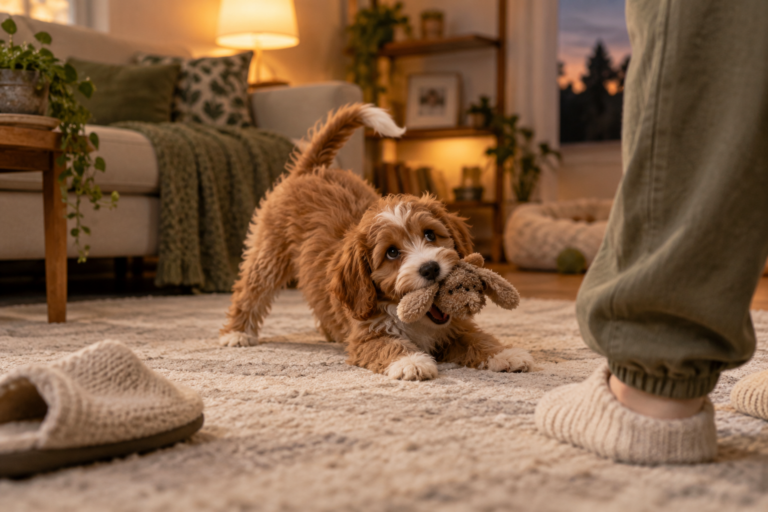
Can dogs understand the names of toys?
Some dogs learn the names of individual toys and can select a named toy from a group. Studies have documented dogs with unusually strong object name learning, including dogs that learned the names of many toys. These cases are impressive, but they do not tell us that every dog will learn at the same rate or reach the same level. ScienceDirect
In a study of 20 dogs whose owners reported that they knew the names of several objects, the researchers found some evidence of word and object associations across the group. However, only one dog reliably performed above chance on an individual level. This is a useful reminder that dogs differ in what they learn and how consistently they show it. PMC
So if your dog does not learn the names of several toys, it does not mean they are unintelligent. Many dogs learn everyday cues and routines without becoming skilled at identifying named objects.
Do dogs understand full sentences?
Dogs can learn short cues such as “sit,” “wait,” or “come,” and some can respond to combinations of familiar words in a practiced activity. But a dog’s response to a cue is not the same as understanding grammar or following a conversation the way a person does.
A dog hearing “Get your ball” may respond because “ball” is familiar, because the phrase is often used before a game, or because you are looking at the toy. The dog may have learned the whole cue as one pattern rather than working out the sentence word by word.
That is why short, consistent cues are often easier for dogs to learn than long explanations.
How to teach your dog a new word
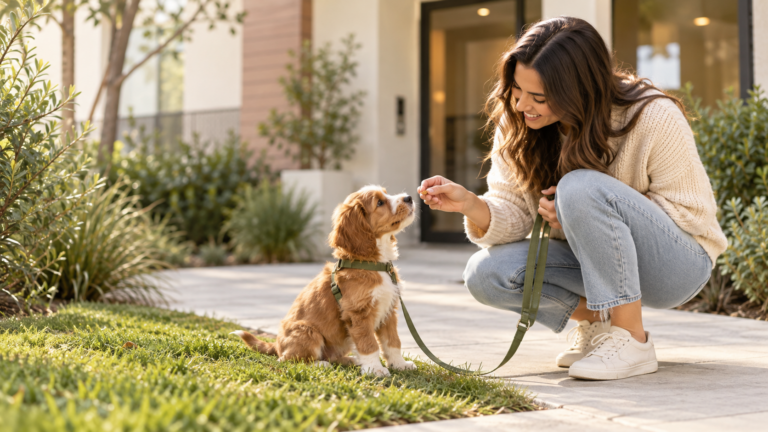
Choose one word and connect it to one clear object or action. Keep practice calm and brief.
- Pick a simple word. Use a cue that is easy for everyone in the household to say consistently.
- Show your dog what it refers to. For a toy name, hold or present that toy as you say its name.
- Say the word once. Give your dog a moment to look, approach, or interact with the object.
- Reward the response you want. Use a small treat, praise, or a short game.
- Practise in a quiet place first. Add distractions gradually as your dog becomes more reliable.
- Use the same word each time. Avoid switching between several versions of a cue while your dog is still learning.
- Keep sessions short. A few successful repetitions are more useful than a long practice session that ends with frustration.
If your dog does not respond, pause and make the task easier. Move closer, reduce distractions, or show the object again. Repeating the word over and over can make it less clear what response you are asking for.
For more help with a dog who does not respond to cues, see Why Your Dog Doesn’t Listen. If you are wondering whether your dog is being stubborn, read Your Dog Is Not Stubborn.
Napomena: Proveri da li se druga adresa otvara pre nego što je povežeš; ako ne radi, izostavi link ili pošalji mi adresu tog članka da je proverim.
Common mistakes that can confuse a dog
- Changing the cue while teaching it: “Come,” “come here,” and “get over here” may sound like different signals to a dog still learning.
- Repeating a cue many times: Your dog may learn that the first few repetitions do not matter.
- Using a cue when the dog is unlikely to respond: Practise first in easier settings before trying in a busy park.
- Expecting a word to work without practice: A cue becomes familiar through repeated, clear experiences.
- Assuming a missed cue is deliberate: Distraction, excitement, uncertainty, or an unfamiliar setting can affect a dog’s response.
A dog that does not respond is not automatically ignoring you on purpose. The cue may not be well learned in that situation, or something else may be holding the dog’s attention. You can read more in Why Your Dog Ignores You.
What I have learned from living with dogs
After more than 15 years of living with and caring for dogs, I have seen how quickly they notice familiar sounds and routines. A dog may react to a word because it has often been followed by a walk, a meal, or a favorite game.
That response can feel like a little conversation between you. It is still helpful to remember that dogs learn from the whole situation: the word, your voice, your movements, and what usually happens next.
When I want a dog to learn a cue, I focus on being clear and consistent. If the dog seems unsure, I make the task simpler instead of repeating the cue more loudly.
When to speak with your veterinarian
If your dog has suddenly stopped responding to familiar sounds or cues, arrange a veterinary check. A sudden change can have several possible explanations, including a hearing or health problem, and a veterinarian can assess your dog. This article is for general education and is not a diagnosis.
Frequently asked questions
Many dogs learn to respond to their names because they hear them often in familiar situations. A response does not necessarily mean they understand a name exactly as a person understands it; they may have learned that the sound often signals attention or interaction.
There is no single number that applies to every dog. Dogs vary in their learning history and in how consistently they respond. A small number of highly practiced cues may be more useful in everyday life than a long list of words your dog rarely hears.
Your dog may react to familiar words, names, tone, and changes in your behavior. That does not prove they understand a conversation about them. They may be responding to a word or another clue they have learned to notice.
Yes. Talking to your dog can be part of a warm relationship. For training, though, use a short cue and make it clear what you want your dog to do. Then give your dog time to respond.
Final thought
Dogs can learn more from our words than many people expect, especially when words are repeated in clear and familiar situations. But they do not need to understand every sentence to respond to us, learn routines, and share a close bond with their people.
Use simple cues, reward the response you want, and pay attention to the other signals your dog may be reading.
Sources
- Neural evidence for referential understanding of object words in dogs, Current Biology, 2024.
- Investigating responses to object labels in the domestic dog, Animal Cognition, 2023.
- The influence of voice familiarity and linguistic content on dogs’ ability to follow human voice direction, Scientific Reports, 2023.